


Kaine meets with the Loudoun farming community to discuss tariffs and grants
By Valerie Cury
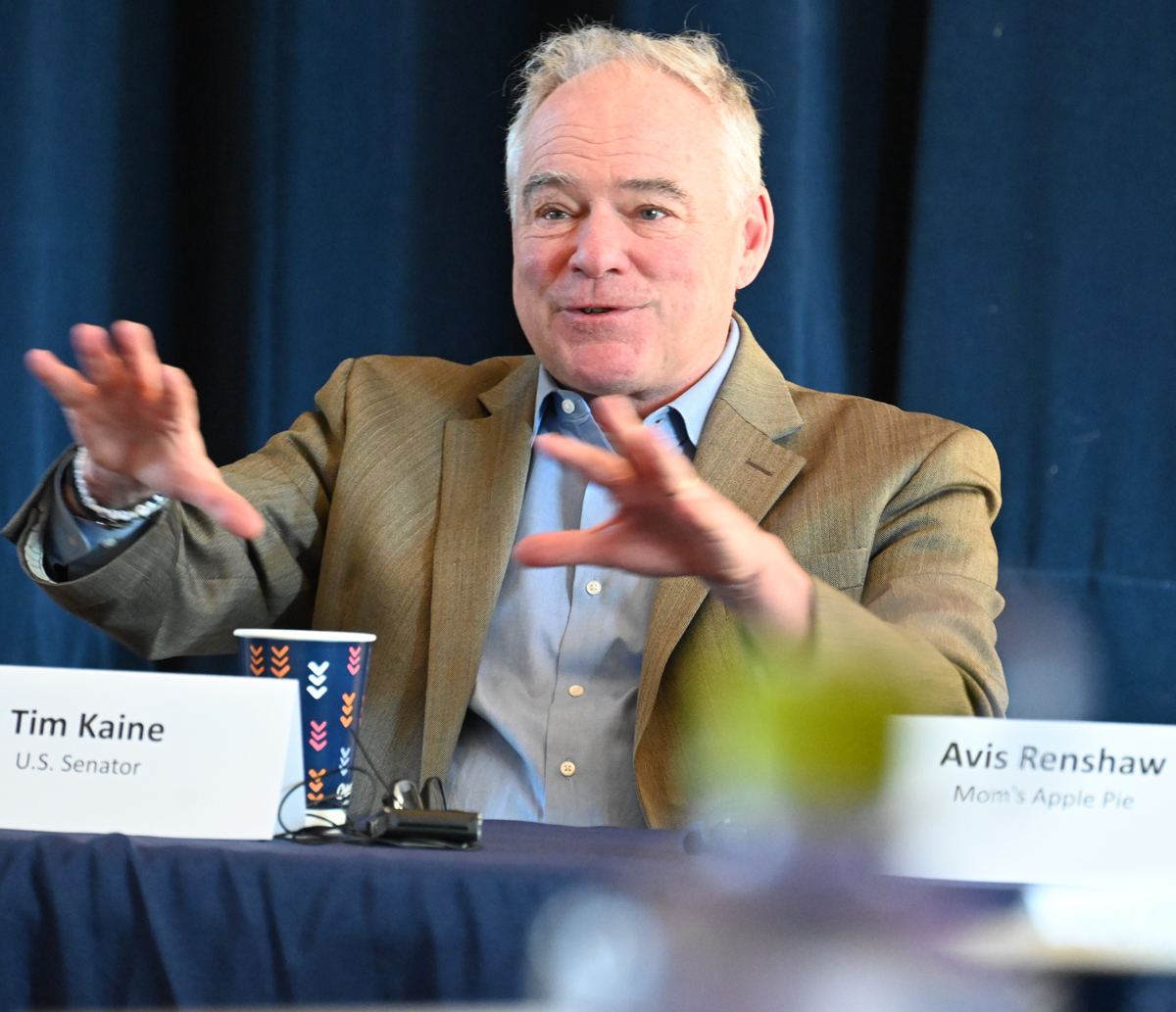
On Feb. 14, U.S. Sen. Tim Kaine hosted a roundtable with Loudoun County farmers at the Hillsboro Old Stone School. He listened to concerns about the uncertainty and challenges facing the farming community during the early weeks of the Trump administration, including spending freezes, potential tariffs, and the unclear future of immigration policies that could impact farm labor.
Kaine heard from Catoctin Creek Distillery owners Scott and Becky Harris, who founded their company in Purcellville in 2009. They explained that the threat of new tariffs is making their distributors in Mexico and Canada hesitant to import their products.
Scott Harris also shared that during the previous Trump administration, the tariffs imposed to American whisky halted their planned expansion into Europe. Prior to that, they had built a good business in Europe, which bought in 11% of their revenue. When the U.S. put a tariff on European aluminum imports, the Europeans retaliated by imposing a 25% tariff on whiskey—bringing the cost of their product from 50 euros to 75 euros.
Harris said that to this day they continue to feel repercussions, and there is a negative outlook in Europe toward American products there. “So, it killed our business to zero—and it’s stayed to zero in Europe.”
Sara Brown, a ninth-generation farmer and owner of Oakland Green Farm in Lincoln, said she is unsure whether she will receive her approved federal grant for a “demo farm,” one of only two awarded in Virginia. She has an agroforestry project planned but doesn’t know if she can proceed, such as installing $60,000 worth of fencing. She is collaborating with the Savanna Institute to implement a farming practice that combines trees, forage, and grazing animals in one system.
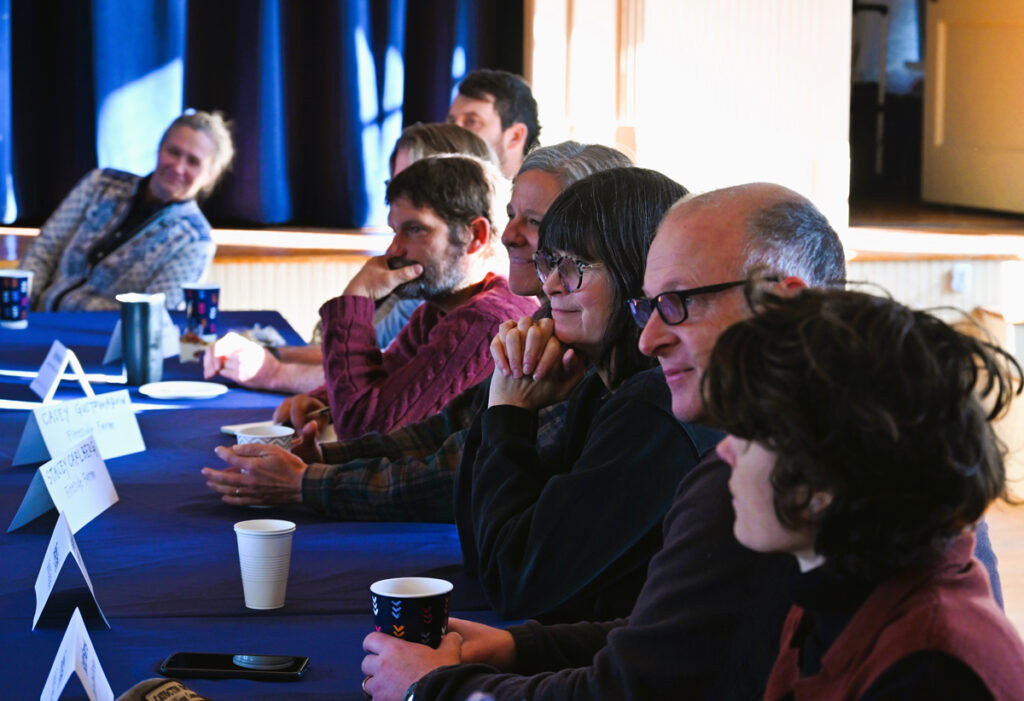
Eliza Greenman of the Savanna Institute explained that integrating livestock and trees in pastures provides not only shade but feed from persimmons, mulberries, and chestnuts. She noted that this practice was once a common practice on farms and “we are bringing that back.”
Mom’s Apple Pie owner Avis Renshaw said if tariffs are placed on Canada, she anticipates pie tins she uses for her business to increase. She said when tariffs were placed on Canadian aluminum the pie tin cost increased from $72 to $173 per case. Renshaw said once the price increases, it never really goes down.
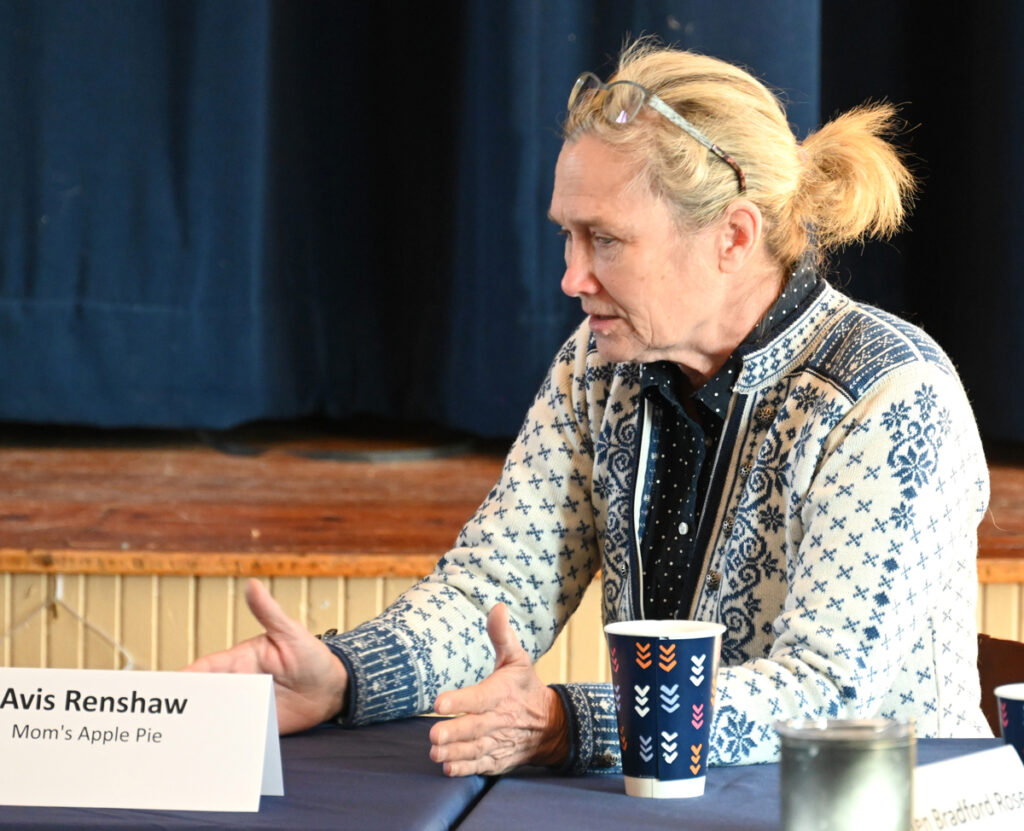
Renshaw said, “Butter is very important to me,” and it is a major cost for her bakery. She said that farmers have to prepare so far in advance, and seed is hard to get. She said that she is concerned about the spread of disease like what is impacting the availability of eggs. This is happening when programs at the National Institutes for Health could be shut down.
Kaine said that farming and forestry is the biggest part of Virginia’s economy. Agriculture and forestry are still number one. He said the uncertainty is really hard and farmers are dependent on a healthy economy. He said a lot of the farmers at the meeting have applied for grants and at the moment things are on hold.
Kaine said with spring just around the corner, farmers are preparing their plans, though they remain uncertain about their next steps. However, approved funding and grants should become available as the courts address ongoing legal issues.
“In my view,” said Kaine, “it’s unlawful to halt a grant or a program if Congress has already passed an appropriation.” He noted that the next challenge will be meeting the March 14 deadline for agreeing on a budget. Kaine said the budget must include essential programs that the farming and forestry sectors rely on.
Kaine asked why the administration is doing unilateral cuts— “they don’t think they can convince the leadership. We have to push on the court side.”
Stacey Carlberg with Fireside Farm said she and Casey Gustowarow are in the growth stage of their farm and “we are fearful of the upheaval so far. She said she is deeply concerned about the workforce.
Stephen Bradford Rose with Potomac Vegetable Farms said the problem is the uncertainty—you don’t know. “People just pull back.” It’s a setback to implement more sustainable farming.
Sage Devlin with Far Bungalow Farm said she grows cut flowers and “tariffs are going to affect everything.”
Tia Erman with the Piedmont Environmental Council said everything is on hold due to funding and this might delay the expansion for their community garden and other programs.
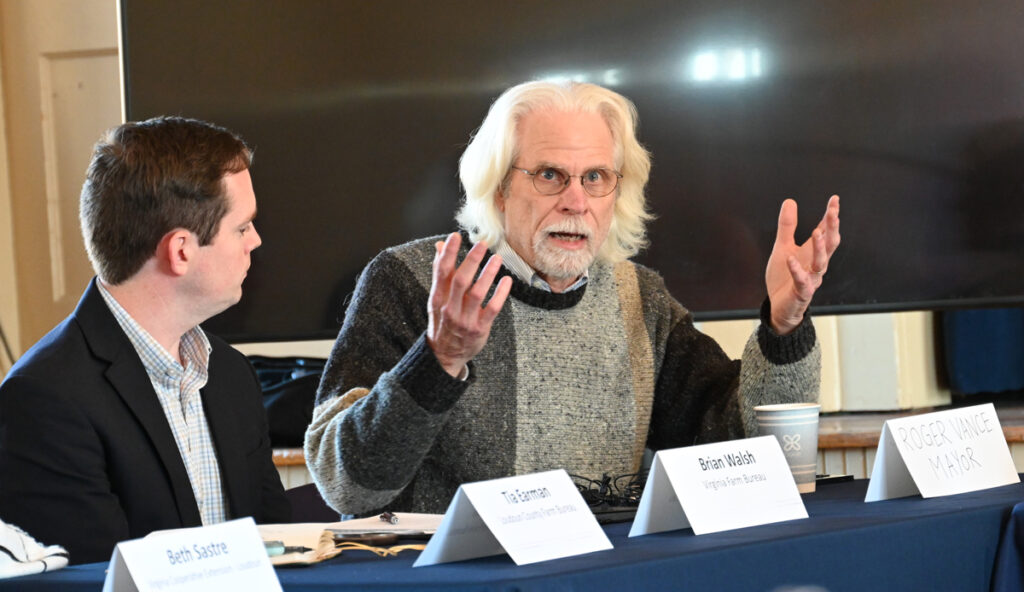
Hillsboro Mayor Roger Vance said, “This is where the rubber meets the road. The uncertainty is palpable and the anxiety is palpable.”
Renshaw said that farmers have a bad rap and grants are well used. The profit margin for farmers is so low, she said. “Dammit, we feed America,” and farmers need support.
After the roundtable ended Kaine summed up the situation, “The uncertainty is very difficult for people around the table. You have folks whose businesses depend upon a healthy economy and big layoffs of federal employees threaten their customers, threaten their businesses. You have a lot of people around the table who have applied for or received grants and the dollars aren’t flowing on the grants. That’s impacting their businesses.”
Continue reading in this news section
Comments
Any name-calling and profanity will be taken off. The webmaster reserves the right to remove any offensive posts.

Greatest news for all us