


Supervisors, School Board in Back-and-Forth Over Elementary SRO Funding
By Valerie Cury
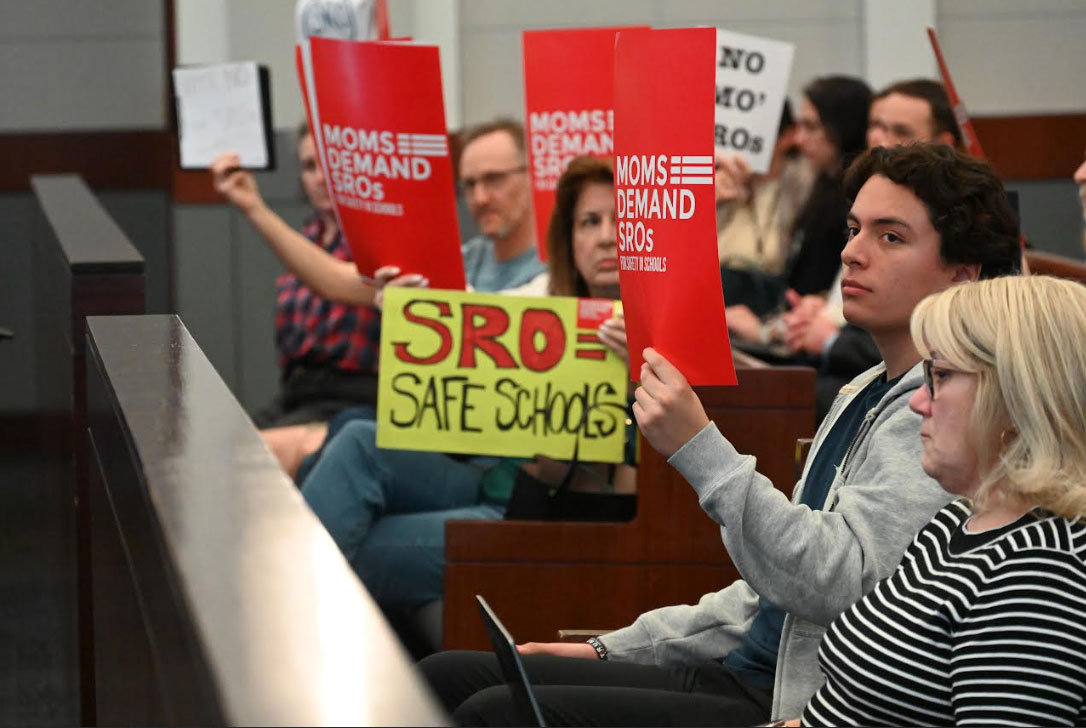
At the March 9 Loudoun County Board of Supervisors FY2027 Budget Work Session, Sheriff Mike Chapman addressed the board regarding the county’s budget priorities, focusing on law enforcement training and the phased addition of School Resource Officers in elementary schools. He emphasized the importance of keeping children safe while maintaining high standards of policing.
Chapman said the training request responds to growing demands on law enforcement, including de-escalation tactics, changing laws, and emerging technology. He highlighted the department’s record of success, noting that since he took office in 2012, serious crime has dropped 48 percent, and deputies recently recovered $1.4 million in a cybercrime case.
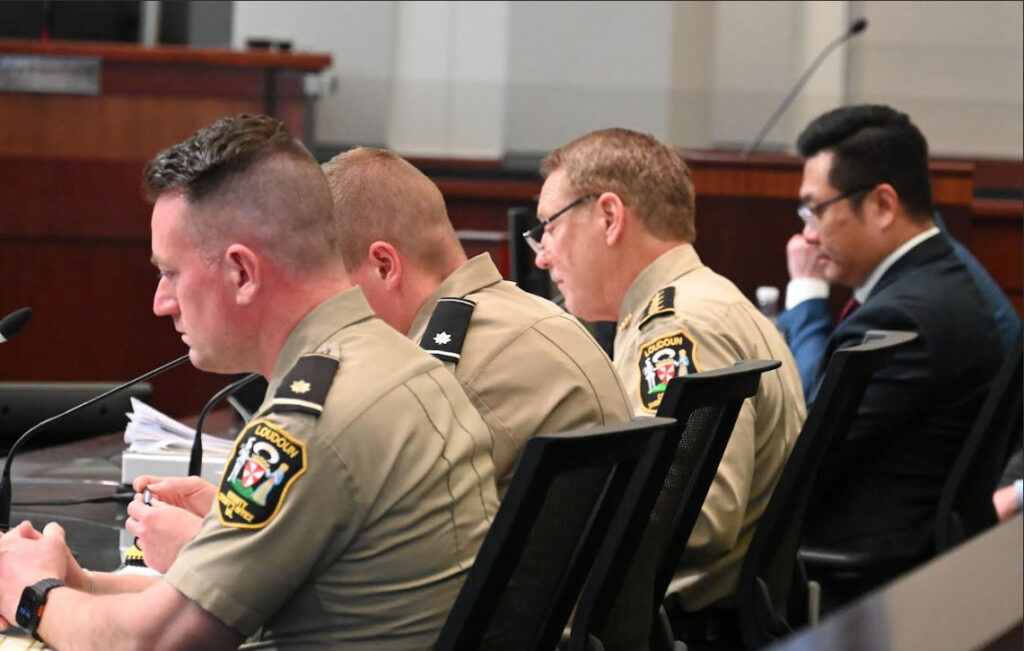
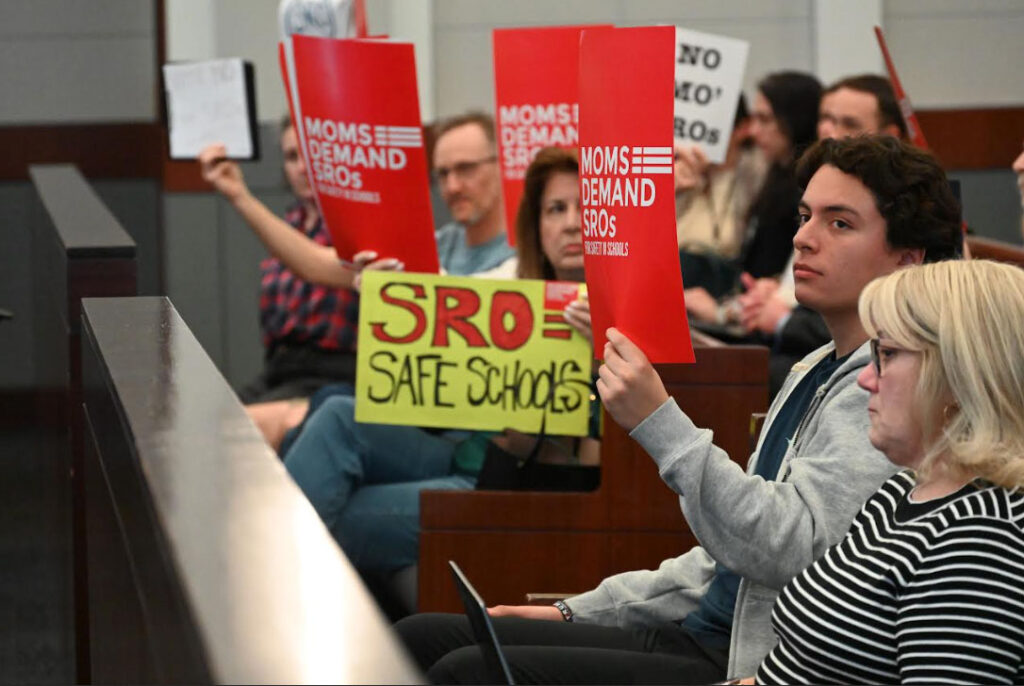
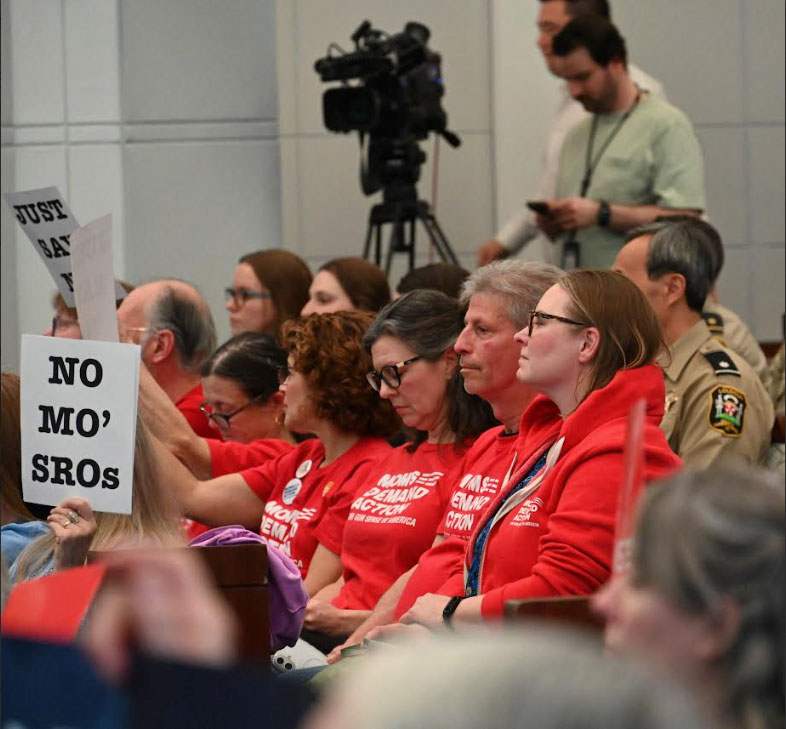
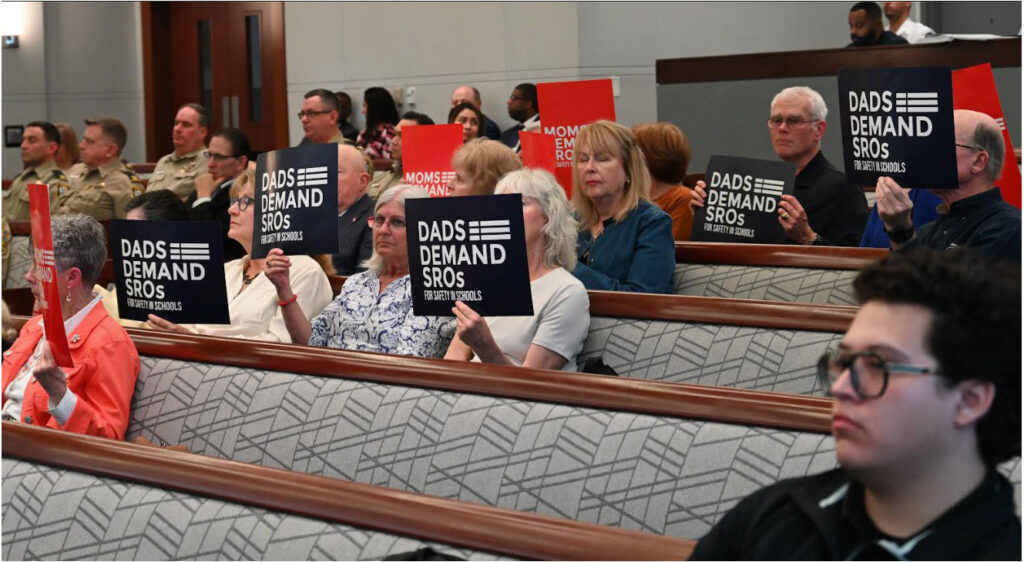
He then turned to the proposal to place SROs in elementary schools, an initiative that mirrors the program already in middle and high schools. Chapman stressed the simplicity of the decision, saying, “Either you support an extra layer of safety … or you don’t. That’s it.”
He noted that the request was in 2019, 2024, and 2025, and that calls for service at elementary schools have tripled from roughly 500 to over 1,500 per year.
Chapman addressed public support and opposition, citing surveys and town hall feedback that show strong citizen backing. He also refuted claims that SROs would replace counselors, unfairly target students, or create a school-to-prison pipeline, emphasizing, “This issue is about child safety and nothing else.”
Supervisor Kristen Umstattd (D-Leesburg) highlighted the significant demand for deputies in elementary schools, noting that “in the last year there have been 1,649 times that someone at an elementary school had to request that a deputy come to the school to deal with the situation.”
She also pointed out the sharp rise in attacks in elementary schools, which have increased by over 1,000 percent in the last seven years.
Umstattd asked Chapman to summarize the SRO training, and he detailed that deputies receive extensive preparation, including basic and advanced crisis intervention, trauma-informed youth interviews, support for students with special needs, and restorative justice practices.
Chapman emphasized that “we take the time to really make sure we get the right people in these positions.”
On the effectiveness of school security measures, Umstattd noted that hardening schools cannot stop a determined attacker. Chapman agreed, saying that while security measures help, “school resource officers—they are a great addition” because they can respond immediately and coordinate with emergency services when a critical situation arises.
Supervisor Juli Briskman (D-Algonkian) questioned Chapman on community engagement and the operational impact of expanding SROs to elementary schools. She asked whether the sheriff’s office had specifically engaged immigrant communities on this proposal.
Chapman responded, “We’ve engaged everybody on this proposal. That’s been a very open and public discussion.” Briskman noted that New Virginia Majority had submitted a petition with 391 signatures opposing the program.
Briskman also raised concerns about middle school coverage, asking how many incidents occurred when SROs were pulled to elementary schools. Chapman said the data could not be separated, explaining, “I don’t have a way in the system to differentiate that.”
Briskman referenced the school board’s position, pointing out that they had voted against expanding the program and stressing that operational authority for schools lies with the school board.
Finally, Briskman questioned the use of the Flock surveillance system as an alternative resource, noting concerns about privacy, nationwide searches, and potential misuse. Lt. Col. Christopher Sawyer of the Loudoun County Sheriff’s Office, who oversees the program, clarified that data sharing and retention are strictly regulated by Virginia law, limited to law enforcement agencies within the state.
Briskman asked, “So, does the Virginia code say you can’t give it to ICE, that it won’t be searchable by ICE? Sawyer reiterated that the Virginia code regulates who we can share our data with and that is limited to only law enforcement agencies.”
Supervisor Koran Saines (D-Sterling) asked why elementary schools were not included in the original SRO program. Sawyer explained that the Memorandum of Understanding historically focused on middle and high schools and that past revisions were intended only to update existing positions, not to expand into elementary schools.
Saines also asked about using school security officers instead of deputies. Sawyer emphasized the value of fully trained SROs, saying the program “is a lot more than just somebody sitting at the front door” and that deputies work with students, parents, and school staff to prevent issues such as bullying and online threats.
On coverage for crossing guards or other duties, Sawyer clarified that street deputies are prioritized first and auxiliary deputies are limited in availability, so SROs are generally kept in their schools rather than reassigned.
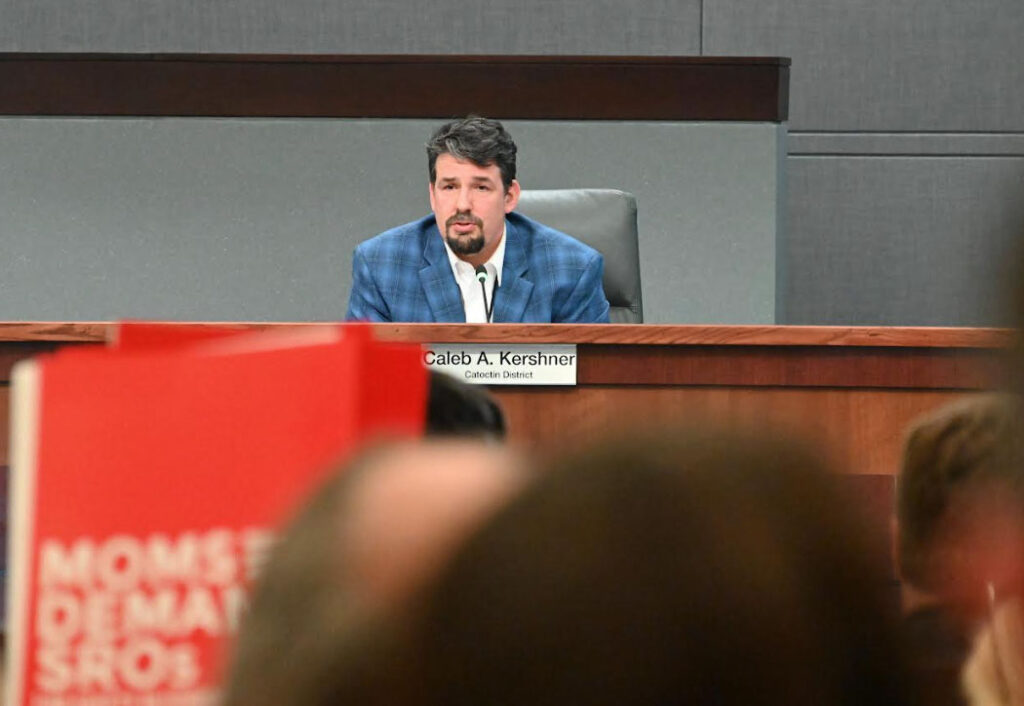
Supervisor Caleb Kershner (R-Catoctin) voiced support for expanding the SRO program to elementary schools. “I’m a big fan of this. Since I’ve been on the board—I thought that I was a little shocked that we didn’t have SROs” in elementary schools.
“I think there’s nothing more valuable that we can do than to ensure the protection of our children,” he said.
Kershner emphasized that SROs provide more than security, highlighting their role in relationship-building and community policing. He expressed disappointment that the school board had not approved the program but acknowledged that discussions about a Memorandum of Understanding were still pending.
He noted that the SRO program focuses on education, law enforcement, and mentorship. Chapman added that officers must have at least three years of experience and additional training before joining, while Sawyer said the model follows standards from the National Association of School Resource Officers, which emphasize the same three roles.
“Someone sent me a notice from a 2019 event at Madison’s Trust Elementary where several individuals invaded the school, and we had to send SROs from another school,” Kershner said.
He explained that the current debate centers on the lack of a new MOU for elementary schools. His understanding is that the plan was to secure funding first, then work with the school system on the agreement—following models used for middle and high schools.
Kershner described the disagreement as “cart before the horse,” with the sheriff’s office seeking funding first while the school board wants the MOU finalized before moving forward.
Supervisor Matt Letourneau (R-Dulles) questioned whether the police response during the Robb Elementary School shooting reflected how law enforcement would respond in Loudoun County during an active shooter situation.
Sawyer said it would not. He said the decision by officers in Uvalde, Texas to wait in the hallway resulted from a command decision that incorrectly treated the situation as a barricade rather than an active shooter event. In an active shooter situation, officers are trained to immediately pursue and stop the attacker.
Letourneau also pushed back on statements that the school board was not interested in expanding the SRO program.
“I have the motion right here,” he said, reading from the measure passed by the Loudoun County School Board on March 5.
The motion states the board “supports further discussion regarding expansion of the school resource officer program,” including conversations with the sheriff’s office about a MOU.
Letourneau encouraged Chapman to continue engaging with the school board to discuss a potential agreement covering elementary schools.
Letourneau also asked about staffing levels in the county’s current SRO program. Officials said there is typically one officer assigned to each middle and high school, meaning if an officer is absent there may not be coverage.
“Correct, there’s no SRO there,” Sawyer said, noting that if a high school officer is out, a deputy may be reassigned from a middle school, leaving that campus without an SRO.
Supervisor Laura TeKrony (D-Little River) asked how often school resource officers respond to calls at elementary schools.
Sawyer said most calls for service at elementary schools are handled by officers assigned to middle schools, since elementary schools do not currently have SROs. High school officers are generally not pulled unless necessary.
TeKrony also asked how the SRO program handles student discipline. Sawyer said deputies are not involved in school disciplinary decisions, which are handled by school administrators.
Deputies instead respond to safety concerns or potential criminal incidents. Most situations are referred back to the school for discipline, Sawyer said, while more serious offenses—such as threats of violence, weapons on campus, or assaults involving multiple students—may result in criminal charges.
Supervisor Mike Turner (D-Ashburn) acknowledged conflicting emotions about putting armed officers in elementary schools. Citing a 2024 RAND study, he noted meta-analyses suggesting SROs do not reduce school violence.
“From an emotional standpoint, I feel like the underlying premise of armed police officers in our schools is a manifestation of the bumper sticker platitude, the best way to stop a bad guy with a gun is a good guy with a gun, which I categorically reject,” Turner said.
Despite the data, Turner said the reality in Loudoun County shows middle and high school SROs are already being pulled to respond to incidents at elementary schools.
He said he supports a compromise motion that would address that need while balancing concerns about introducing armed officers into younger schools. He asked Chapman what the compelling reason would be to place SROs in elementary schools.
Chapman cited rising incidents nationally and locally, noting that calls to elementary schools had increased from roughly 500 to 1,500 in recent years, often requiring middle school officers to respond. “It’s better to be better prepared than to not be prepared,” Chapman said, emphasizing the SROs’ role in counseling and preventive presence as much as in law enforcement.
Turner added that the RAND study also showed teachers and students perceive schools with SROs as safer, even if the data on violence reduction is mixed. He also acknowledged concerns some parents, particularly Hispanic families, may feel about armed officers in schools.
Chapman responded that in local events, such as an elementary school D.A.R.E. graduation, parents had no concerns and appreciated officers’ presence. He also cited a National Police Foundation study suggesting SROs prevent or mitigate incidents that might not otherwise make the news.
Sawyer added that the department distinguishes between being safe and feeling safe, noting that extra presence is sometimes added in response to national or international events to ensure both actual and perceived safety in the community.
Chair Phyllis Randall (D-At Large) expressed frustration with the discussion on placing SROs in elementary schools, emphasizing the importance of having a thorough conversation with the school board first.
“Our schools should have protection, and they do have that protection,” Randall said, noting that schools are already hardened with security measures and that SROs are not involved in day-to-day school discipline.
She questioned why deputies were being called to schools for non-safety issues, citing hundreds of calls for crossing guards and other routine tasks.
Randall made a formal motion to pause funding for the elementary school SRO expansion until discussions with the school board are completed. “I move the Board of Supervisors remove the school resource officers, elementary school phase one of four resource requests from the sheriff’s office. The fiscal impact is $5,317,409.”
She explained that the motion is intended to ensure the proper process is followed—funding should come after a MOU is agreed upon with the schools, not before. Randall noted that the school board has indicated willingness to engage through a subcommittee to address questions such as staffing, language needs, and other operational details.
Randall emphasized that discussions with the school board should come first, with funding and implementation considered afterward. “I think this is premature right now.”
Briskman added, “I believe the reason we’re here right now is because at least the last two school board chairs, and maybe the last three school board chairs did not want to expand this program.
“And so in those discussions, when they did not want to expand this program, this path was taken instead. I’m really glad that the schools are going to set up a committee, hopefully, so we can have a transparent process about the MOU.”
Umstattd added a budget perspective, noting the importance of keeping funding available for further discussions. “Given that fact we don’t have a hard no from the school board, I think the wise thing would be for … us to keep this money in the budget and enable the school board and the sheriff’s office to sit down and hash this out, otherwise it will probably be allocated to other uses,” she said.
Supervisor Sylvia Glass (D-Broad Run) said she would like the sheriff’s department to have those conversations with the school board and would be open to the possibility of different programs being considered.
Kershner said “It’s pretty evident to me that we have to start somewhere, and so I obviously don’t support the motion here to remove this fund from the budget during this process. It’s pretty evident to me that we either start with requesting the funding or we start with an MOU.”
Saines said he will support the motion because the school board voted and said they would like to have more discussion.
Letourneau said, “The school board in the past has said, ‘Well, there’s no funding’ and then the Board of Supervisors says, ‘Well, there’s no MOU’—and then there’s just ping-ponging back and forth. I want the message to be that—that’s going to stop and that there needs to be an MOU. That discussion needs to happen.”
When asked, County Administrator Tim Hemstreet said usually it could take six months to a year for an MOU. The motion passed 6-2-1 with Kershner and Umstattd voting no, and Letourneau abstaining.
The Board did approve a motion by Letourneau to add five SROs and one sergeant to establish a floater group to assist in covering vacancies for existing school resource officers in high schools and middle schools.
Continue reading in this news section
Comments
Any name-calling and profanity will be taken off. The webmaster reserves the right to remove any offensive posts.
e-edition