


Purcellville’s Zoning Overhaul: developers, dollars, and the battle for the town’s future
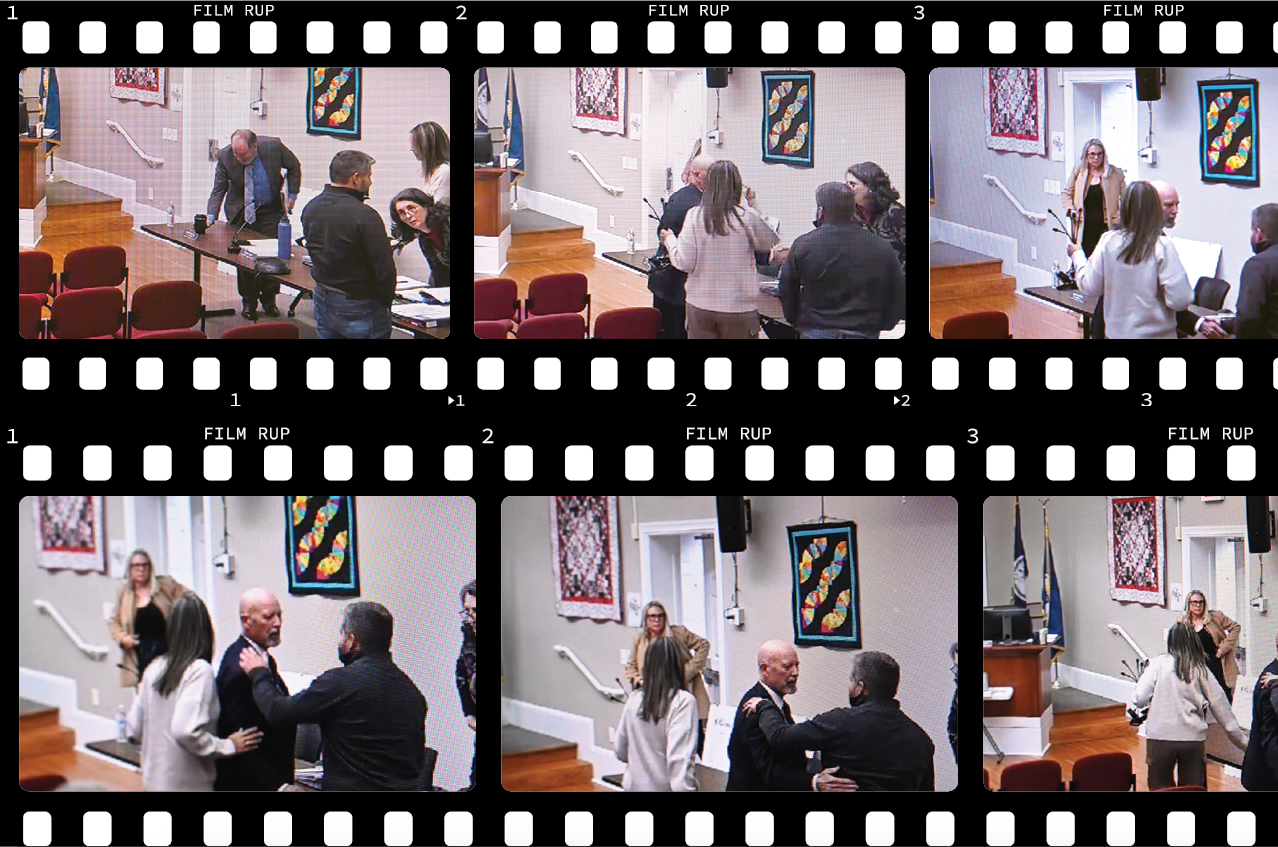
By Valerie Cury
The Purcellville Planning Department has skirted years of citizen input, election results and the principals of transparency, as well as the Town’s 2030 Comprehensive Plan, in favor of advancing developers’ interests. This is most clearly reflected in the significant proposed changes that Planning Staff made to the draft zoning ordinance before presenting it to the Town Council. The Planning Commission’s draft zoning ordinance, which comports with the 2030 Comprehensive Plan, passed unanimously.
At the Purcellville Town Council meeting on Nov. 12, Director of Planning and Community Development and Zoning Administrator Summer Wilkes presented her proposed changes to the Planning Commission’s draft zoning ordinance, claiming that “the more you develop—the more charm you get.” Her proposed revisions do not align with the Town’s 2030 Comprehensive Plan.
Additionally, there has been no Town Council vote directing Wilkes to make wholesale changes to the ordinance. The Planning Commission spent two years crafting the ordinance to ensure consistency with the Town’s 2030 Comprehensive Plan, which is aimed at sustaining and protecting the town. All changes recommended by the Planning Commission were thoroughly vetted during extensive meetings, with the sole goal of assuring Purcellville’s small town charm.
Wilkes’ revisions cater to developers and landowners by relaxing zoning requirements, reducing setbacks, and increasing density in all areas residents wanted to sustain. Her revisions also add high density uses to the Agricultural Commercial Tourism District, remove the limit on the number of apartments per building in the Historic Downtown area, and eliminate most Special Use Permits—all provisions developers and landowners have long been requesting.
Wilkes’ changes
Wilkes said she proposes Mixed Use Neighborhood Scale for the Historic Downtown area, even though this does not align with the Town’s 2030 Comprehensive Plan or the current town zoning ordinance, which limits apartments to two per building in that area.
She said the Comprehensive Plan envisioned a village scale “and I think we need to honor that.” Instead of the longstanding two apartment per building on 21 st Street, Wilkes is recommending no limits to how many apartments can go in this area.
“The form of buildings and where they are, it’s naturally limiting,” said Wilkes. “It will limit naturally due to the form and lot size. The market will naturally dictate the number.” The Planning Commission, however, recommends leaving the current zoning at two apartments per building.
Developer Casey Chapman and his investors have been asking for multiple apartment complexes in this area. They own the Valley Business Park, and Chapman is the manager of the Vineyard Square block on 21 st Street. They have said along with the allowed commercial uses, they want multi-family apartments and a hotel use added to this area.
Conflicts of Interest?
From 2020 to 2023, Vice Mayor Erin Rayner has received a total of $72,476 in donations. Approximately $27,000 of that came from developer Casey Chapman’s affiliates, his uncle and two of his uncle’s employees. From 2022 to 2024, Rayner has contributed $10,300 of her donations to Council Member Caleb Stought, who has also received approximately $1,500 from one of the investors of Vineyard Square and the Valley Business Park.
This past election, Mayor Stan Milan received $10,000 from an employee of an uncle of Chapman who has a land development company in Purcellville. He also received $11,849 from Citizens for Virginia PAC which is based in Wisconsin. Milan received $2,000 from a landowner who will also be annexed along with the Valley Commerce Center if it is annexed into town.
The Agriculture Commercial Tourism District is comprised of three parcels, one of which is located on Colonial Hwy immediately after the traffic circle at Main Street and Rt. 287. Staff has proposed adding a school, senior center, and country inn (up to 50 rooms) as permitted uses. Under the zoning passed by the Planning Commission, country inns are limited to nine rooms, with any facility exceeding that number requiring a Special Use Permit.
This gateway district was originally envisioned for low-density development, given its close proximity to the traffic circle and the 90-acre Crooked Run Orchard which is in conservation easement. One of the property owners has requested the inclusion of these new uses, as they might have a potential contract for a school with 100 students.
The owner of this parcel donated $2,000 to the Milan for Mayor Campaign and has donated $2,100 to Vice Mayor Erin Rayner’s campaign from 2020-2022.
More changes
Wilkes said that the Planning Commission’s recommendation to remove the provision for duplexes in the R-3 (residential) area, reduces a “development right from two units per parcel to one.” She recommends leaving duplexes in that area as a by-right (allowed) use.
Wilkes said that the suburban and urban areas in town are “two different animals—and I will say that as a general statement, suburban development doesn’t pay for itself.
“We talk in the Comprehensive Plan about areas to sustain. Generally speaking, over time, over the long run, suburban development costs the town more per house, per mile, per block and essentially, they are areas to subsidize,”—meaning these areas have too much front and back yard.
Wilkes said, “Properly passed infill development will increase the character and charm. When you grow according to a charming DNA, you are going to get more charm. The more you develop—the more charm you get.”
Council Member Carol Luke asked, “Purcellville is built out, is it not?” Wilkes responded, “I don’t believe it’s built out.
“What are you proposing? We have streets that exist, houses that exist,” said Luke.
Wilkes said, “It would be each street has its own character. So, we would try and capture the character in the regulations.”
Town Planner Jordan Andrews answered, “It’s the redevelopment of these small lots [which if redeveloped, would make the area more dense thus less suburban].”
Said Luke, “So what you are saying is that it’s going to become like Falls Church.” There was no response.
Wilkes said that she is generally recommending eliminating Special Use Permits. “They are not necessary and overly complicated.”
The purpose of Special Use Permits is to ensure that the community has an opportunity to provide input on proposed developments. Developers have been advocating for eliminating this requirement, but without the Special Use Permit process, the public would lose the ability to voice concerns about what is being built in their neighborhoods or elsewhere in the town.
Wilkes is also recommending no minimum lot size in the commercial areas. The Planning Commission recommended 20,000 square feet minimum lot size.
Staff recommends eliminating lot sizes and lot size minimums in the Medium Scale Commercial parts of town. They are also recommending no Floor Area Ratio for structures, which means a building could overwhelm a lot.
Wilkes also recommended having no parameters to by right conditions in the commercial districts. “The general approach of the Planning Commission was if you fell within certain parameters, it would be a by-right condition. If you fell outside it, each of these parameters—you would need some kind of Special Use Permit.
“In other words, go to the Planning Commission and the Town Council for review,” she explained. “It’s the planning staffs’ opinion that these things are not necessary—that they are overly complicated,” she said.
Wilkes said Purcellville’s Main Street should have the “same standard as the downtown area—in other words there is no minimum lot size in downtown.” She does not agree with any lot size standards as they are too “suburban.”
Wilkes said Main Street is a “suburban area right now, but if you have the goal of making it more like a traditional Main Street, then you should allow it to grow that way.” She is recommending no minimum lot size “because based on the way the market will essentially develop this out, there’s really no need to have a maximum lot size. It will self-regulate [to its highest density].”
Wilkes is recommending a minimum street frontage of 30 ft. as opposed to the current 100 ft. recommended by the Planning Commission for street frontage on Main Street— “It’s in keeping with the traditional Main Street approach.”
Regarding lot depth, staff is recommending none, versus the 150 ft. recommended by the Planning Commission. Wilkes is also recommending no limits to by-right development on East Main Street.
In the Industrial Districts the Planning Commission approved combining the CM1 and M1 districts into a single district with a minimum lot size of 20,000 square feet. Wilkes recommends maintaining the two separate districts.
Currently, Hirst Road is zoned CM1, while the Mayfair Industrial Park is zoned M1. One of the key reasons for the Planning Commission’s decision to merge the districts was to address safety concerns related to fuel storage from a permitted by-right use to a Special Use Permit in the CM1 District, as both areas are in close proximity to residential and commercial businesses, with the M1 district being even closer to residential than the CM1 district.
Wilkes noted that a flood plain buffer exists along Hirst Road, and as a result, she recommends that fuel storage remain a permitted use in this corridor. The change recommended by Planning Staff would allow more fuel storage in a flood plain.
Wilkes said staff wants to add Planned Unit Development into the ordinance as “a tool in the tool box.” This addition would allow for creativity and density with lax standards in height and uses. It is usually applied to areas of approximately one acre or more. For example, the Vineyard Square property on 21 st Street spans two and a half acres.
Wilkes proposes to cut out all the Planning Commission Overlay Districts the commission worked on with then Interim Zoning Administrator Martha Semmes as it is “too suburban.”
The planning staff recommends one foot of rise in the flood plain, per project, as opposed to the Planning Commission’s zero rise recommendation which mirrors Loudoun County and protects citizens who live along the major flood plain of the South Fork of the Catoctin Creek. Wilkes is recommending a 100 ft. buffer from the creek instead of the 200 ft. buffer recommended by the Planning Commission. Wilkes said 200 ft. “is too large.”
When a property in the flood plain area on Hirst Road put fill for over a decade in that area, it led to the expansion of the flood plain in the Old Dominion Valley Neighborhood requiring some home owners to buy flood insurance. Moreover, as recent as 2020, 25 properties in both Catoctin Meadows and west of Hatcher Avenue, were found to be threatened by the 100-year flooding.
Town Council will review the director’s changes at the Dec. 10 Town Council Meeting.
Update: This article has been updated to correct the statement that approximately $27,000 in campaign donations came from developer Casey Chapman’s affiliates.
Also developer Casey Chapman is the manager of the Vineyard Square property on 21st Street.
Continue reading in this news section
Comments
Any name-calling and profanity will be taken off. The webmaster reserves the right to remove any offensive posts.