


Catoctin District Supervisor candidates
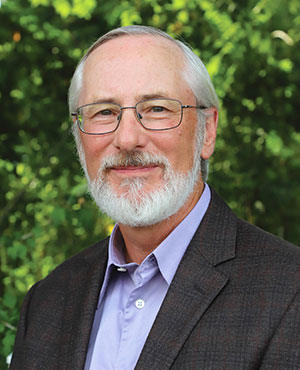
John Ellis
John Ellis grew up in rural South Dakota and Michigan. He and his wife Anne live in the Between the Hills area north of Hillsboro and are dedicated Virginia Master Naturalists. Ellis is an economist who worked for over 30 years in various branches of the U.S. foreign service, including as the head of U.S. delegations in international trade negotiations. He is a co-founder of Save Rural Loudoun and, since his retirement in 2015, has devoted his spare time to advocating for rural preservation in Loudoun County. Ellis and his wife have two adult daughters and one granddaughter.
Blue Ridge Leader: What is the best way to prevent over-development in western Loudoun?
John Ellis: The only sure way to prevent over-development in western Loudoun is to revise our zoning regulations to reduce the number of new housing units that developers can build in rural subdivisions. Currently, Loudoun allows developers to build three times more houses per acre in our rural areas than is allowed in rural Fauquier County and Clarke County. This provides a huge incentive for developers to focus on building in western Loudoun.
Voters have a clear choice on this and many other issues. My opponent believes we should maintain the current, pro-development rural zoning. This should not be a surprise since he has accepted more than $60 thousand from the developers’ political action committee.
We also need to re-establish a County “Purchase of Development Rights (PDR)” program to compensate landowners who voluntarily decide not to subdivide and build on their properties. To maximize their incentive to take advantage of PDR, I want to expedite it so it can be implemented before the rural zoning is changed. My opponent has had four years to put it in place and has made no progress.
To avoid confronting the fundamental problem with pro-development zoning, my opponent argues the County should “accelerate” voluntary conservation easements. Voluntary easements are absolutely the best way to permanently protect rural land. However, the County cannot “accelerate” easements since those decisions are made between private landowners and land trusts, with only minor support from the County.
The easement option has been available to landowners for decades, but it did not prevent the rural population from growing by over 80% in the last two decades and will not prevent thousands more houses from being built in western Loudoun in the future. The definition of insanity is to continue doing the same thing over and over and expect different results. This is exactly what my opponent advocates.
BRL: Do you think the County should require developers to preserve prime farming soils on rural properties?
JE: Yes, absolutely. Western Loudoun has some of the best farmland in the eastern United States. It was known as the “Breadbasket of the Revolution” 300 years ago. We have a vibrant community of farmers who continue to produce healthy, high quality local foods and beverages. As other agricultural areas come under increasing stress, it is vital to preserve Loudoun’s exceptional farming soils.
Unfortunately, my opponent believes the County should continue to allow rural developers to destroy what is left of our prime farming soils. He is concerned that preserving the soils would reduce “development potential” and that this, in turn, might affect a few large land investors’ decisions to put their own properties in conservation easement.
This concern is misplaced since most conservation easements in Loudoun to date have been done on properties with low “development potential” by landowners for whom the financial benefits were not the primary motivation. It also ignores the fact that the same high development potential that allows a few large property owners to defray taxes on their business profits also incentivizes developers to build more houses in western Loudoun.
BRL: What should the County do about traffic on Rt. 9, Rt. 15 North, Rt/ 287 and other rural roads?
JE: In a recent County Safety and Operational Study, western Loudoun citizens overwhelmingly stated that their top priorities are to preserve the rural character of our rural road system while improving traffic safety. I’m with them.
My priority is to expedite cost-effective traffic safety improvements that do not require taking a lot of people’s property to widen the roads. That should include more pull-outs that allow the Sheriff’s office to better enforce traffic rules and prevent reckless driving. Our goal should be to keep traffic moving smoothly and safely. Speeding up traffic on Virginia Scenic Byways and then funneling it through rural chokepoints only encourages reckless driving and makes driving conditions more dangerous.
I also want to preserve Loudoun’s unique historic system of gravel roads, which are the outdoor meeting place for many of our rural communities. Paving narrow roads with no shoulders, heavy vegetation, and many blind curves and ridges is extremely dangerous. I support citizens’ efforts to work with VDOT to develop and apply improved gravel surfaces that reduce dust and potholes and are easier and more cost-effective to maintain.
BRL: Would you support a Comprehensive Plan Amendment to increase the number of new subdivisions that can be built in the Transition Policy Area?
JE: No, we must maintain the Transition Policy Area (TPA) as it is currently described in the Comprehensive Plan, especially the requirement that it include 50% open spaces.
My opponent and his appointee to the Planning Commission have supported “up-zoning” TPA subdivisions to allow for hundreds more houses. Other sitting supervisors have described this as “the definition of insanity” because nearby roads and schools do not have the capacity to meet the needs of so many more residents. We have to stop allowing development to overwhelm Loudoun’s public infrastructure and services.
During my opponent’s term in office, we have seen increasing suburban “creep” into the TPA and western Loudoun’s rural areas. Each time a new development comes in, pro-growth special interests argue that it has changed the character of the surrounding areas and therefore justifies further development on adjacent properties. This can’t continue. We need to hold the line.
BRL: How would you propose to control the growth of County spending?
JE: My short-term goal is to reduce the growth of County spending from 7.5% per year during my opponent’s term of office to around 4% per year over the next four years. This is equivalent to inflation plus population growth and would mean no real increase in spending per County resident. In addition, I believe the County can and should provide some tax relief.
Reducing spending increases will be difficult, as the County is still trying to catch up with decades of rapid growth that has overwhelmed our roads and public services. I will look carefully at any proposed increases in administrative costs, including in the school system, which accounts for 60% of the County’s budget. At the same time, I strongly believe it is critical to ensure that educators and first responders are competitively compensated.
I am against any further cuts in taxes on data center equipment. By holding down spending increases and taking advantage of the continued growth of data center revenues, I will seek to lower the “car tax” on residents and other businesses. The County’s fiscal policy should promote diversification of the local economy.
BRL: Do you believe the Purcellville Town Council was unreasonable in rejecting the construction of lighted ballfields and a park-and-ride on the Fields Farm property?
JE: No. I have had long talks with Purcellville residents and Town Council members on this and other recent conflicts between the Town and County governments. Our elected officials represent the same constituents and it is their responsibility to work together professionally to solve problems.
On the principle that government should be as close to the people as possible, the County should defer to the wishes of the Towns and historic villages on proposed developments within or near their jurisdictions. With respect to the Fields Farm property, the Town Council provided reasonable objections to lighted ballfields and the County should respect that decision. The County should also comply with Purcellville’s request to remove the proposed “Northern Collector Road” from the County Transportation Plan.
The same principle applies to the County’s proposal to build a massive new fire station on the Philomont community’s historic horse grounds. I agree with the community that the fire station should be scaled to match the actual local needs and circumstances.
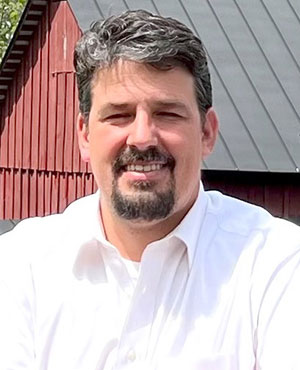
Caleb Kershner
Caleb Kershner, an attorney, is a partner in the law firm of Simms Showers, LLP in Leesburg. He earned a bachelor’s degree in finance with honors from George Mason University and a doctorate in law from George Mason University. Kershner began his legal career as an assistant commonwealth’s attorney in Loudoun County, prosecuting criminal cases between 2005 and 2009. Kershner currently serves on the Loudoun County Board of Supervisors representing the Catoctin District. Kershner lives in Hamilton with his wife, Whitney, and their four children. They attend Cornerstone Chapel in Leesburg.
Blue Ridge Leader: What is the best way to prevent over-development in western Loudoun?
Caleb Kershner: Property rights are important in Western Loudoun so we must give landowners options to monetize their land through permanent preservation and conservation programs such as the Purchase of Development Rights and Transfer of Development Rights programs, and rural economy uses such as wineries, breweries, farming and bed and breakfasts. Personally, I would like to see our production agriculture increase in Loudoun and will work toward policies that encourage preservation and agriculture.
BRL: Do you think the County should require developers to preserve prime farming soils on rural properties?
CK: I am not opposed to a prime agriculture soils ordinance if it is balanced and does not devalue an individual’s property rights. Cluster development can be improved, and if done correctly, may preserve prime agricultural soils for future farming uses, but we must have flexibility, or we will have unintended consequences of encouraging more developments and houses. What we are doing now is working incredibly well.
We have over 85 thousand acres voluntarily placed into easement in Loudoun County and will be close to 90 thousand by the end of this year. Most experts estimate there is 65 to 75 thousand more acres to preserve on order to have permanently preserved western Loudoun.
In short, we are more than halfway there. Under the state and federal conservation program, Loudoun is seeing prime agriculture soils preserved forever at a 20 to 1 ratio. We should not slow or kill that preservation steam engine.
However, those who are rapidly preserving western Loudoun through conservation easements have demonstrated that the current prime agriculture soil proposal will devalue owners land and consequently they will no longer engage in buying farms and putting them in permanent easement. Any prime agriculture or preservation initiatives should always respect the property values of landowners.
BRL: What should the County do about traffic on Rt. 9, Rt. 15 North, Rt/ 287 and other rural roads?
CK: These roads have one thing in common—all carry commuters from Maryland and West Virginia through rural Loudoun. I have been instrumental in shepherding several critical improvements to these major arterial roads. The Board initiated a Primary Rural Road (Routes 7, 9, 15, 50, and 287)Safety and Operation Study.
Active projects are underway for Route 9 from the West Virginia line to Route 7. Short-term, mid-term and long-term recommendations were adopted by the Board as a result of the Route 9 Safety and Operations Study.
The Route 15 North project is also ongoing with multiple phases underway. The widening of Route 15 from the Town of Leesburg to Montresor Road is well underway with land acquisition and utilities movement expected in October. The Spinks Ferry Roundabout and realignment of New Valley Church Road is also underway. Safety improvements have been adopted for Rt 15 south and programed in our CIP. Although the Safety Study has not been initiated for Route 287 there are two projects included in the Adopted FY 2019 – 2024 CIP: Route 7/287 interchange improvements and a roundabout at Route 9/287.
BRL: Would you support a Comprehensive Plan Amendment to increase the number of new subdivisions that can be built in the Transition Policy Area?
CK: The Transition Policy Area in the new Comprehensive Plan is planned for a diversity of housing options in clustered patterns with substantial open space areas that provide recreational amenities and protect natural, environmental, and heritage resources. The area is planned for a diversity of large-lot and clustered residential uses with limited commercial uses. Any TPA CPAM proposal would need to fit the original intent of the TPA as a visual transition from the suburban to the rural policy area.
BRL: How would you propose to control the growth of County spending?
CK:The best way to do this is to give proper guidance to the County Administrator on the tax rate. I am a firm believer in trying to remain at the equalized rate. By doing this, the County Administrator can go back to all the departments with guidance about how to get to the reduced tax rate. County spending has far outpaced the population growth in Loudoun. I have opposed four budgets in a row because the guidance was set at several cents above the equalize rate.
Raising taxes in Loudoun should not be the trend, it should be the exception. I am a big fan of phasing out the car tax over the next four years. Although it produces approximately $150 million in annual revenue for the county, we can make that up with data center revenue. This tax impacts anyone with a car and will give the greatest relieve to our citizens across the board.
BRL: Do you believe the Purcellville Town Council was unreasonable in rejecting the construction of lighted ballfields and a park-and-ride on the Fields Farm property?
CK: There is quite a long history with this project going back to 2007. The Town Council and Loudoun County both spent a lot of time and energy on this project. I think it’s important to move forward and remember that the main goal of the project is to bring amenities and services to Western Loudoun residents.
Without question, having 147 acres is more than enough space to accommodate the Western Loudoun Recreation Center, the aquatic center, the new library, fields, the park and ride, and a multipurpose park. I am looking forward to helping to move this project along in its new location to serve the residence of Purcellville and of all Western Loudoun.
Continue reading in this news section
Comments
Any name-calling and profanity will be taken off. The webmaster reserves the right to remove any offensive posts.
Mr. Kershner chose not to answer most of the questions directly. I guess voters will be able to read between the lines.
I wonder why neither candidate considered that if the Janelia Farm Complex (Howard Hughes Institute) which is private, not a charity and well funded didn’t have its assessed property tax waived every year by the BOS they could buy at least one substantial, precious soil farm per year and then lease it to someone who wants to farm it. Many large farm owners have no children who want to farm but rather they see the capital achievable by selling to a developer. How hard is that to consider?