

More Than a Shelter: LAWS Envisions a New Future for Survivors in Loudoun County
By Valerie Cury
“We have a responsibility as organizations … to keep survivors safe in their communities, as opposed to saying to survivors, in order for you to be safe, you have to leave your community.”
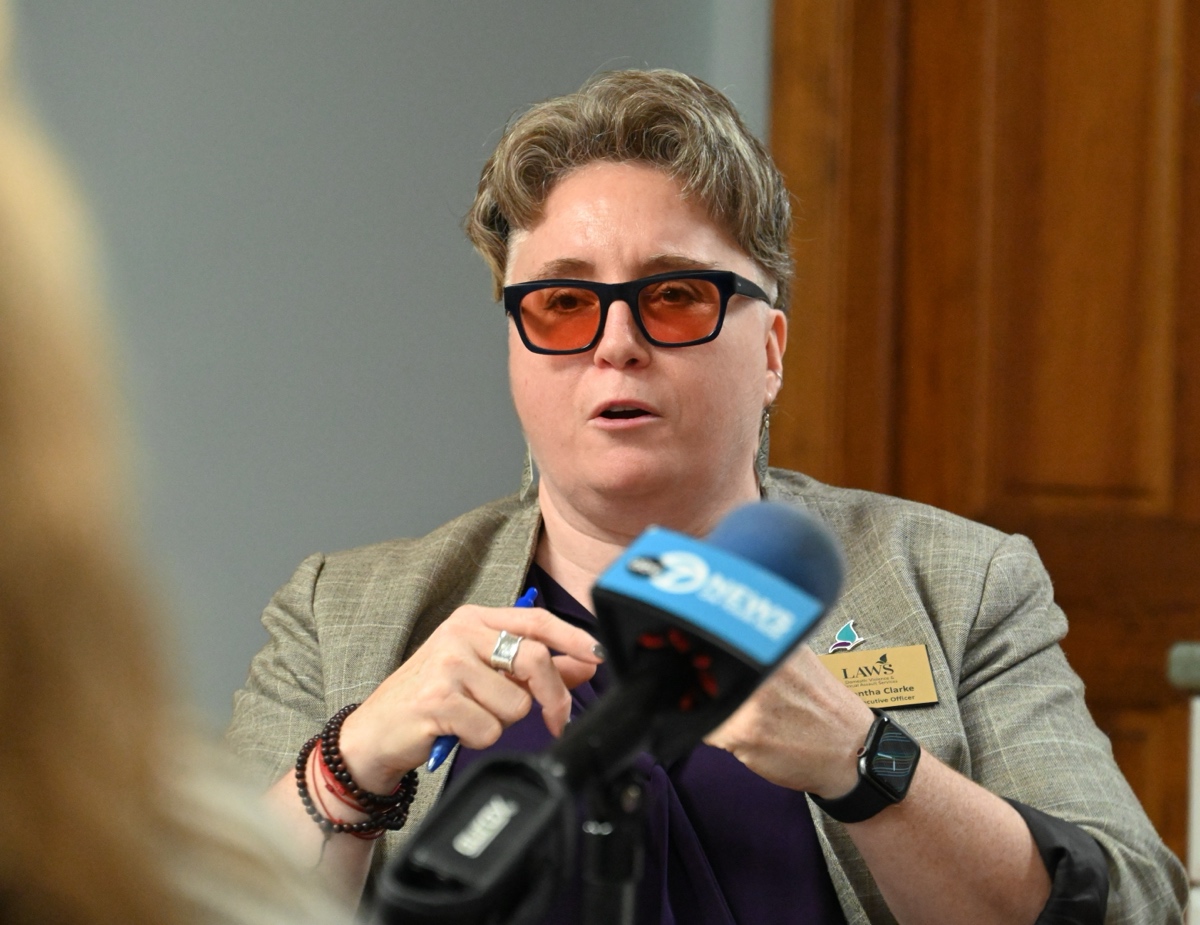
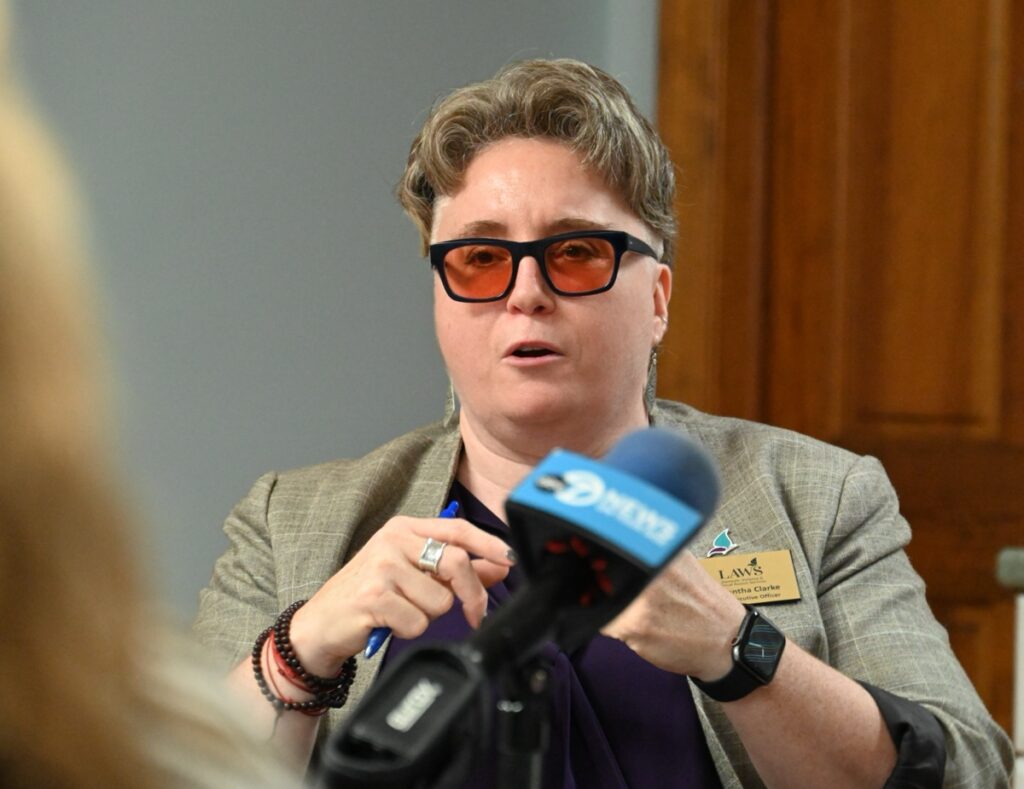
For Samantha Clarke, CEO of LAWS Domestic Violence and Sexual Assault Services, that philosophy is reshaping how Loudoun County responds to survivors of domestic violence and sexual assault.
For decades, emergency shelters were intentionally hidden from public view, designed to protect survivors by removing them from the people and places that threatened them.
While that approach provided safety, it often came with another kind of loss.
Families left behind their neighborhoods, children’s schools, jobs, friends and support systems at the very moment they needed them most.
The next chapter for LAWS is built on a different idea.
Rather than asking survivors to disappear from their communities, the organization’s new $11.6 million shelter will allow them to remain connected to the people, places and resources that can help them rebuild their lives.
It is a vision years in the making—one that drew U.S. Senator Tim Kaine to the nonprofit’s Leesburg offices July 6 for a conversation that quickly became less about a building and more about the people it will serve.
Kaine visited LAWS to celebrate $1 million in congressionally directed spending he secured with former Congresswoman Jennifer Wexton. The federal earmark was used to purchase the property where the new shelter will be built, allowing other funding sources to be dedicated to construction. Groundbreaking is expected this fall.
But after a brief overview of the project, the discussion turned away from funding and construction schedules.
For over an hour, Kaine listened as counselors, attorneys, advocates, board members and staff described the realities facing survivors long after they escape abuse.
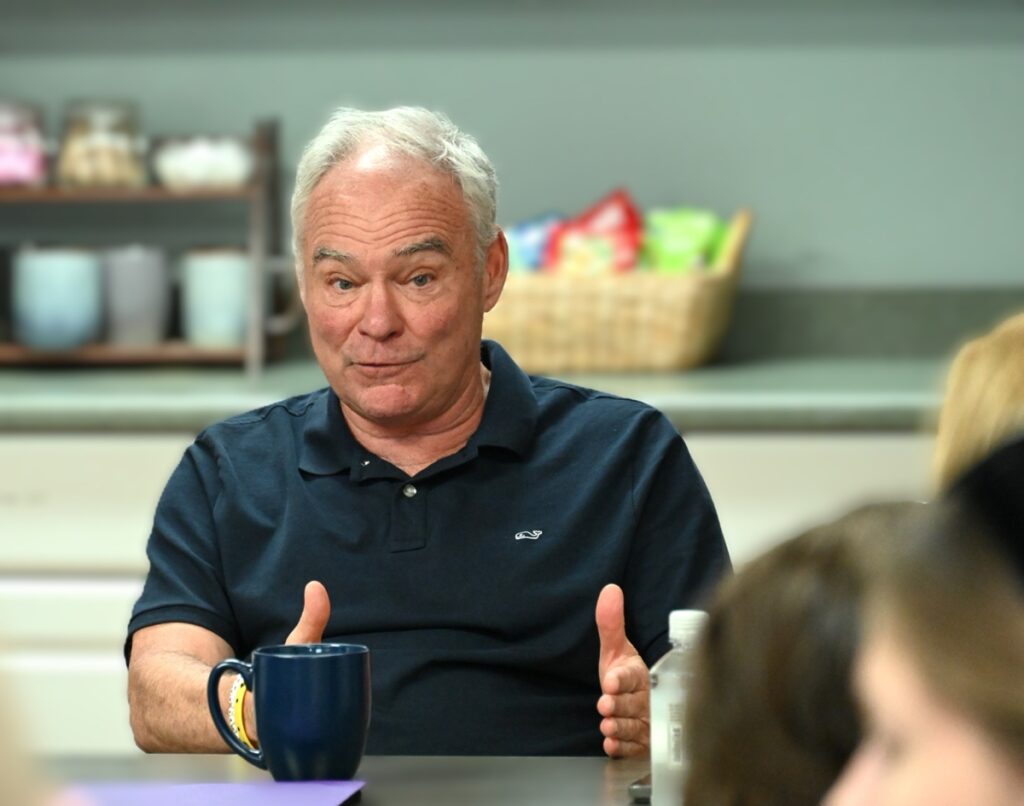
The conversation centered on affordable housing, trauma recovery, financial independence, child care, transportation and the difficult choices survivors make every day as they try to build a new life.
“I wanted to come and hear about this particular project,” Kaine said. “But more generally, talk about trends in domestic violence or sexual assault, and what we could do at the federal level to be more helpful.”
For Clarke, the new shelter represents more than additional beds.
She said the project will help survivors stay rooted in their community while encouraging the community itself to be part of the solution.
That shift reflects years of listening to survivors.
Instead of constructing another traditional shelter hidden away from public life, LAWS intentionally designed the facility to blend into the surrounding neighborhood—what Clarke described as being “hidden in plain sight.”
The goal is to protect survivors without isolating them.
“It will reduce, if not remove, the shame and stigma around domestic and sexual violence,” Clarke said. “It says to the community we all have a shared responsibility.”
The building itself was designed around that philosophy.
Thefirst floor will serve as a community resource center, bringing together LAWS staff and partner organizations to provide employment assistance, housing support, counseling and other services.
“We said, ‘How can we bring the community in with us?’” Clarke said.
The second floor will house the emergency shelter, providing a safe place for survivors and their families during times of crisis.
Clarke said the vision is to create both individual privacy and a sense of community.
The third-floor addresses what advocates say is often the greatest challenge survivors face after escaping abuse.
Where do they go next?
The third floor will feature 11 transitional housing apartments, allowing survivors to remain for up to two years while rebuilding financial stability, securing employment and preparing for permanent housing.
“These are high-barrier survivors who are navigating how their lives have been perhaps dismantled or unsettled after trauma,” Clarke said. “Now they have a safe and stable place to be while they rebuild.”
The shelter also addresses another obstacle that often keeps survivors from leaving abusive relationships.
Families will be able to bring their pets.
For many survivors, Clarke explained, the fear of leaving beloved animals behind with an abusive partner becomes one more reason to stay.
The facility has also been designed to reflect the changing needs of the families LAWS serves.
“The old narrative of it’s a single woman fleeing for her life is really not what we see that much anymore,” Clarke said.
Today, the organization regularly assists multigenerational families, fathers with children, grandparents raising grandchildren and households from every cultural and economic background.
Flexible apartment layouts will allow those families to stay together while preserving the privacy and dignity every survivor deserves.
Listening to Clarke describe the project, Kaine reflected on how much domestic violence services have evolved since his years as mayor of Richmond and later governor of Virginia.
Years ago, he said, shelters were intentionally isolated to protect survivors from those who had harmed them.
“I can see why there has been a shift in the philosophy about the best way to provide service,” Kaine said. “I wouldn’t have really been able to articulate that without coming today.”
As the conversation continued, another question emerged.
What happens after a survivor reaches safety?
“What about affordable housing?” Kaine asked. “What about mental health? How do you restart a life when your rug has been completely pulled out from under the life that you thought you had?”
Around the room, heads nodded.
For the people who do this work every day, those questions are often far more difficult to answer than helping someone escape violence.
The new shelter represents a significant investment in that future.
Construction is expected to begin this fall on the $11.6 million shelter project, which has been funded through a combination of federal, local, foundation and private support.
Clarke said the $1 million federal earmark secured by Kaine and Wexton was strategically used to purchase the property, allowing additional funding to be directed toward construction and the services that will ultimately fill the building.
For Kaine, the project demonstrated what can happen when local organizations with a proven record earn the confidence of lawmakers and appropriators.
“The fact that you got it,” he told the group, “means that you not only impressed us, but you impressed appropriators, both with the mission, but also with your track record and what you intend to do with these funds.”
But throughout the morning, the discussion repeatedly returned to one reality. A shelter alone cannot solve domestic violence.
Survivors often arrive carrying far more than the trauma of abuse. Many have no financial independence. Some have been isolated from family and friends for years.
Others have children, aging parents or beloved pets they fear leaving behind. Many simply cannot afford to start over.
Nitza Medina Peralta, LAWS’ Community Services Manager, said affordable housing has become one of the greatest barriers facing survivors.
“The biggest barriers to people being able to leave their abusive relationships is being able to afford living independently,” she said.
Rent, child care, transportation, groceries and health care quickly become overwhelming expenses for someone rebuilding a life from scratch.
“There are so many different pieces that folks have to consider when they’re leaving,” Nitza Medina Peralta said.
Kaine said those challenges mirror what communities across Virginia are experiencing.
“Housing affordability is one of the … it’s a crisis,” he said.
Later, reflecting on why housing means so much to survivors, he offered an observation that resonated throughout the room.
“The dignity place—that’s like the one physical thing anybody has that’s more than just a physical thing. It’s really kind of part of your identity.”
Christopher Walker, LAWS’ protective order attorney, described another painful reality.
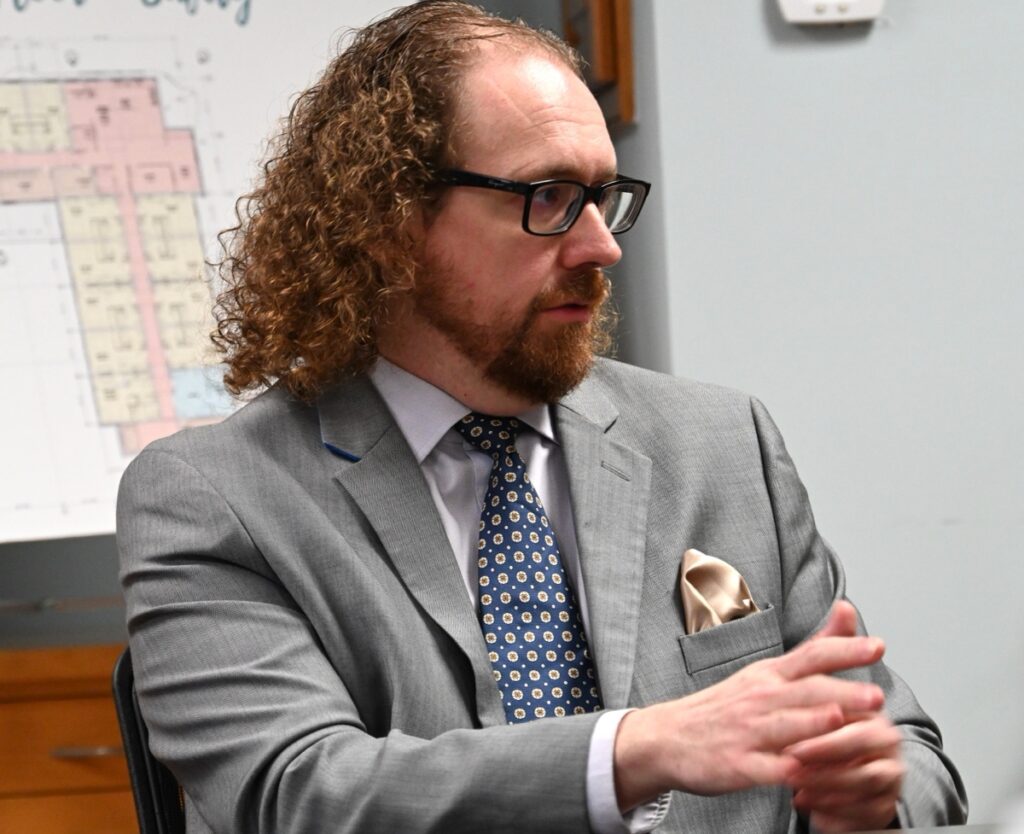
Some survivors begin the legal process, seek protective orders and prepare to leave.
Then they stop. Not because the danger has passed. Because the economics of leaving prove impossible.
“I’ve had cases that I’ve offered representation to,” Walker said, “and I’ve gone to court with the person, and then they say, ‘I can’t go through with this. I can’t afford it.’”
For many survivors, Walker explained, fear of homelessness can become as powerful as fear of the abuse itself.
The discussion also touched on concerns that some immigrant survivors may be reluctant to seek help because they fear interactions with government agencies.
Kaine acknowledged those concerns, saying, “Folks believe that any interaction with officials could trigger some kind of an immigration action against them.”
For organizations like LAWS, Clarke said those realities reinforce the need to meet survivors where they are—with legal advocacy, counseling, housing assistance and community partnerships working together rather than in isolation.
She noted that while government grants often support emergency shelter and crisis services, long-term trauma recovery frequently depends on private philanthropy.
Healing, she said, takes time.
“The field and the funding haven’t caught up to the value of trauma mental health.”
That message was echoed in one of the day’s most personal moments.
A member of the LAWS Board of Directors, herself a survivor of domestic violence, quietly shared her own story.
For nearly 15 years, she said, she convinced herself not to leave.
She had been out of the workforce for years. She didn’t know how she would support herself. She questioned whether she could make it on her own.
“I’ve talked myself out of leaving for almost 15 years,” she said.
Eventually, she found the courage to leave.
Today, instead of running from her past, she helps guide an organization dedicated to helping others find the same path forward.
Her story was a reminder that the decision to leave is rarely made in a single moment.
It is often the culmination of years of fear, uncertainty, financial hardship and emotional trauma.
Another member of the LAWS team had shared a different story.
A woman arrived at the organization’s offices seeking help but was so overwhelmed she could not bring herself to walk through the front door.
Staff members set aside everything else and remained with her for nearly two hours, simply listening until she felt safe enough to take the next step.
The experience, they said, underscored a truth many people never see.
Domestic violence exists in every community.
“It is a wonderful place to live,” one staff member said of Loudoun County. “But it’s not a wonderful place to live for everyone.”
As the visit came to a close, Kaine reflected on everything he had heard.
“I wanted to come and hear about this particular project,” he said. “But more generally, talk about trends in domestic violence or sexual assault, and what we could do at the federal level to be more helpful.”
For Clarke, the answer is already taking shape. The new shelter will provide safety. But more importantly, it will offer something every survivor deserves—the opportunity to rebuild a life without losing the community they call home.
It is, she believes, a future where survivors are no longer asked to disappear in order to be safe—but are instead surrounded by a community willing to help them heal.
Continue reading in this news section
Comments
Any name-calling and profanity will be taken off. The webmaster reserves the right to remove any offensive posts.
e-edition