

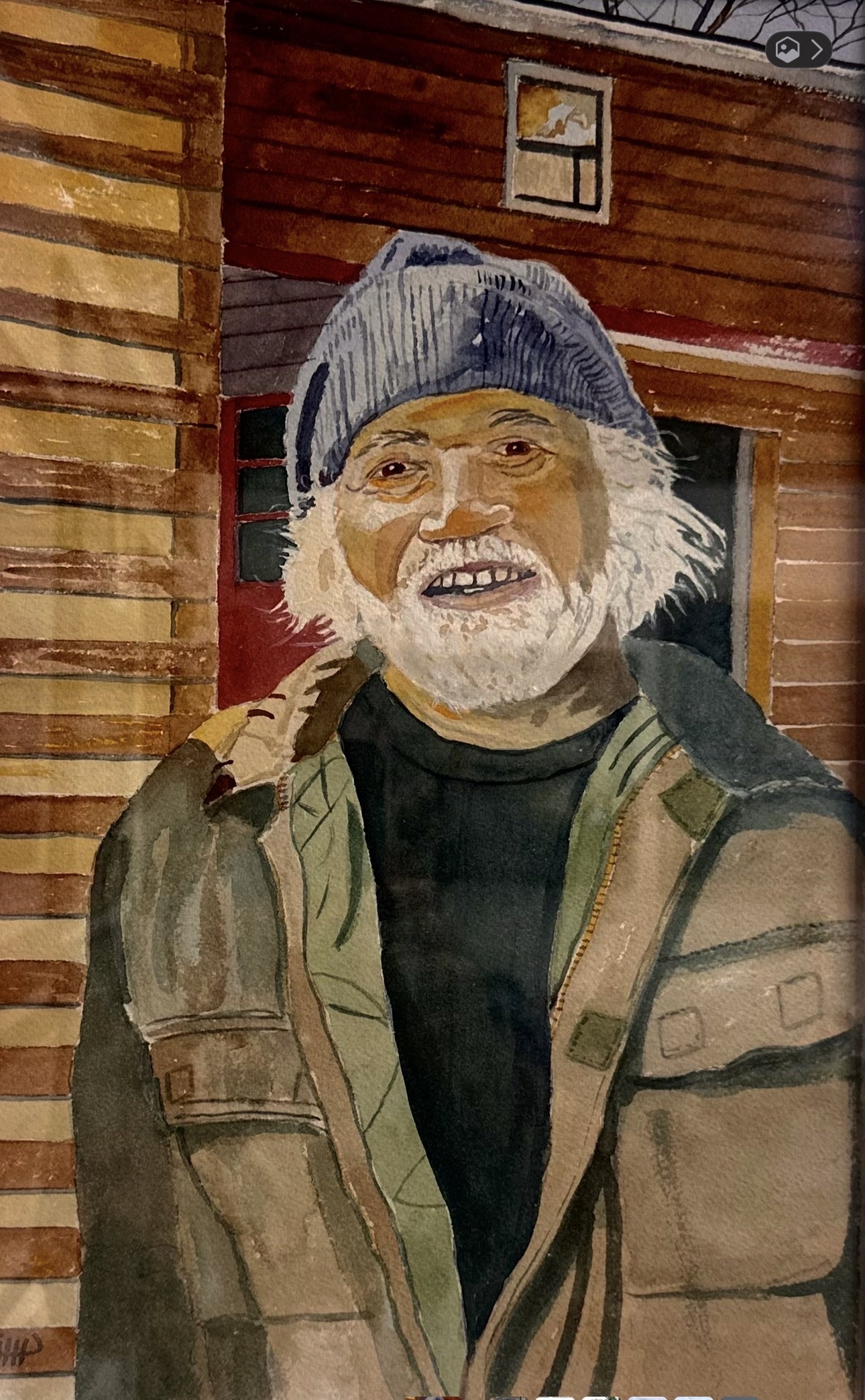
Louis Jett—More Than A Footnote In Local History
By Chip Beck, EdD
Not every historian works in an ivory tower on an Ivy League campus. A rare one might work out of a cabin on the side of a wooded mountain.
Not every biographer chronicles the lives of famous celebrities already known to many. Some focus on the stories of persons who were forgotten or ignored.
Not every researcher delves into the National Archives or libraries of major universities to uncover injustices in foreign lands. One historian, born and raised in Western Loudoun County, poured through the back pages and obituaries of local newspapers, community newsletters, family correspondences, and church announcements for decades to uncover and document the struggles and personal victories of residents who were largely denied publicity in their time of being.
The community treasure I have in mind was Louis Albert Jett (76), who passed away on July 17. Perishing with him was a lifetime of knowledge and local folklore that cannot be resurrected. Even with the advent of the Internet and Wikipedia, knowing what to look for, where to seek the data, and which people to ask about, are pieces of a demographic puzzle that was unique to the mind, experiences, and background of Louis Jett.
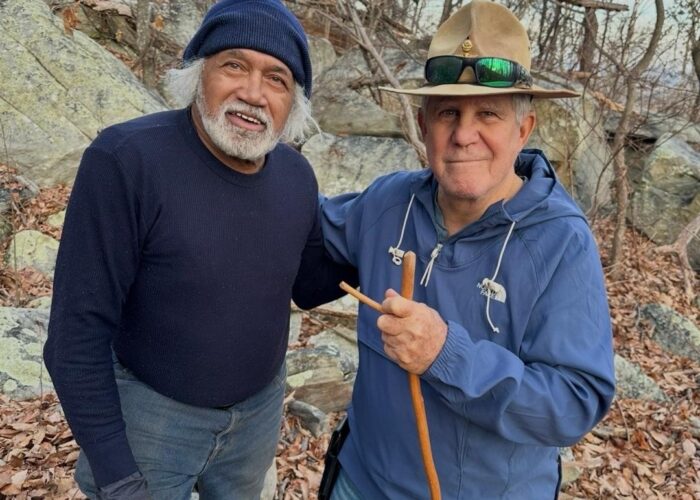 Louis Jett and Chip Beck on the hunt for the Wolf's Den.
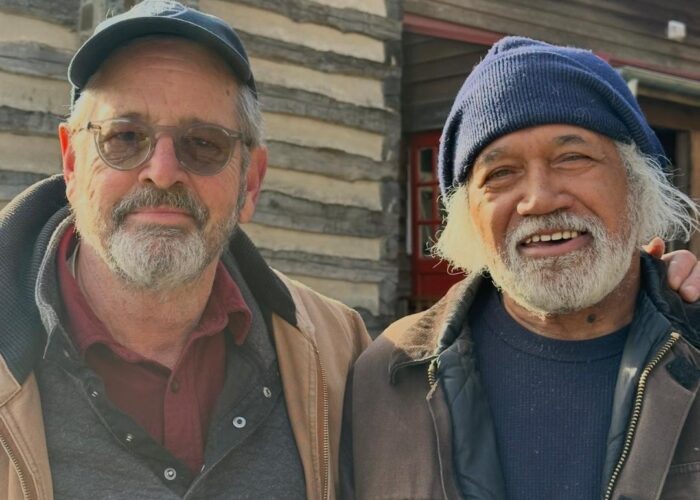
Louis was born in the Loudoun County Black community of Willard on February 25, 1950. He played and attended school there until the entire community was razed to the ground by the Right of Eminent Domain in 1958-1962 so Dulles International Airport could be built in its place. As one former resident later told Louis, “I doubt that would have happened if it had been a white community living there.”
Thus it happened at about age 11, Louis and his family relocated to the outskirts of Hillsboro, itself a predominantly white enclave founded as “The Gap” in 1752. From those colonial beginnings to modern times, the Mill Town’s African American employees, hired hands, or area farmers were scattered on secluded hillside cabins, existing as clusters of Black families north and south of Hillsboro on the east side of Short Hill Mountain.
It was mostly on that mountain, uphill from a gravel lane called Ashbury Church Road, that Louis lived modestly but proudly for the rest of his life. For the most part he toiled as an independent handyman who repaired broken things or cleaned up the trash, debris, and occasional treasures from area farms and properties. That hard labor was essentially his day job, but in his free time, Louis became a champion of his people’s stories and memories.
Louis was especially passionate when it came to chronicling the obliterated Black community of Willard, where his life began even as his birthplace faced its demise. At the end of his life, Louis still lobbied for reparations or recognition for the families that were undercompensated and unceremoniously displaced from the historic 19th Century farming village and crossroads so a patchwork of long jet runways and multiple passenger terminals could relieve Washington’s old National Airport of its increasing noise and airway congestion.
To acquire the village and its land, which boasted a Baptist Church, the Willard Colored School, a general store, 300 structures to include homes, and a post office, the Federal Government simply “condemned” the properties writ large and paid residents $500 an acre to pack up and move along. Today, those acres would sell in eastern Loudoun Country for $1 million an acre, maybe even $5 million dollars for a Data Center.
As he grew older and became conscious of social disparities, Louis adopted his research habits and cataloging technique of collecting local stories about Black History, families, and events from his grandmother, Elizabeth Lucas Jett, who meticulously snipped articles from daily newspapers and community newsletters, and then pasted them in chronological order in binders and notebooks.
In a way, his grandmother constituted a data bridge back to earlier generations of descendants of freed slaves who built Willard and worked as farmers, sharecroppers, farmhands, laborers, craftsmen, or timber workers throughout the county.
When his grandmother could no longer keep up her chronicles, Louis enthusiastically kept up the tradition. Over a period of 26 years, he became an authority and de facto historian of the descendants of enslaved people and free men and women of Loudoun County.
The vast wealth of knowledge he developed about the past and living histories of Western Loudoun earned Louis a role as secretary of Loudoun’s Black History Committee. From 2006 to 2010 he supplied the Thomas Balch Library with all the materials it needed for the annual Black History Month exhibits.
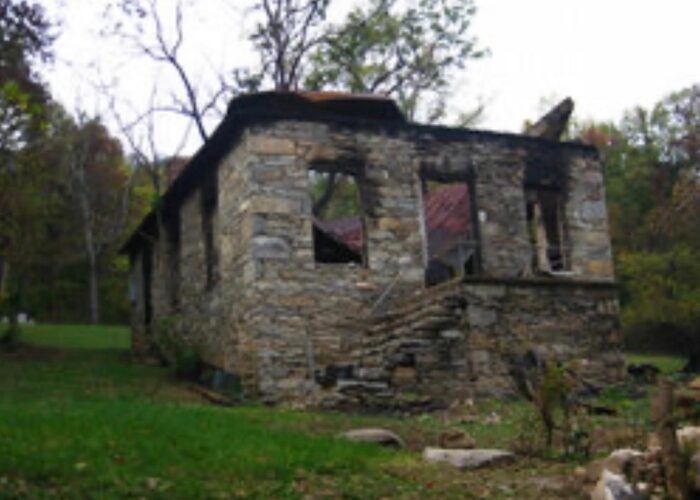
Then, in the summer of 2010, an arsonist surreptitiously set fire to the Asbury Methodist Church, a small stone chapel built in 1887 just outside the Hillsboro City Limits. The church was not far removed from the Jett homestead. Constructed by Black craftsmen for their segregated-community use in the 19th Century, Louis helped maintain the chapel as a volunteer handyman and convenient caretaker.
The church was also where Louis temporarily had stored all one hundred of his treasured five-inch binders, bulging with decades of research he and his grandmother had collected, organized, and maintained.
Every one of the binders were destroyed in the fire. The historical details they contained went up in smoke. There were no backup copies or files.
Whether the arsonist set the fire as a racial statement against the presence of a Black church or as a hateful act to obliterate a unique and irreplaceable archive of Western Loudoun’s Black history is not known. The arsonist was never caught so the motives remain suspicious, but unproven.
In the years following the devastating loss of his lifetime data collection, Louis and members of the Black History Committee continued to search for, and protect, Loudoun’s dwindling repositories of memorabilia and recollections. Good finds were scarce. Much of what turned up was illegible, brittle, faded, moldy, or waterlogged. None of it matched the details existing in the destroyed Jett family notebooks.
Over the past three years, this writer and fellow former member of the Hillsboro Preservation Foundation, Matt Danielson, have begun modest efforts to update and expand the 1976 Memories of a Mill Town, a history of The Gap (Hillsboro) published during the U.S. Bicentennial.
While the document contains a wealth of data on the town’s commercial frontier origins, its founding and notable residents, and events spanning 200 years, one of the account’s shortcomings was that it read more like a genealogical account from Genesis rather than an engaging narrative of a little town with more than its fair share of excitement, intrigue, and colorful characters.
Among the deficiencies in the historical pamphlet was the omission of significant references to Indigenous or African American communities or personages who played their own roles in the history of Western Loudoun, the frontier town called The Gap, the Civil War, and the post-enslavement period. Louis Jett had agreed, informally, to provide us input or contacts from friends and relatives who he hoped might still be able to provide unique remembrances of the Black-and-white interactions in Hillsboro’s past.
Toward this end, one crisp day in December 2023, when dense vegetation no longer obscured the overgrown walls, foundations, and ruins scattered along the old colonial wagon road that stretched from Hillsboro to the Potomac River on the east side of Short Hill Mountain, Louis Jett, Matt Danielson, and I set out on foot from Hill Tom’s Cabin in search of the stone paddocks and the legendary “Wolf’s Den,”—the Civil War hideout of Colonel John Mosby, aka The Gray Ghost.
We found the Wolf’s den, consisting of giant boulders that long ago tumbled down from higher on the mountain, plus an incredible number of waist or chest-high stone walls climbing up, as well as across, the face of Short Hill Mountain for more than a mile. The sheer weight of those immense rocks forming the walls boggled our minds as to who, and how many people it took to pile thousands of those large stones one-on-top of another, using only pre-Civil War or even Colonial-era tools and manpower.
It was obvious to Louis, Matt and me, as the self-taught historians we all were, that the old wagon road—virtually impassable today—once served communities of Black and white sharecroppers or subsistence farmers back when the region was still considered a frontier.
It was an area where Louis roamed and played with his cousins and friends when they were still kids approaching their teenage years in the middle of the 20th Century. Matt and I could see the joy in Louis’ face when he dug up those experiences like gold nuggets from the depths of his personal memory.
So I ask myself, from an historical perspective, did the stories uncovered by Louis Jett over a lifetime die with him? Or is he now visiting with his ancestors and family friends who are regaling him with other stories and details he never knew. For Louis, that would be Heaven.
Services will be held at First Mt. Olive Baptist Church, 216 Loudoun Street SW, Leesburg, for Louis Jett on 5 September 2026. Visitation: 10-11 a.m.; Funeral Service: 11-12:15 a.m.
Comments
Any name-calling and profanity will be taken off. The webmaster reserves the right to remove any offensive posts.
e-edition