


“If It Can Happen to Me, It Can Happen to Anybody”
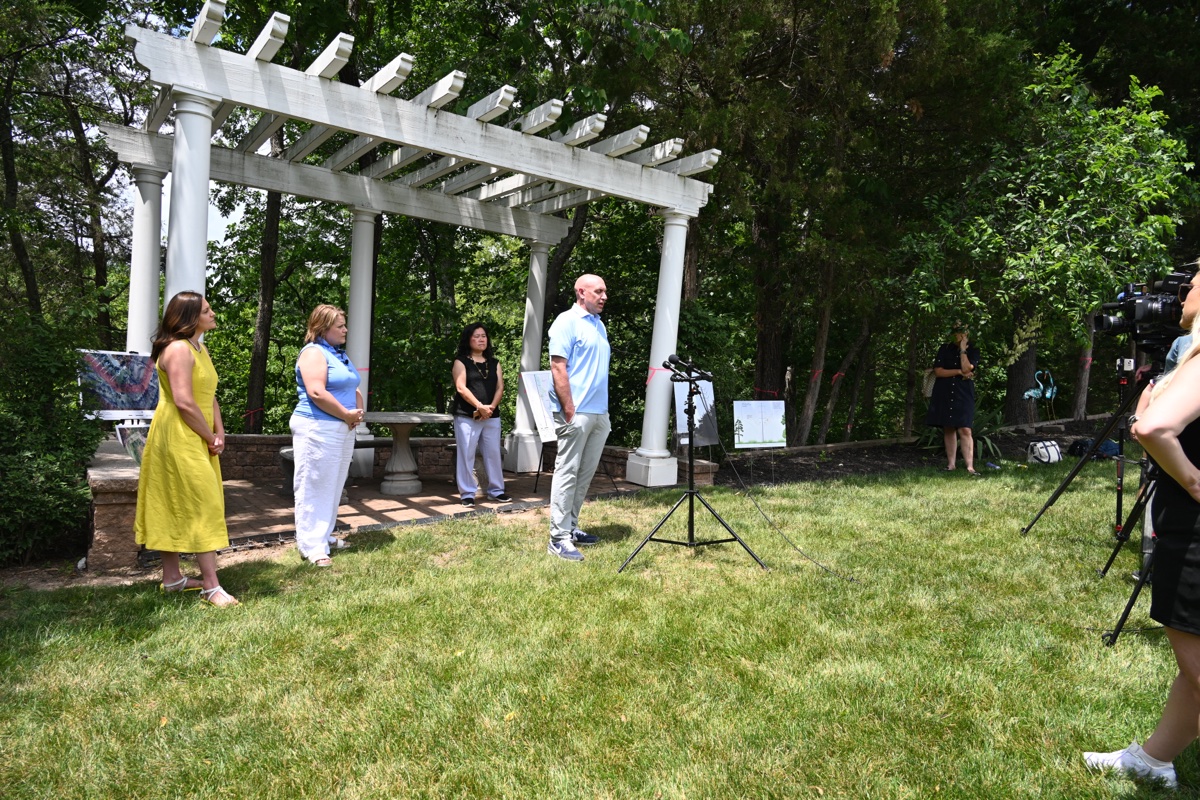
Homeowner Vicky Hu shares concerns over proposed transmission line route through Loudoun Valley Estates
By Valerie Cury
When Vicky Hu purchased her home in Loudoun Valley Estates 25 years ago, the wooded backyard was one of the reasons she chose it.
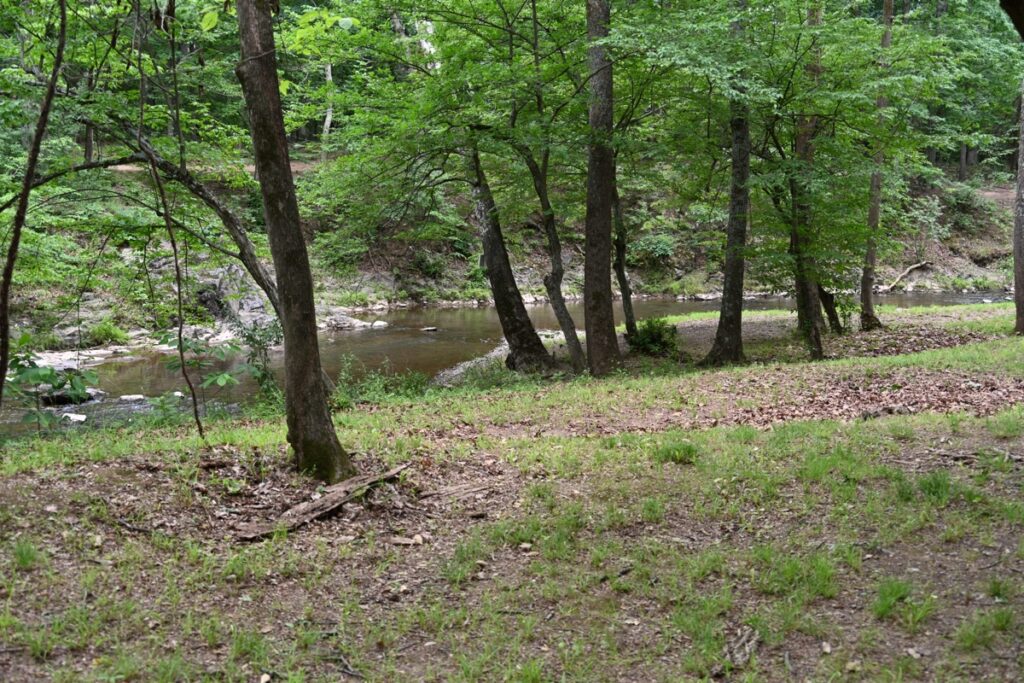
Her meticulously maintained property backs to a stream valley lined with mature trees and protected green space, creating a peaceful natural setting where she and her family raised their children and cared for elderly parents.
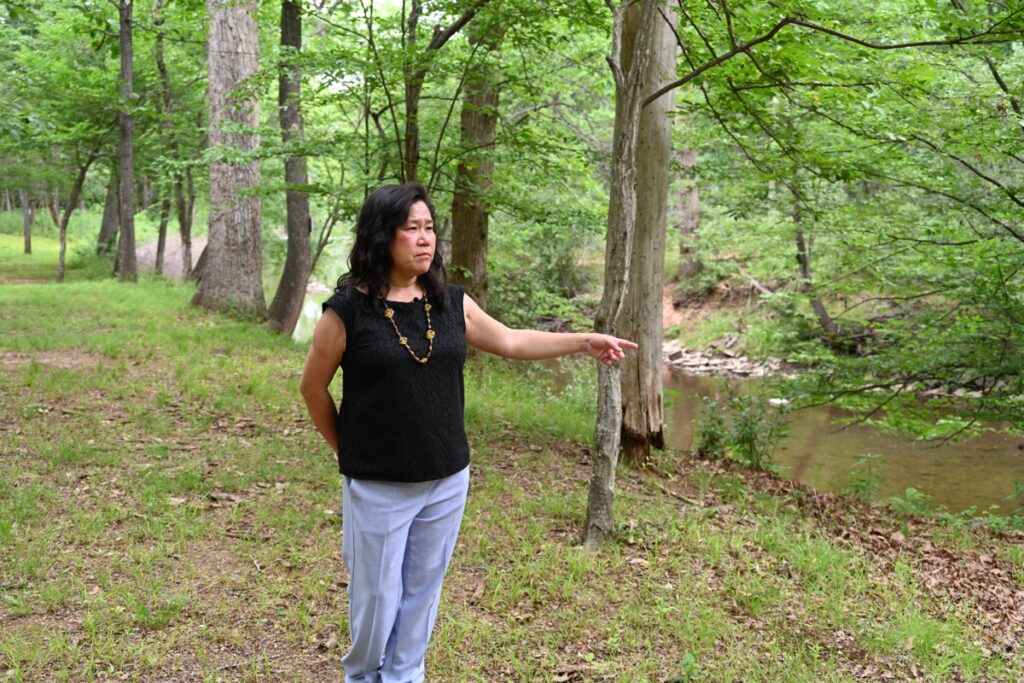
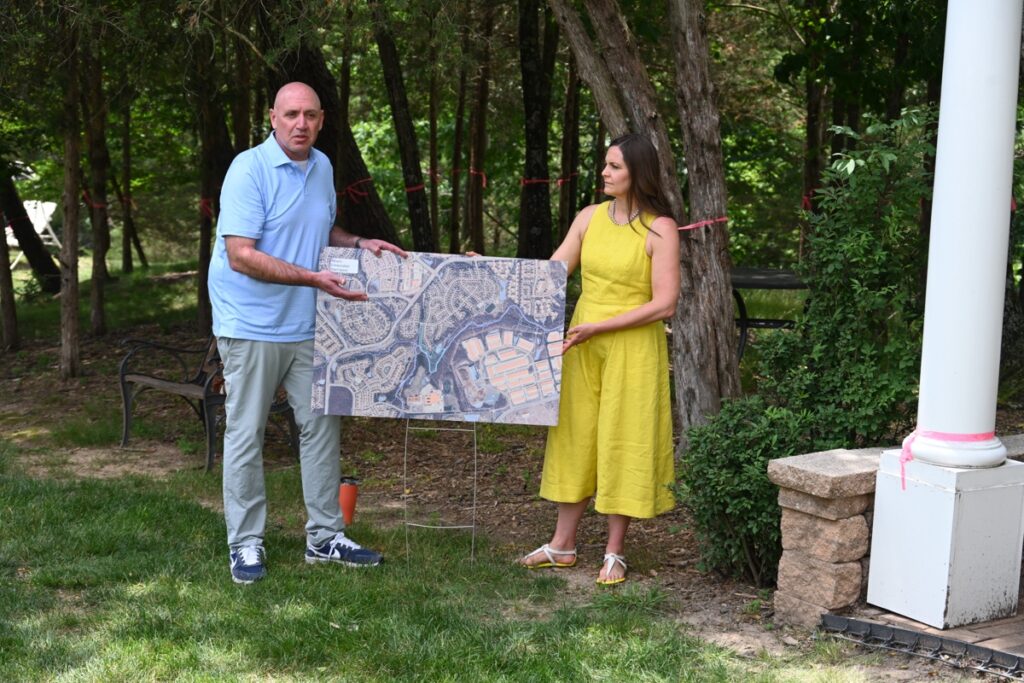
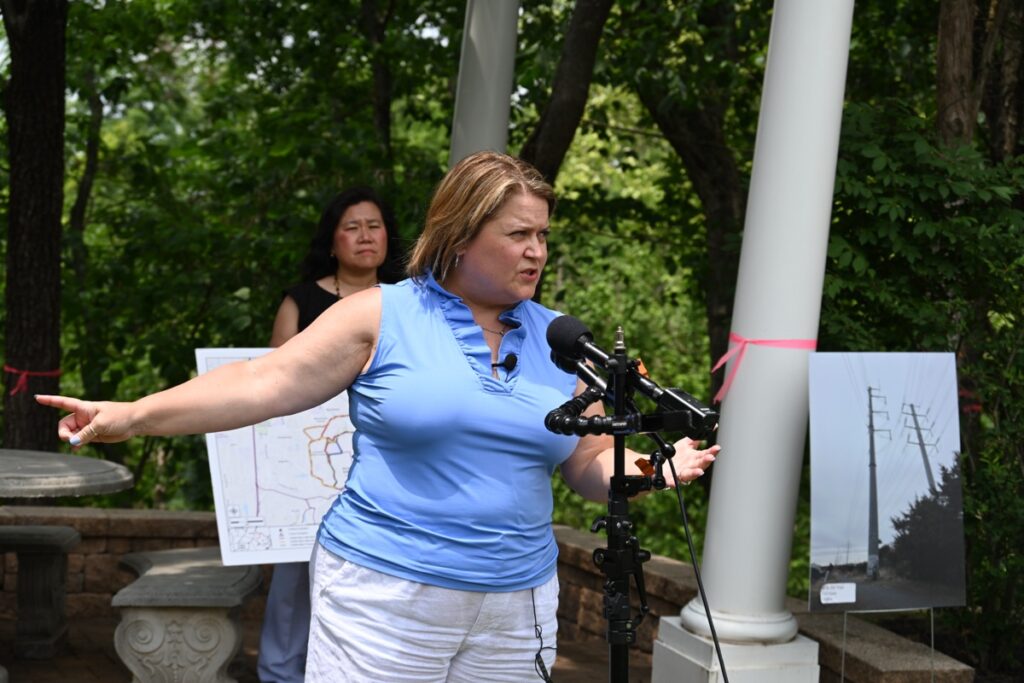
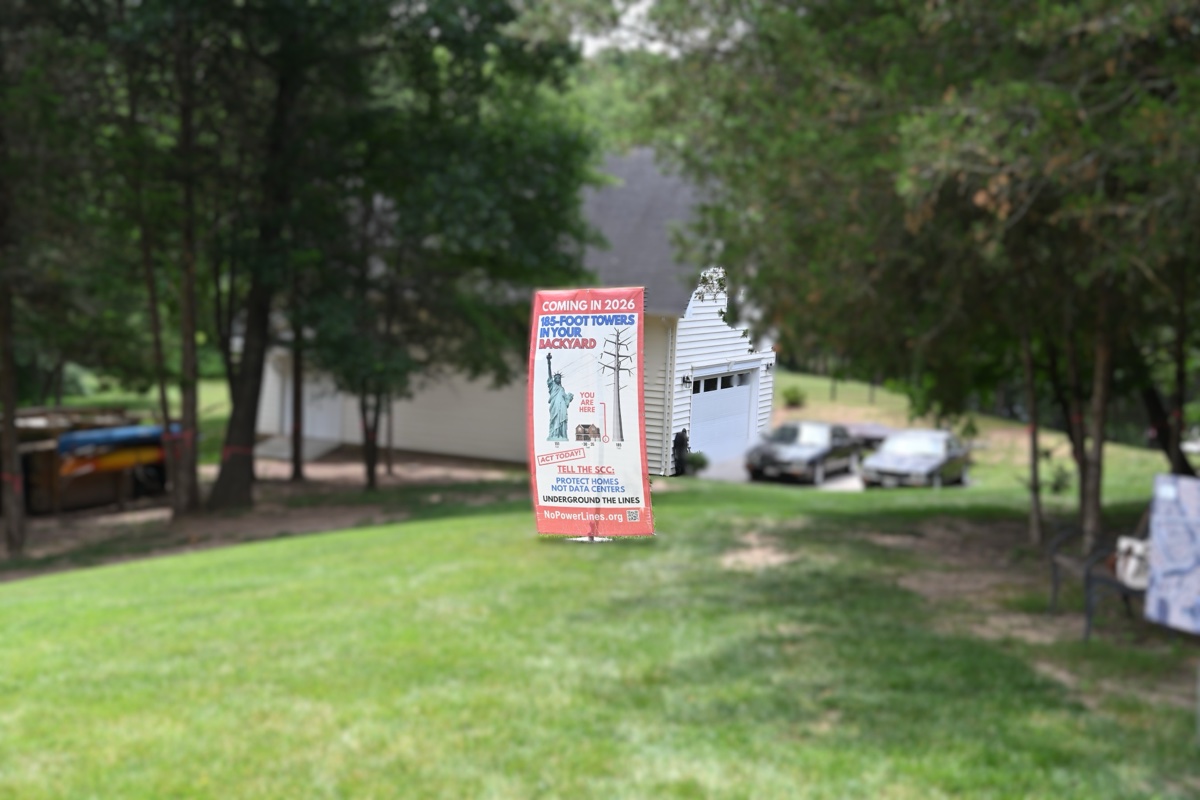
Today, that same landscape sits within the path of a proposed Dominion Energy transmission line project that could bring 185-foot transmission structures within yards of her home.
Standing in her park like backyard June 8, surrounded by community leaders, members of the media and her daughter, Hu described the phone call she received from Dominion last June informing her of the proposal.
“The reason we purchased a home here was because of the beautiful green space,” Hu said. “This is why we moved from Fairfax County to Loudoun County.”
Hu said she was devastated to learn that one of the proposed routes could place a massive transmission structure in her back yard and require the removal of trees that have defined the landscape for decades.
“When Dominion called me last year, they said they’re going to build a 185-foot pole with a 500-kV line in the middle of my backyard,” she said. “We’ve been fighting ever since.”
As she spoke, neon-colored ribbons encircled her entire patio and stretched into the surrounding trees, providing a vivid illustration of the project’s potential footprint. From that same patio, Hu has spent years enjoying views of the Broad Run Stream Valley below, a landscape she says was one of the primary reasons her family chose the property.
Behind her, the wooded corridor slopes toward Broad Run, a stream valley residents say provides wildlife habitat, environmental benefits and a natural buffer between neighborhoods and nearby development.
Hu said her concerns extend beyond aesthetics.
“It’s not just the pole,” she said. “They’re going to cut down hundreds of trees surrounding us.”
Looking out across the wooded landscape that first attracted her family to the community, Hu reflected on what the project could mean not only for her property, but for others throughout Loudoun County.
Hu’s concerns were echoed throughout the gathering as Sterling District School Board member Amy Riccardi and several community leaders outlined what they believe are the broader implications of the proposed project for schools, neighborhoods and the environment.
The event was organized by Sterling District School Board member Amy Riccardi, who has become one of the most visible public officials speaking out about the proposed routes affecting Rock Ridge High School and Rosa Lee Carter Elementary School.
Standing near the tree line separating the neighborhood from school property, Riccardi explained why she believes the issue extends beyond a single community.
“This has now come to our backyard here in Loudoun,” Riccardi said.
She noted that several proposed routes would place transmission infrastructure immediately adjacent to school property and student activity areas.
“The biggest thing for me, first and foremost, is putting really powerful transmission lines right on school property,” Riccardi said.
Riccardi described the possibility of transmission lines bordering school campuses, crossing areas used by students, and potentially impacting land surrounding both schools.
She said the issue is particularly concerning because Loudoun County schools are typically built within residential communities rather than isolated from them.
“Our campuses are built in neighborhoods,” she said. “If they’re going to do this here at Rock Ridge and Rosa Lee Carter, I can’t imagine how many more times they’re going to want to do this on other campuses.”
Riccardi also expressed concern about future precedent.
She noted that Loudoun County Public Schools already maintains policies restricting certain types of utility infrastructure on school property and questioned whether transmission lines of this scale belong near students and staff.
“I don’t want power lines on our campuses,” Riccardi said. “I’m definitely not for putting 500-kilovolt transmission lines anywhere near our students and staff and on our properties.”
The school board member said she hopes future discussions will include direct conversations between Loudoun County Public Schools, Dominion Energy and state regulators regarding alternatives that would avoid neighborhoods and school campuses.
Also speaking during the tour was Loudoun Valley Estates Homeowners Association President Victor Block, who has emerged as one of the leading community voices throughout the Golden-to-Mars proceedings.
Block stressed that the debate is not about whether power lines are needed, but whether they should be routed through established neighborhoods and near schools.
“The thing has never been that you don’t need a power line,” Block said. “The power lines are going to be there. The question is how do you run these power lines.”
According to Block, residents have consistently argued that major transmission infrastructure should be routed through existing commercial and industrial corridors whenever possible rather than through established neighborhoods and environmentally sensitive areas.
He pointed to nearby industrial corridors and transportation routes that residents believe deserve greater consideration.
Block also urged county leaders and utility planners to take a longer-term view of Loudoun’s energy needs.
“We should take a hard look at what we’re doing to make sure we’re doing it right before we start approving anything more,” he said.
While much of the discussion centered on homes and schools, environmental concerns were also a major focus of the event.
Lauren Lillestolen, spokesperson for the Coalition to Protect the Broad Run Stream Valley, described the wooded corridor behind the neighborhood as one of Eastern Loudoun’s remaining wildlife corridors and an important environmental resource.
Lillestolen has been active throughout the proceedings, advocating for the protection of the Broad Run Stream Valley and its ecological resources.
Lillestolen said residents are concerned about the removal of a large swath of mature trees that could be required for construction of the transmission line corridor.
She pointed to potential impacts on wildlife habitat, steep slopes, stream buffers and water quality throughout the Broad Run watershed.
“The Broad Run Stream Valley is one of the only remaining wildlife corridors in Eastern Loudoun,” she said.
Lillestolen noted that Broad Run ultimately feeds into the Potomac River and the Chesapeake Bay, raising concerns that increased erosion and sedimentation could have impacts extending beyond the immediate project area.
Like Block, she emphasized that residents are not opposed to electric infrastructure but believe projects should be planned in a way that minimizes impacts on existing communities and natural resources.
“We understand there will need to be power that gets to them,” she said. “We just want it put in a responsible location and done the right way for all stakeholders.”
Throughout the meeting, speakers repeatedly returned to a common theme—that the discussion is not simply about one transmission line, but about how Loudoun County balances growth, infrastructure, schools, neighborhoods and environmental stewardship in the years ahead.
For Hu, however, the issue remains deeply personal.
Surrounded by community leaders, reporters, and her daughter, Hu looked toward the trees that first drew her family to the property a quarter-century ago, and out over the stream valley beyond.
“If it can happen to me,” she said, “it can happen to anybody.”
Related Posts
Continue reading in this news section
Comments
Any name-calling and profanity will be taken off. The webmaster reserves the right to remove any offensive posts.