


Gov. Spanberger Signs Virginia’s First Agrivoltaics Law at Aldie Farm
By Valerie Cury
Solar panels and farming are not usually thought of as compatible uses of land, but Virginia officials say a new state law could help bring the two together.
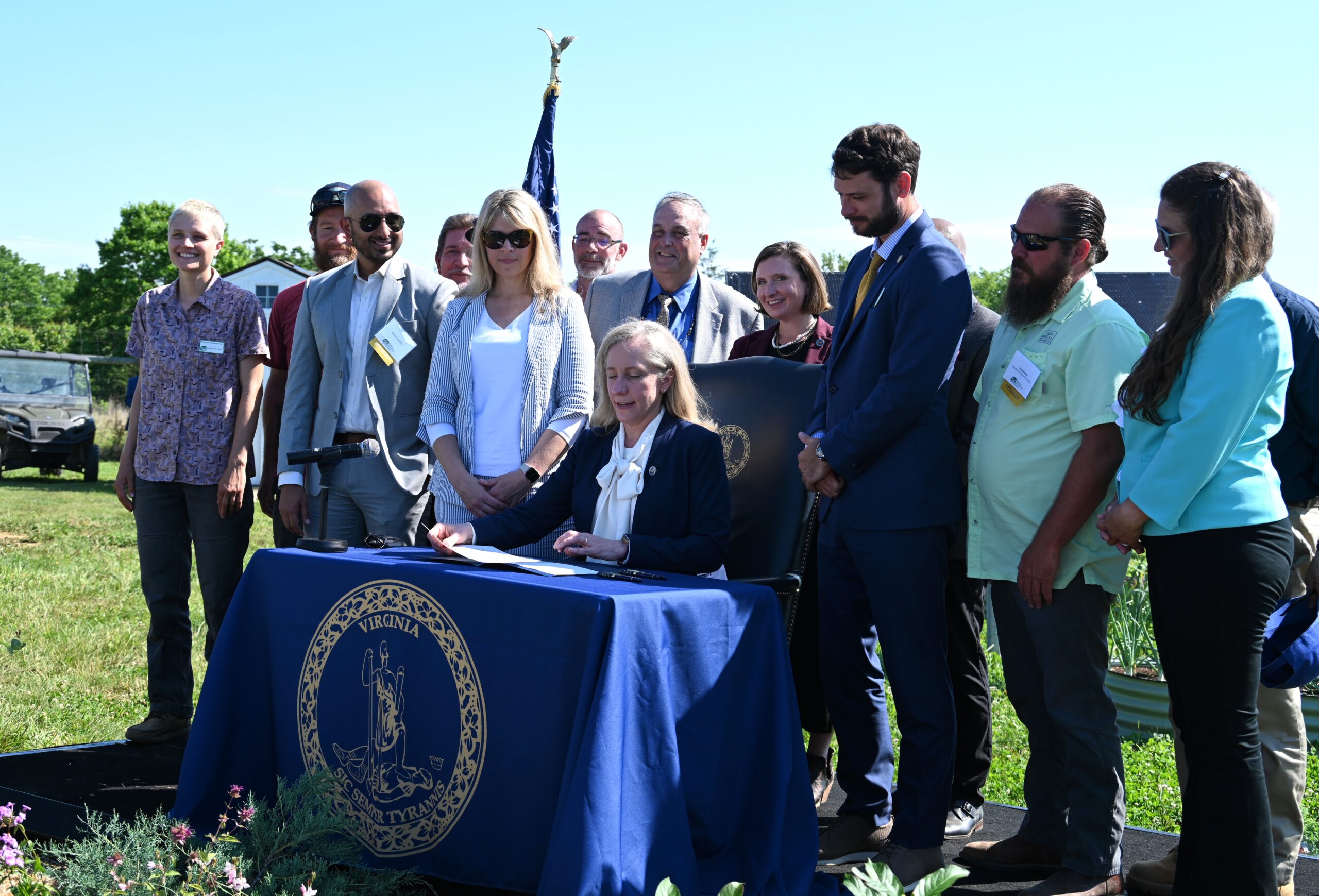
Gov. Abigail Spanberger visited The Piedmont Environmental Council’s Community Farm at Roundabout Meadows on June 17 to ceremonially sign legislation that establishes Virginia’s first official definition of “agrivoltaics”—the practice of combining agricultural production and solar energy generation on the same piece of land.
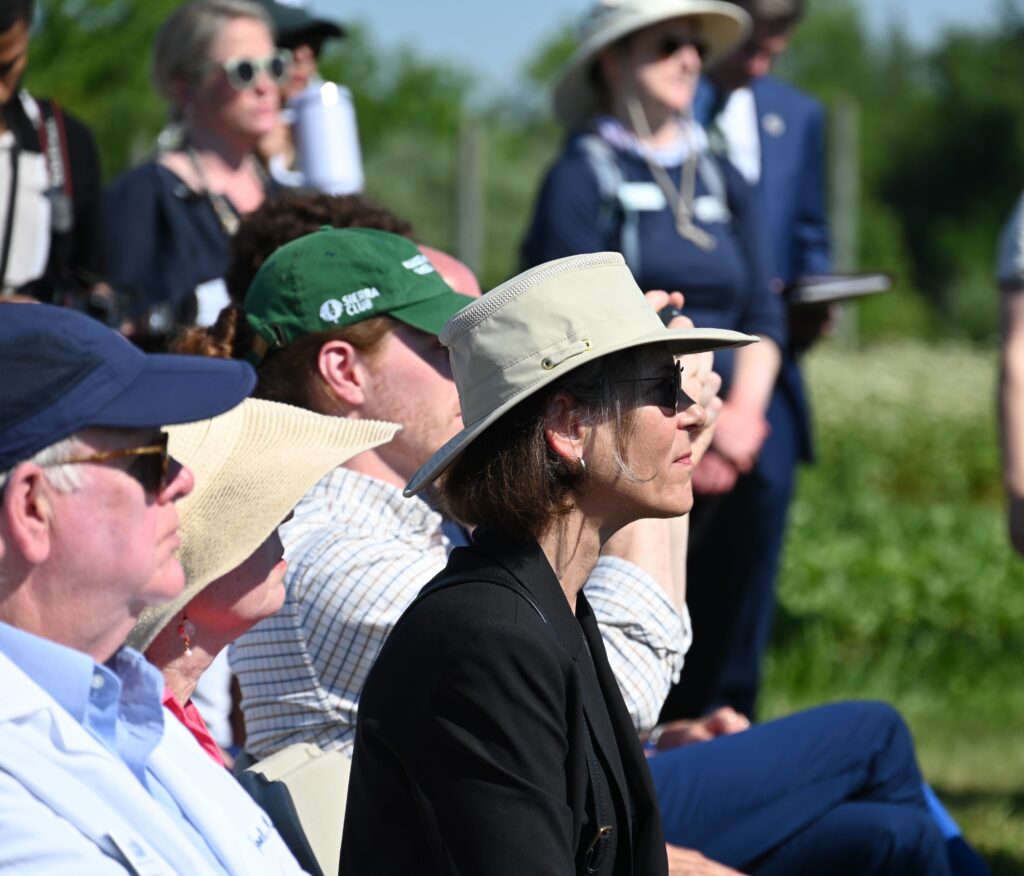
The event was held at the Aldie farm, one of Virginia’s first demonstrations of how crops can be grown beneath and around solar panels.
Unlike traditional solar projects that can remove acreage from agricultural production, agrivoltaic systems are designed to allow farming activities to continue alongside solar generation. The approach can help maximize land use efficiency by producing both food and energy from the same property.
The new law, sponsored by Sen. Russet Perry and Del. John McAuliffe, provides a framework for future policies that encourage solar development while preserving farmland.
Under the legislation, agrivoltaics is defined as solar energy development that prioritizes and sustains agricultural production, keeps land in active farm use, allows continued agricultural sales and provides flexibility for farmers over time.
The bill received bipartisan support in the General Assembly and was developed with input from The Piedmont Environmental Council and the Virginia Farm Bureau.
Agrivoltaics has gained attention nationally as states seek ways to expand renewable energy generation while preserving agricultural land. Depending on the design, solar panels can be elevated to allow crops to grow beneath them or paired with livestock grazing and other agricultural activities.
The approach can help farmers generate additional income while maintaining productive farmland.
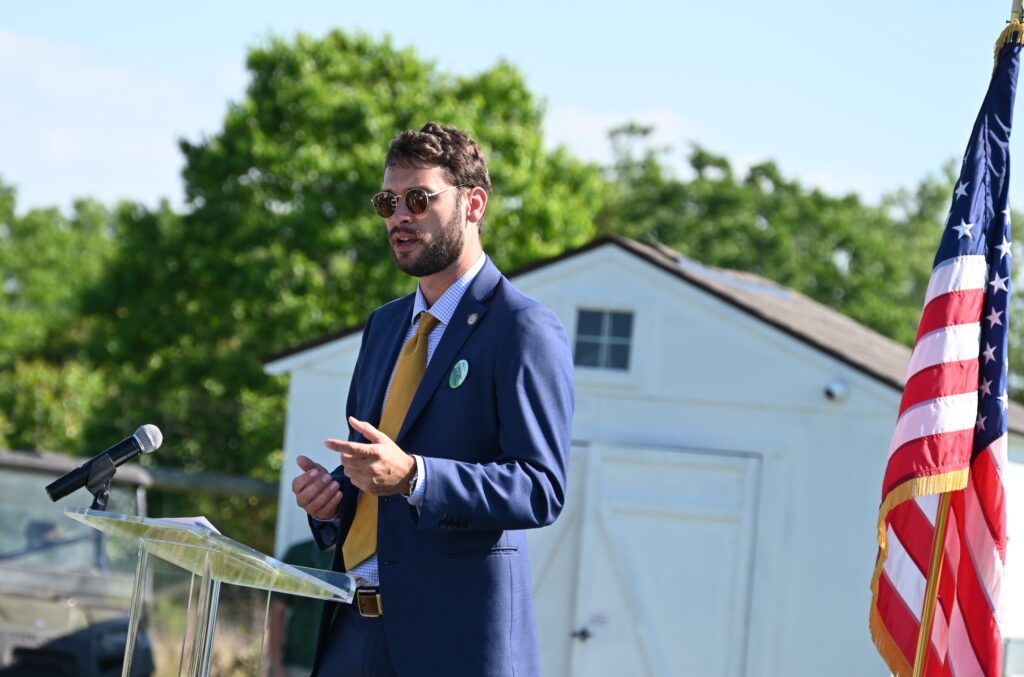
Speaking at the ceremony, McAuliffe said the legislation helps farmers continue working the land while adapting to changing economic conditions.
“Because here in House District 30, agriculture is more than just an industry, it is part of who we are,” McAuliffe said. “We don’t have to choose between agriculture and sustainable clean energy; we can have both.”
He said the legislation establishes a farmer-first definition of agrivoltaics designed to ensure solar development does not significantly displace agricultural activity and gives farmers another tool to remain productive and profitable.
Perry described the measure as a way to help preserve farmland while creating new opportunities for farmers across Virginia.
“At its core, this bill is about preserving farmland and expanding opportunity,” Perry said.
She noted that Loudoun County remains one of Virginia’s most significant agricultural regions despite continued development pressures. Perry said the county has one of the Commonwealth’s most diverse farming communities, including large numbers of new, veteran, women and minority farmers.
Perry also described the legislation as a foundational step that will allow policymakers, agricultural organizations and energy stakeholders to build future programs and incentives around a shared definition of agrivoltaics.
Spanberger said the legislation addresses both Virginia’s growing energy demands and the need to keep farmland in production.
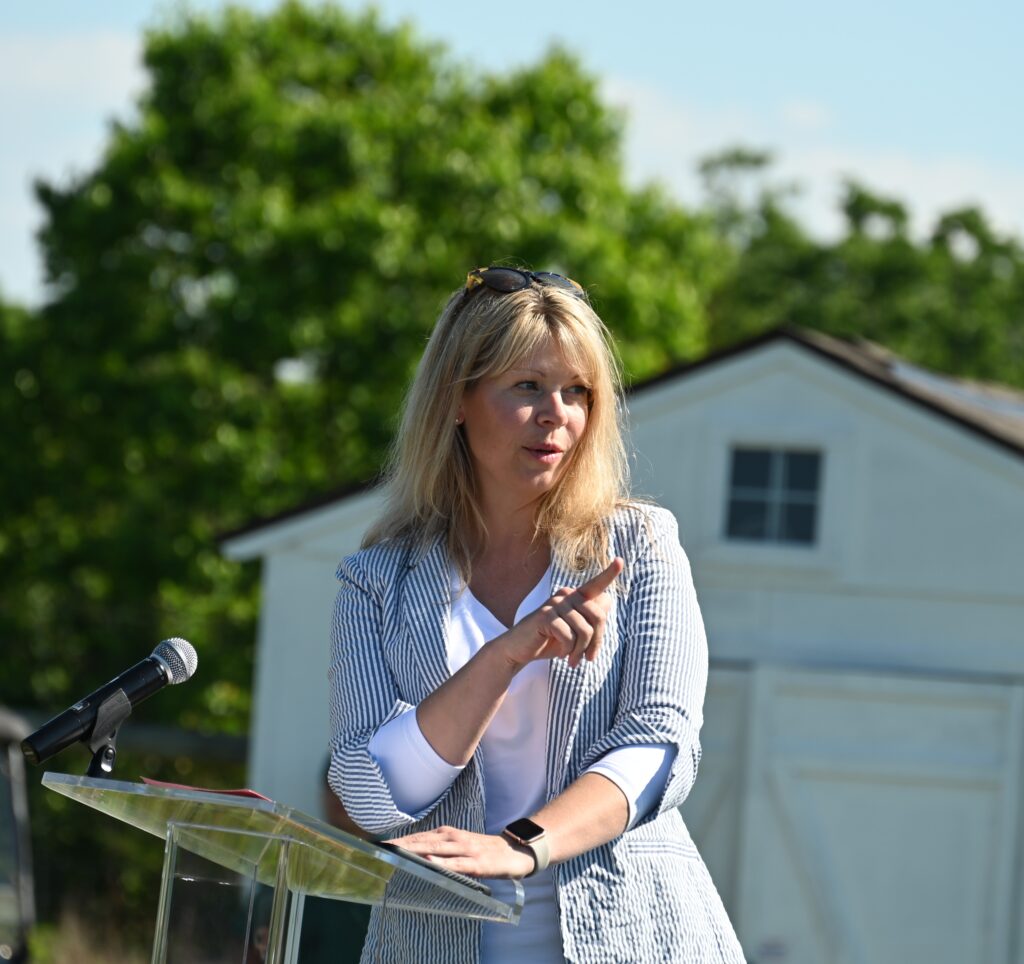
“Agrivoltaics is one of these solutions,” Spanberger said. “The idea is simple: you put solar panels on farmland in a way that keeps that land in production.”
“The farmer gets supplemental income and lower energy bills. The grid gets clean power, and nobody has to choose between feeding people and powering communities,” she added.
The governor said establishing a legal definition in Virginia code will help provide certainty for farmers, developers and policymakers while helping prevent future disputes over how agricultural land can be used in solar agreements.
Without a clear definition, Spanberger said, some farmers elsewhere have entered agreements expecting land to remain in agricultural production only to later discover that solar development plans could significantly alter how the property was used. The new law is intended to ensure agricultural production remains the priority in agrivoltaic projects.
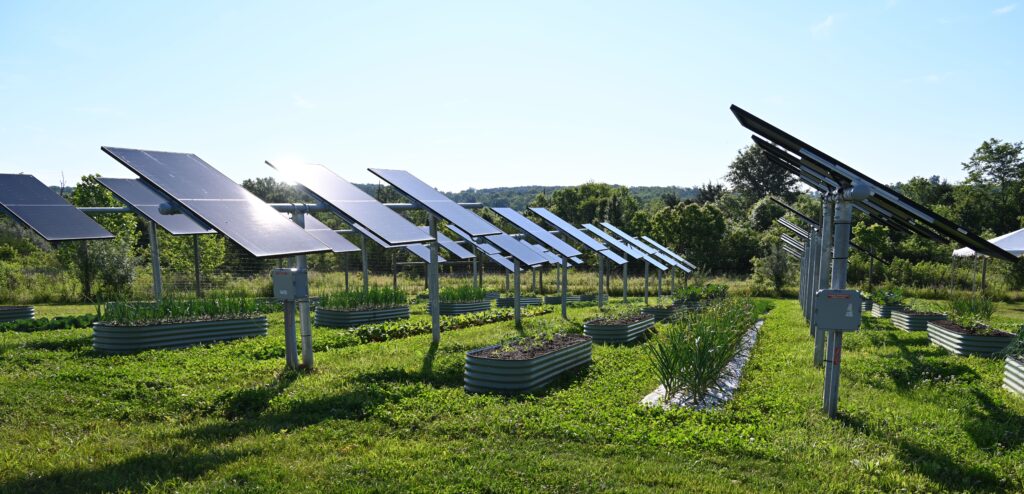
At Roundabout Meadows, rows of elevated solar panels provide partial shade for crops while generating electricity. The site also includes battery storage capable of supplying power when the electric grid is unavailable.
The Roundabout Meadows installation is considered one of Virginia’s first crop-based agrivoltaics projects. Farmers and researchers are testing different crops and growing methods beneath and around the solar arrays while monitoring factors such as soil conditions, crop yields and plant health. Information gathered at the site is being shared with farmers across the
Commonwealth as interest in agrivoltaics continues to grow.
The solar arrays also help power farm operations, while battery storage can provide electricity for critical equipment during outages. Such systems can improve farm resilience while demonstrating how renewable energy and agriculture can coexist.
Supporters describe agrivoltaics as a potential way to address two competing challenges facing Virginia—growing demand for electricity and the need to preserve agricultural land.
As data centers, population growth and business expansion continue to drive electricity demand across Northern Virginia, state and local officials are increasingly exploring ways to add new energy generation without permanently removing productive farmland from use.
Agrivoltaic projects can allow farmers to diversify income while continuing agricultural operations. Potential benefits include reduced water evaporation, crop protection during extreme heat and increased energy resilience.
The legislation itself does not create incentives or funding programs. Instead, it establishes a legal definition that may serve as the foundation for future state policies, regulations and discussions regarding solar development.
Continue reading in this news section
Comments
Any name-calling and profanity will be taken off. The webmaster reserves the right to remove any offensive posts.