


Randall calls Loudoun “historic and resilient” in State of the County address
By Sophia Clifton
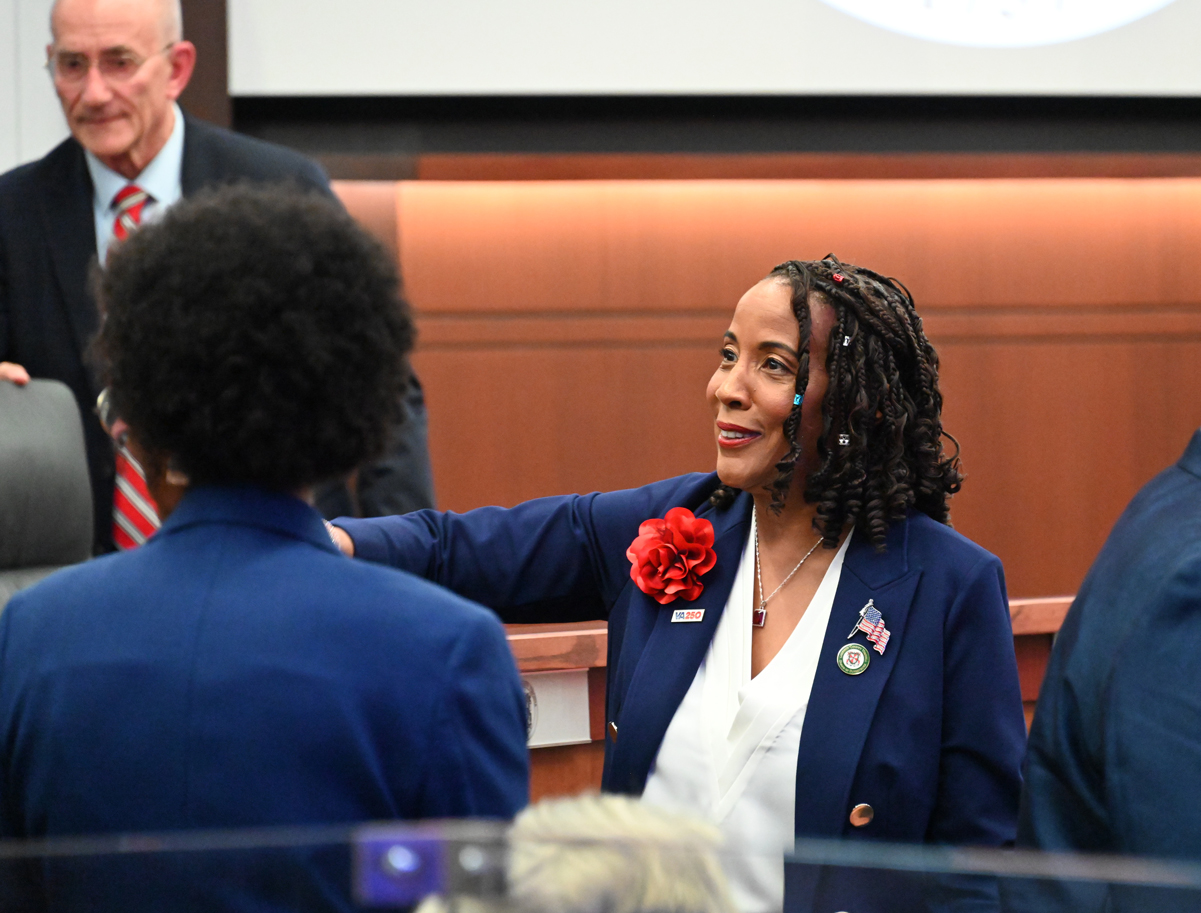
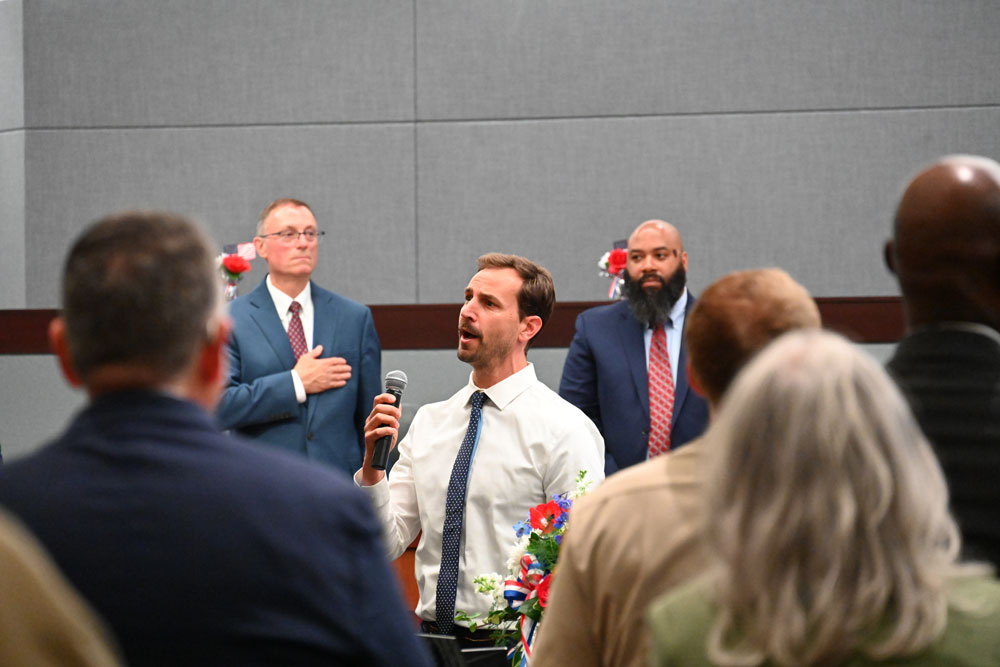
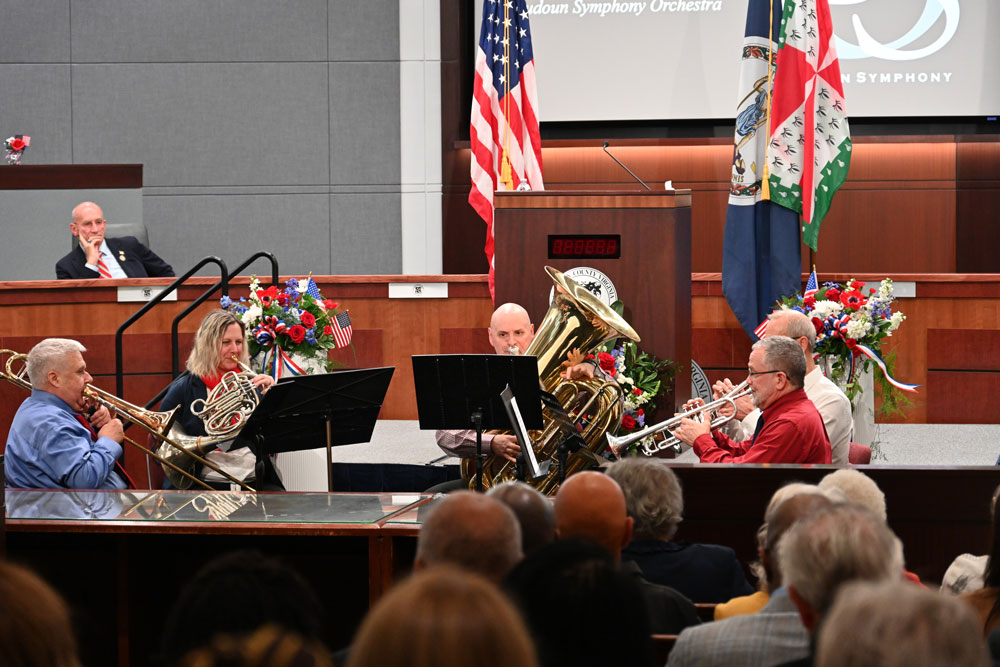
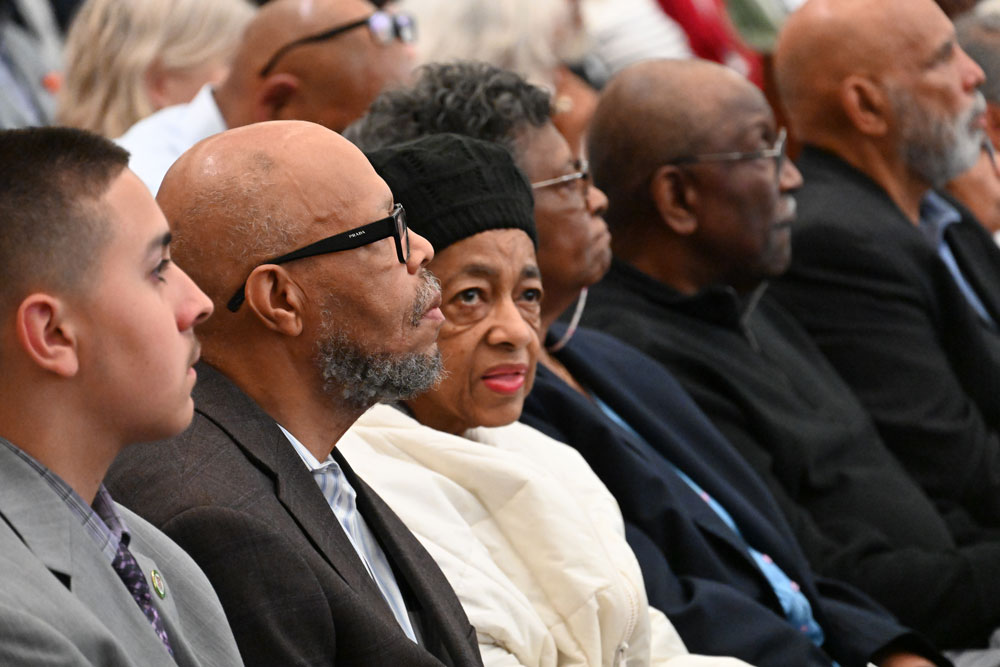
Chair-at-Large Phyllis Randall used her annual State of the County address on May 21, to frame Loudoun County’s past and future as part of a broader American story, weaving together themes of military service, immigration, economic growth, racial injustice and civic responsibility.
Randall delivered a speech titled “Loudoun’s American Story,” arguing that the county’s history reflects both the nation’s triumphs and contradictions.
“Loudoun, the history of our county is a study in contrast,” Randall said near the conclusion of the address. “A story as varied, challenging, powerful and victorious as ours is written in bittersweet ink.”
Throughout the speech, Randall repeatedly connected Loudoun’s development to larger moments in American history, beginning with the Revolutionary War and the signing of the Declaration of Independence.

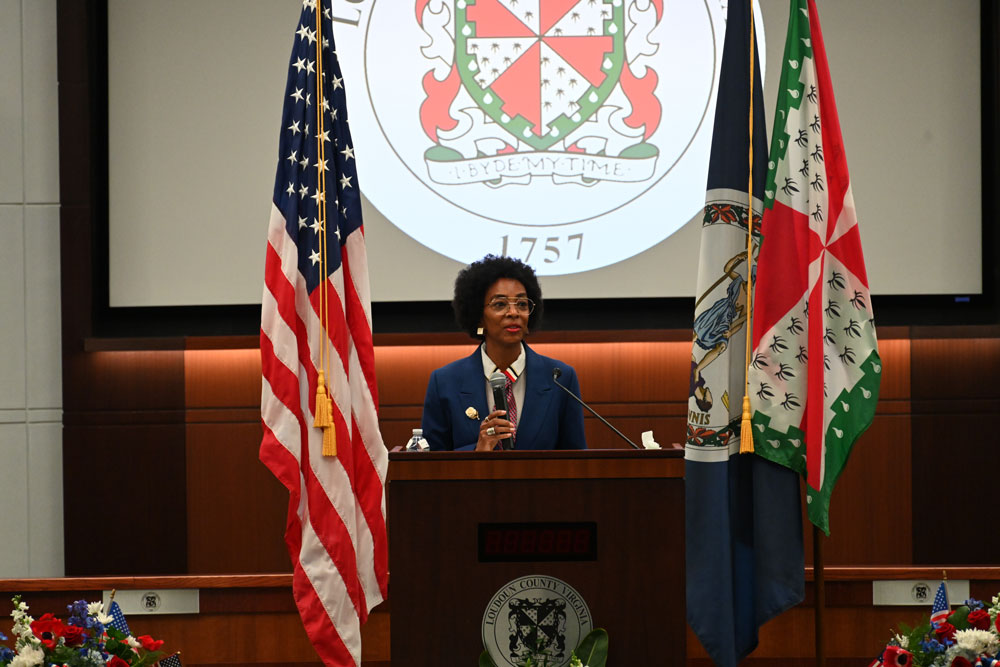
“Those men were far from perfect,” she said of the nation’s founders. “However, even with their many imperfections, these men wrote a document that established a new nation that has withstood the test of time.”
Randall, the daughter of a military family, spoke at length about patriotism and public service, describing how her parents taught her that “the price one pays for living in America is service.”
She said service can take many forms—from volunteering in schools and nonprofits to helping neighbors—but argued that military service remains uniquely important.
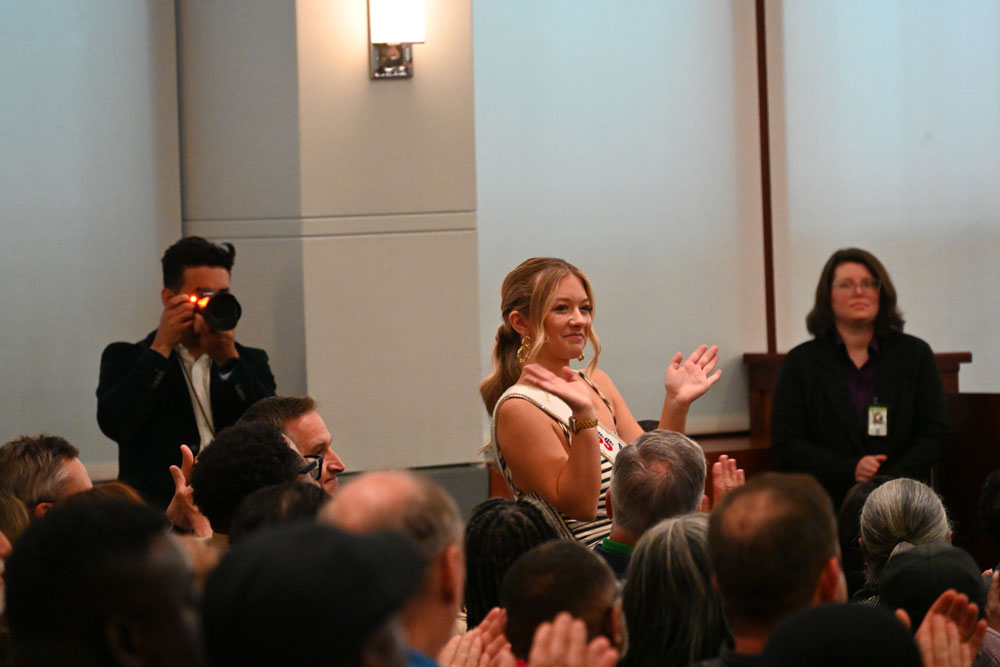
“Military service is indeed the one calling that allows a free society to remain free,” she said before asking veterans and active-duty service members in attendance to stand and be recognized.
Randall also highlighted immigration as central to both the nation’s and Loudoun’s identity, saying many first-generation immigrants come to the United States seeking “a brighter, more prosperous, safer, and freer future for themselves and their families.”
“In Loudoun, diversity is not just our strength, it is our goal,” she said.
Much of the address focused on housing and the local economy.
Randall said Loudoun has dramatically expanded its investment in attainable housing during her tenure as chair. In 2016, she said, the county allocated roughly $1 million to attainable housing funds. Today, that figure stands at $29 million.
She pointed to 19 attainable housing projects that have produced or are expected to produce more than 2,000 housing units for households earning between 30% and 70% of the area median income.
Still, Randall acknowledged the county faces continuing affordability challenges.
“We are well aware that we have a long way to go,” she said, “not just to address homelessness, but to address people who are precariously housed.”
The chair praised Loudoun’s economic performance, crediting Economic Development Executive Director Buddy Rizer and Visit Loudoun President and CEO Beth Erickson for helping guide the county’s growth.
“In 2025, Loudoun boasted $2 billion in new commercial investments,” Randall said, along with more than 8,000 economic wins across multiple business sectors.
She noted the county’s unemployment rate remains at 3.2%, below the national average, and said Loudoun has nearly 15,000 businesses.
Randall also spotlighted the county’s growing tourism economy, noting that visitor spending reached nearly $5 billion in 2024.
At the same time, she emphasized preserving western Loudoun’s rural identity, saying economic development and land conservation can coexist.
“While rural areas around the Commonwealth and nation are losing farms, in Loudoun the number of farms in our rural area grew by 6%,” she said.
Randall devoted a substantial portion of her remarks to Loudoun’s history, particularly the county’s role during the Revolutionary War and the civil rights era.
She noted Loudoun supplied troops and food to the Continental Army and described the county as the “breadbasket” that helped sustain George Washington’s forces.
“Without Loudoun, the Revolutionary War may not have been won,” she said.
But Randall also focused on the county’s history of slavery and segregation, urging residents to confront difficult parts of the past rather than ignore them.
“Loving Loudoun and our nation does not require ignoring or glossing over painful periods,” she said.
One of the longest sections of the speech centered on the history of Frederick Douglass High School, Loudoun’s segregated Black high school, which opened in 1941 after years of organizing and fundraising by Black families who had repeatedly been denied educational opportunities for their children.
“The story of Frederick Douglass High School … is the story of a community that was told ‘no’ at every turn,” Randall said. “And at every turn, they found a way forward.”
She recounted how Black parents and community members raised money through bake sales and fish fries to purchase land for the school, only to be forced to sell it to the school system for $1 in order for construction to move forward.
“Although being forced to sell their hard-earned land for just $1 was a brutal indignity,” Randall said, “the parents of Black students knew this was the only avenue to allow their students to obtain a high school diploma.”
Randall also touched on county finances, saying Loudoun’s reserves remain strong and all three major credit rating agencies recently reaffirmed the county’s AAA bond rating.
She said the county has reduced the personal property tax rate on vehicles while keeping the higher tax rate on data center equipment.
“At the same time,” she cautioned, “the influences of federal government policies are already having a significant negative impact on the finances of local governments in the Washington Metro region.”
Near the end of the speech, Randall reflected on political disagreement and civic culture, referencing her friendship with former local Republican leader John Whitbeck.
“While there are clearly things John and I don’t agree on,” she said, “when John and I disagree, we do so without being disrespectful, disparaging, demeaning or degrading to one another.”
Randall closed the address by describing Loudoun as both forward-looking and resilient, saying current leaders are preparing the county for future generations.
“Today the elected and administrative leadership in Loudoun are planting trees whose fruit we will not eat and whose shade we will not enjoy,” she said.
“But we do so gladly as we are entrusting to the next generation of Loudouners the baton in the relay of history.”
Continue reading in this news section
Comments
Any name-calling and profanity will be taken off. The webmaster reserves the right to remove any offensive posts.