

The Army Has Found a New Home for its Caisson Horses
Middleburg Town Hall Brings Army and Equestrian Community Together
By Valerie Cury
There are few places in America where horses are as deeply woven into the identity of a community as they are in Middleburg.
And there are few missions entrusted to a horse more solemn than the one that is now coming to this charming town.
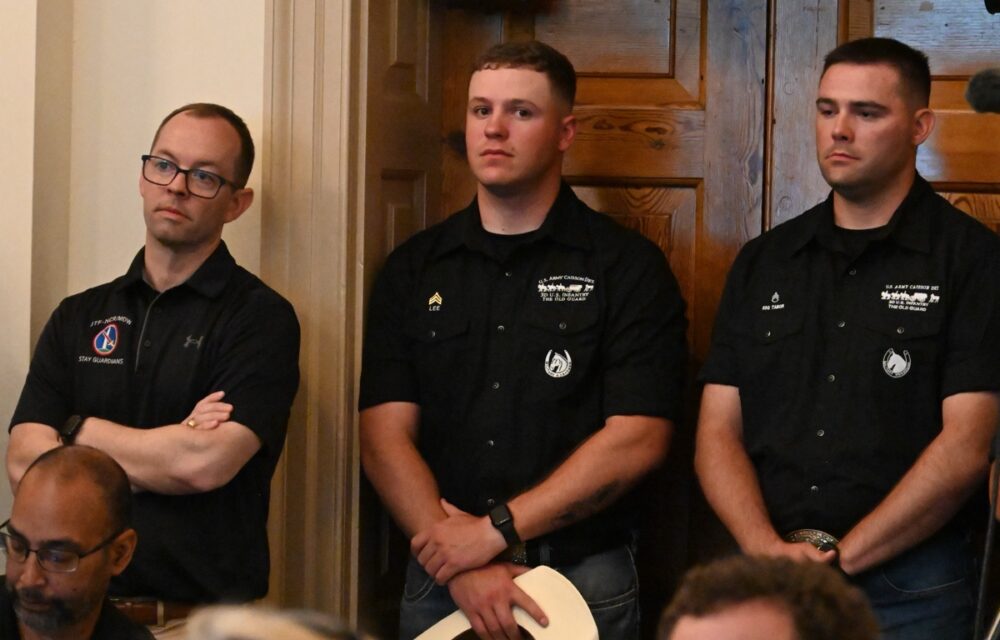
The large, powerful caisson horses of the U.S. Army carry fallen service members to their final resting places at Arlington National Cemetery. Working alongside soldiers of the 3rd U.S. Infantry Regiment, known as The Old Guard, they are part of a military tradition built around dignity, precision and honor at one of the most difficult moments a military family will ever experience.
Soon, those horses will have a new home in Middleburg.
The Army’s Aug. 6 purchase of the 150-acre Middleburg Training Center brings together two distinct equestrian traditions: a community whose history and economy have been shaped by horses for generations, and a military unit whose horses perform one of the nation’s most solemn ceremonial duties.
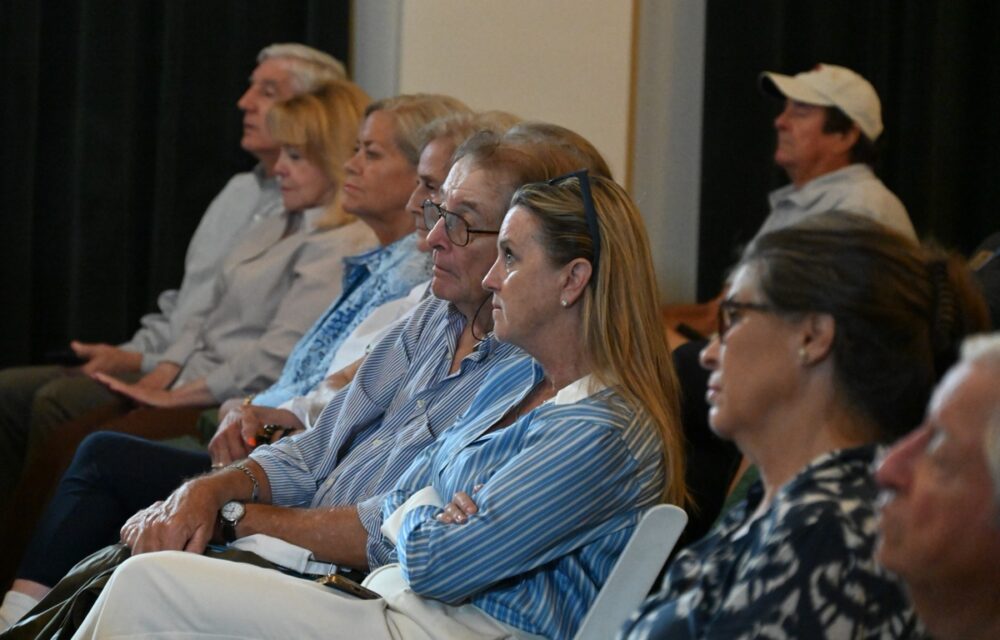
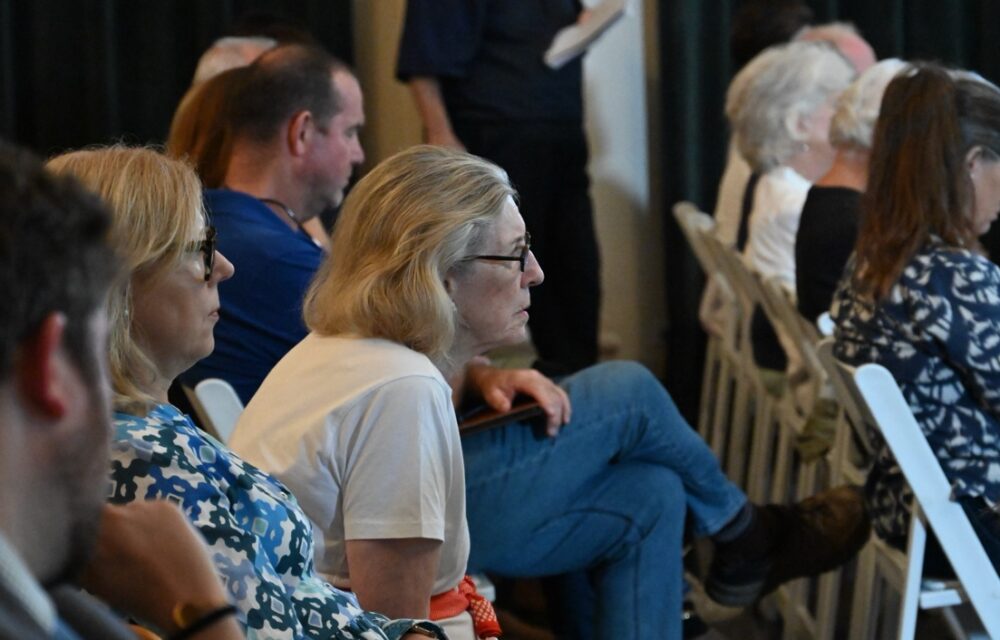
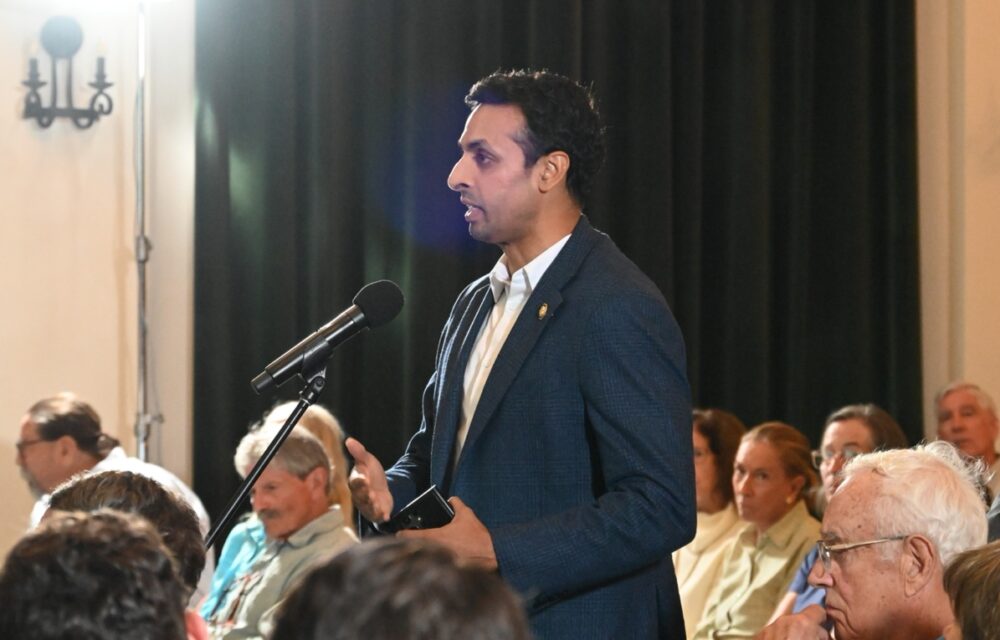
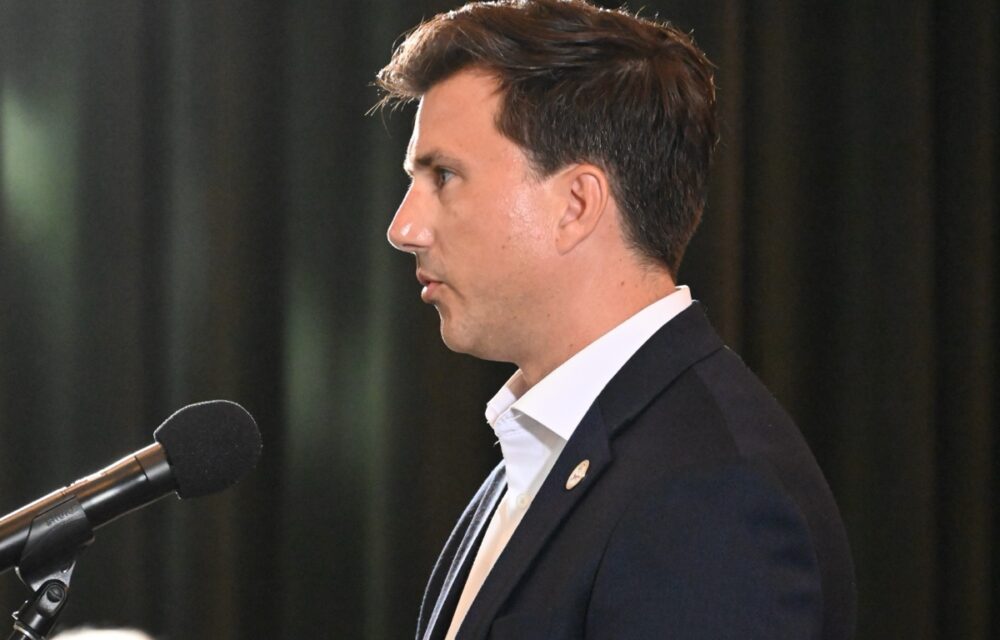
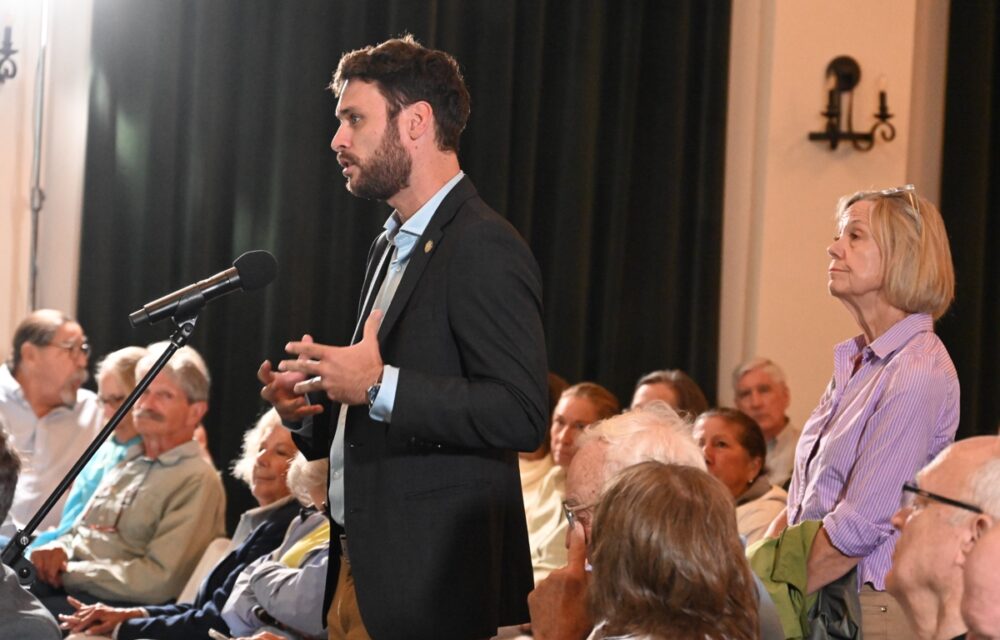
That intersection was at the heart of a community town hall held following the purchase, where Army leaders, elected officials, veterans, horsemen and women and longtime residents began talking about what comes next—and how something deeply important to Middleburg can make way for a new equestrian mission without losing the heritage, knowledge and community that have made Middleburg so special.
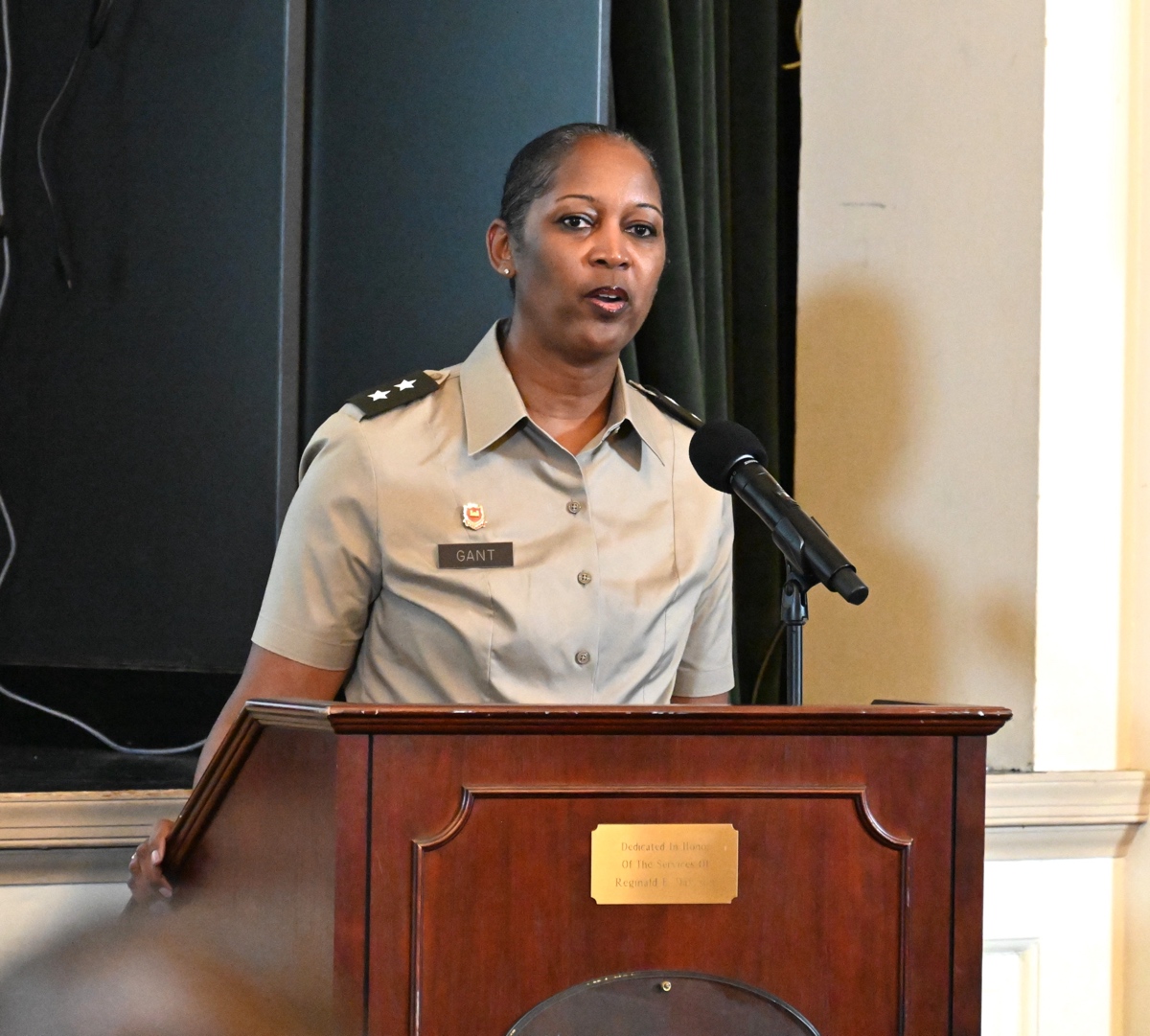
Major General Antoinette Gant, commander of Joint Task Force-National Capital Region and the U.S. Army Military District of Washington, began by acknowledging exactly where the Army has arrived.
“The Middleburg Training Center is not just a part of land; it’s a legacy,” Gant told the large community gathering at the Middleburg Community Center.
She also made clear what the Army is—and is not—bringing to Middleburg.
“When most people think of the Army,” Gant said, they think of soldiers, tanks and guns.
“Those are not things that we’re bringing to this particular area.”
The Army is coming because of horses.
The Military Mounted Battalion performs full-honors funeral missions at Arlington National Cemetery, where its caisson horses pull the carriage bearing a fallen service member’s casket to the gravesite.
It is a mission in which there is no second chance.
“This mission has to be done above and beyond,” one soldier explained in a video shown during the town hall, “because we’re doing the mission for our fallen soldiers and their family.”
The relationship between the soldiers and the animals entrusted with that responsibility is equally remarkable.
“Horses are the same as the soldiers, and each of them has a personality,” another soldier said. “There is a bond between the soldiers and the horses, and they’re more than just a piece of equipment.”
The soldiers care for the horses around the clock, train with them and depend upon them. The horses, in turn, must possess the strength and temperament to carry out a mission in which composure is essential.
After two Army horses died in 2022, the military undertook a sweeping review of its equine program. One of the central findings was straightforward. The horses needed more room.
The historic facilities at Joint Base Myer-Henderson Hall could not provide the turnout space and environment necessary to care for the herd at the standard the Army now requires.
So the Army began looking for a horse farm. It was not a casual search.
Beginning in 2024, the Army Corps of Engineers reviewed more than 100 properties within working distance of Arlington National Cemetery. That list was narrowed to 24, then seven and ultimately two.
At the top was the Middleburg Training Center.
The property offered something difficult to replicate—an established equestrian facility, barns, open land and the space necessary to condition and care for large working horses whose ceremonial duties require strength, fitness and extraordinary steadiness.
“We needed a horse farm,” Old Guard Commander Col. Jeffrey Kain told the audience. “The Middleburg Training Center is that farm.”
The Army currently has a herd of 73 horses, with an average age of eight, and has retired or replaced 87 percent of its herd during a broader modernization of the program. It has also invested in lighter wagons with improved braking, custom saddles, veterinary care, civilian equine expertise and a new permanent equestrian military occupational specialty.
The Middleburg property represents the final major piece of that effort.
By 2028, the historic Fort Myer stables are expected to be renovated and used as a forward location for horses performing missions at Arlington. Their primary home, however, will be in Middleburg.
For a community that has lived with horses for generations, the significance of that change was hard to miss.
Middleburg is accustomed to horses arriving here.
What is difficult is knowing that another group of horses—and the trainers, riders and businesses surrounding them—is leaving.
Rep. Suhas Subramanyam captured those complicated emotions well.
He welcomed the caisson mission while acknowledging that the Middleburg Training Center has been a fixture of the community for decades and has contributed millions of dollars to the local economy.
“The concern in the community is that it’s taking the place of the Middleburg Training Center, which has been a staple here for decades,” Subramanyam said.
He asked Army officials to consider whether at least part of the property could continue to be used by the local equestrian community, including the possibility of leasing part of it back for training.
Army officials did not promise that would happen. But importantly, they did not close the door.
Gant said the Army is examining the legal framework surrounding potential shared use and needs to determine what may be possible while keeping the care and training of the Army’s horses as the property’s primary mission.
The possibility of shared use became one of the most hopeful threads running through the evening.
Members of Virginia’s horse community offered not simply concerns, but expertise, partnerships and a willingness to help the Army navigate its new home. Representatives of the Virginia Equine Alliance and Virginia Thoroughbred Association said the local horse industry is prepared to work with the Army and help explore ways that barns and the training track might continue to serve the broader equestrian community.
One longtime horse breeder and former training center employee spoke emotionally about generations of horsemen who learned their craft there and then carried that knowledge into Virginia’s larger equine community.
Others spoke about the veterinarians, farriers, equine dentists, feed stores, tack shops, haulers and other businesses whose livelihoods are connected to the horses that have trained there.
The message was not that the Army’s horses are unwelcome.
It was that the community hopes there may be room for both traditions.
Gant appeared receptive to that idea of partnership. She said the Army intends to establish some form of community advisory group and acknowledged the extraordinary reservoir of equestrian expertise surrounding Middleburg.
That may prove to be one of the greatest opportunities created by the transition.
The Army is bringing horses to Middleburg. Middleburg knows horses.
Perhaps no one captured the potential relationship more colorfully than a longtime member of the local American Legion.
He told Army officials that the Legion has been part of the community for nearly 80 years and reminded them that Middleburg’s identity extends beyond its equestrian heritage.
“This is an equestrian town, but it’s also a veteran town,” he said.
Then he offered the arriving soldiers an immediate invitation to become part of it.
The Legion, he said, would be happy to welcome active-duty members. He even mentioned that the post had invited Vice President J.D. Vance to join—an invitation that apparently prompted a visit from the Secret Service.
“I was interviewed by the Secret Service the other day to find out if I was a crackpot,” he joked, drawing one of the evening’s lighter moments.
Underneath the humor was a heartfelt point.
“We don’t want to have a bunch of soldiers that are burning in and out of town,” he said. “We want some guys that have some interest in and put their heart into our town.”
Vice Mayor Chris Bernard offered a welcome of his own.
Acknowledging that there were differing opinions in the room, Bernard told Army officials, “I’m here to just say welcome.”
He encouraged them to maintain the open communication they had begun that evening and offered to help foster a positive relationship between the Army and the community.
“Whatever people’s feelings are, on some level we appreciate the information and you opening up the dialogue,” Bernard said. “So let’s do it.”
Del. John McAuliff emphasized another part of that relationship: protecting the rural economy that has allowed the equestrian community to flourish.
The region, he said, is already facing immense pressure from data centers, development and other interests seeking land in Northern Virginia. The ability to resist those pressures depends in part upon keeping the rural economy economically viable.
“A piece this big being removed really is going to impact our ability to maintain that,” McAuliff said.
He asked the Army to hire locally whenever possible, give members of the equestrian community opportunities to compete for jobs and honor the conservation easement protecting the property.
Army officials said federal hiring requirements must be followed but pledged to communicate employment opportunities to the community and repeatedly expressed a desire to draw upon local expertise.
That expertise was evident throughout the room.
A neighbor described waking up and watching horses from her window. A horse breeder spoke about generations of horsemanship learned at the training center. Another speaker worried about young people losing a place where they could watch experienced horsemen, learn the craft and discover a life with horses themselves.
For them, the Middleburg Training Center has never been merely 150 acres of valuable real estate.
It has been a place where knowledge was passed from one generation to another. That history cannot simply be recreated somewhere else.
But neither is the property leaving the world of horses. And that distinction mattered as the evening went on.
Perhaps the most moving moment came from a woman who told the audience that more than 50 years ago, her father had been carried by caisson to his burial.
She remembered visiting the Fort Myer stables and seeing the attention given to the horses and the care taken by the people entrusted with that solemn mission.
Today, she has a granddaughter who is an equestrian.
For her, the arrival of the caisson horses in Middleburg connects those generations in a way few other things could.
She spoke of wanting children to understand what the horses represent—not simply equestrian skill, but service, sacrifice and the way a nation honors those who served.
“There’s the honor of the horses,” she said, “and if people took time to go see what these people do, it’s incredible.”
She also offered perhaps the evening’s simplest prescription for what comes next.
“I believe it’s all going to work out,” she said, “because that’s what humans need to do—is work it out.”
Army officials said they intend to preserve the character of the property, abide by its conservation easement, study traffic impacts and continue talking with the community. They emphasized repeatedly that they do not intend to transform the property into a conventional military installation.
But if the town hall demonstrated anything, it was that the Army is not arriving in a community indifferent to its mission.
Quite the opposite.
It is bringing horses entrusted with one of the nation’s most solemn ceremonial duties into one of the most knowledgeable and passionate horse communities in America.
Middleburg is losing something important in the transition. The history of the training center, the livelihoods connected to it and its role in developing generations of horsemen deserve to be remembered—and, wherever possible, preserved.
Now, a different equestrian tradition is coming to the property.
On quiet days ahead, the large caisson horses grazing and training on those 150 acres will be preparing for a mission that takes them from the fields of Middleburg to Arlington National Cemetery.
There, surrounded by grieving families and fellow service members, they will walk slowly and steadily, pulling a caisson bearing someone who served this country to a final place of honor.
Those horses will train in a community that understands, perhaps better than almost any other, the extraordinary relationship between people and horses—the patience required to care for them, the knowledge required to train them and the trust that develops between them.
The Army has found a home for its caisson horses.
Continue reading in this news section
Comments
Any name-calling and profanity will be taken off. The webmaster reserves the right to remove any offensive posts.
e-edition