

Subramanyam hosts dialogue on data centers and power lines
By Valerie Cury
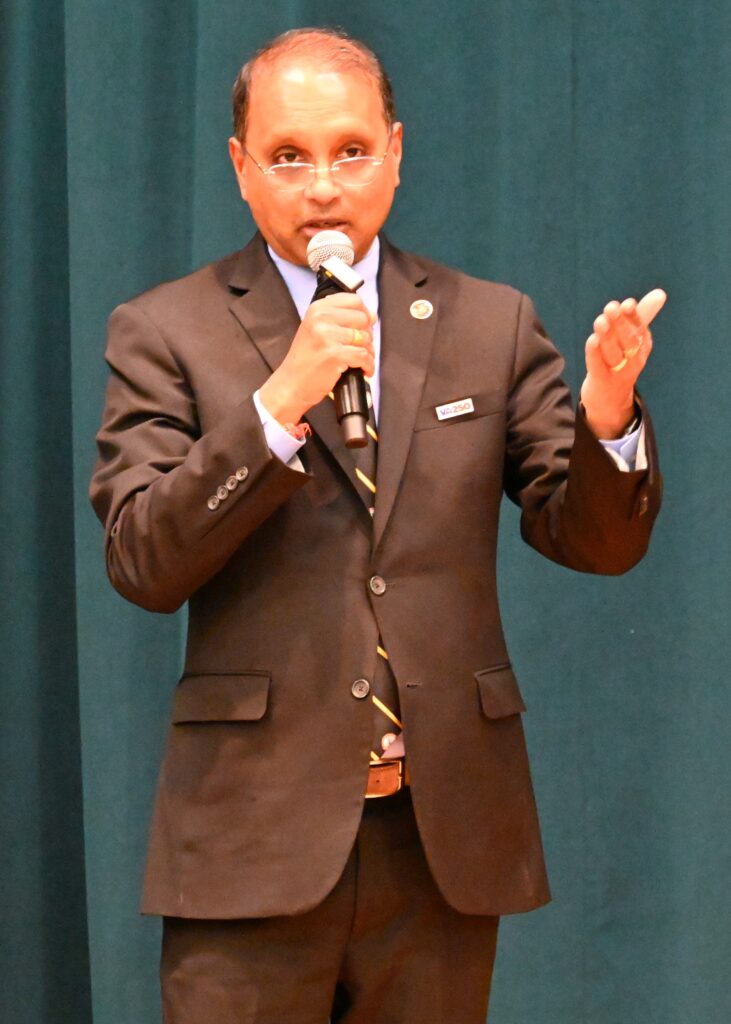
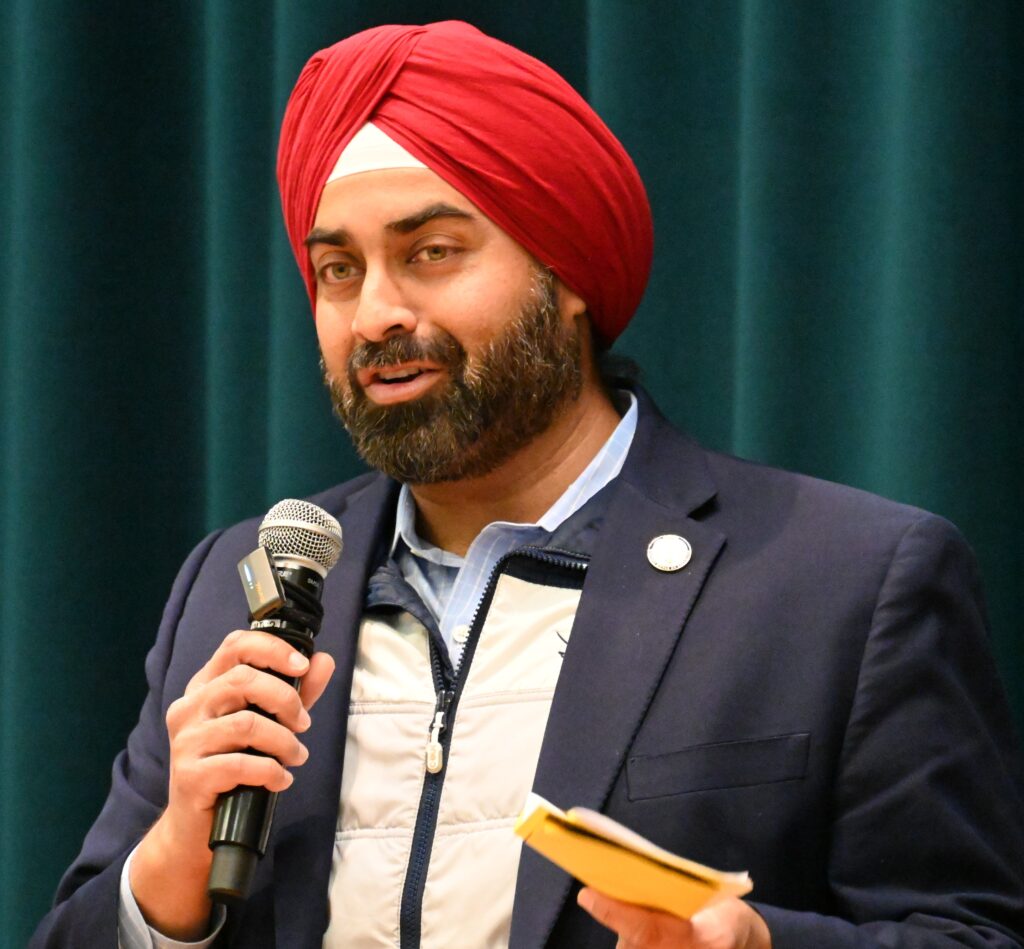
U.S. Representative Suhas Subramanyam (VA-10) hosted the first in a series of District Dialogues on Thursday, Dec. 4, addressing data centers, power infrastructure, and increasing utility costs in Northern Virginia’s 10th Congressional District.
The event, held at Stone Hill Middle School in Ashburn, allowed residents to share their perspectives directly with the Congressman, local officials, and fellow community members.
“We all are responsible for figuring out how to solve some of the problems we’re facing,” Subramanyam said, opening the discussion. He emphasized that while some data center and utility issues are managed locally or by the state, federal engagement is critical given the scale of the challenge.
Subramanyam noted the rapid growth of data centers in the region, which now hosts nearly half of Virginia’s total data centers. He described the strain this growth places on power infrastructure, the environment, and local communities. “We know 70% of the internet runs through our county and our region. The number of data centers is expected to at least double over the next five to ten years, potentially raising utility costs significantly,” he said.
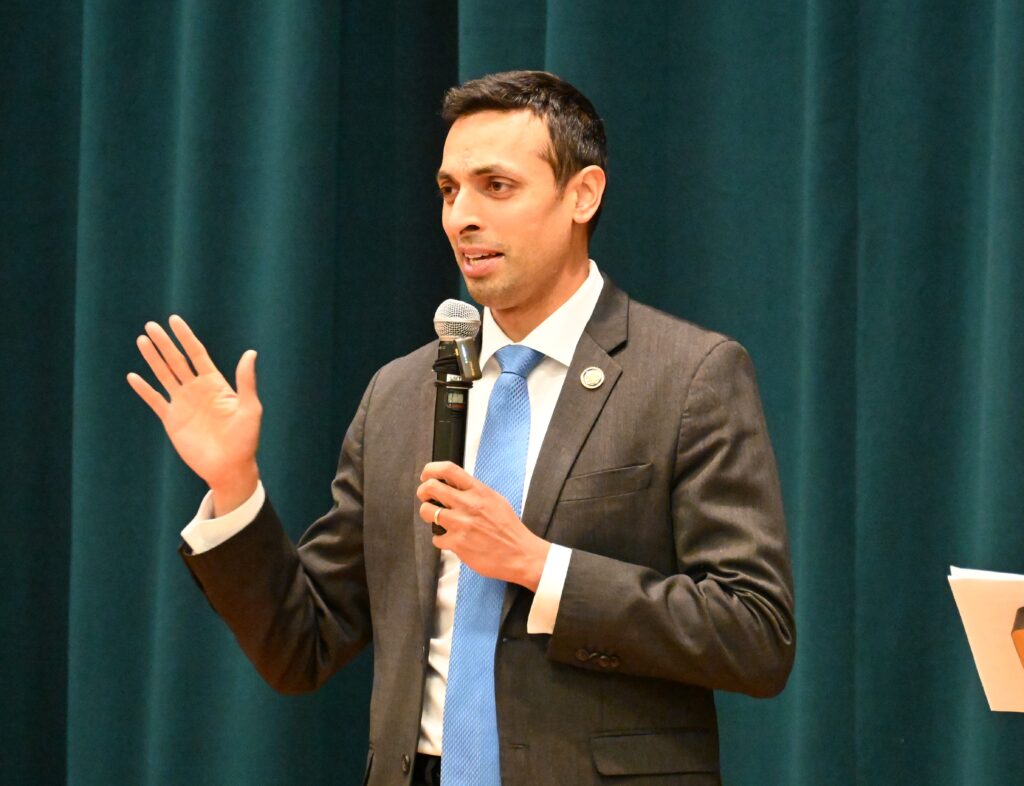
The Congressman highlighted the importance of community input, urging attendees to speak up despite the complexity of the issue. “Your voice really does matter when you stand up and fight back,” he said, encouraging residents to participate in shaping a federal strategy for siting and regulating data centers.
State and local officials joined Subramanyam to discuss their perspectives on data center growth and related issues.
Senator Kannan Srinivasan (VA-32) acknowledged the dramatic expansion of data centers in the district over the past two decades and underscored the growing consequences for residents. “The time has come now where we are confronting some of the real painful impacts,” he said, emphasizing the importance of collaborative efforts between state and federal representatives.
Delegate JJ Singh (VA-26) framed the discussion within the broader context of community quality of life. “I think about the American dream—clean air, clean water, safe streets, great schools, great infrastructure, economic opportunity. Nowhere in that equation are data centers,” he said.
Singh provided key statistics, noting that 13% of global operating capacity for data centers is in Virginia, and local facilities alone could supply enough electricity to power more than 60% of Virginia households. He also highlighted ongoing legislative efforts to require underground power lines and stricter siting rules for new data centers.
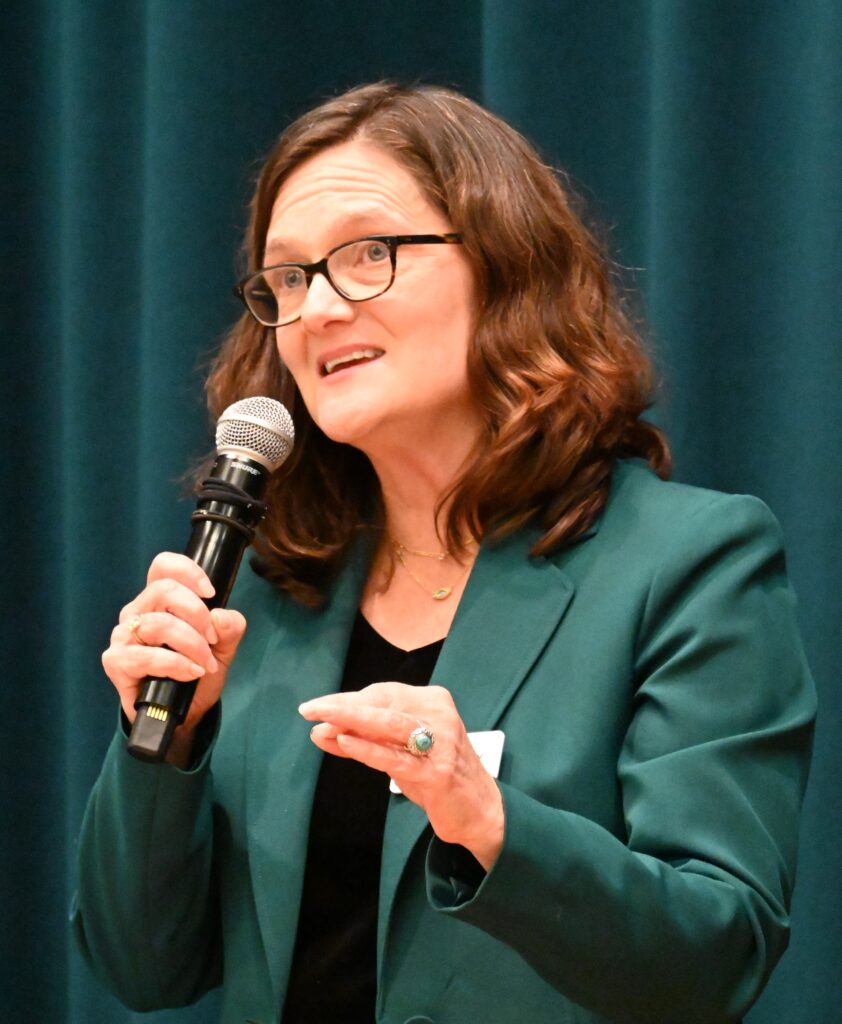
Loudoun County Supervisor Laura TeKrony (D-Little River) shared details of local efforts to manage growth and mitigate community impacts. She described the county’s phased approach to establishing performance standards, requiring special exceptions for new facilities, and setting minimum distances from residential areas. TeKrony also announced plans for an Energy Innovation Forum in spring 2026, which will bring national and state experts together to explore future solutions such as district heating and other sustainable energy practices.
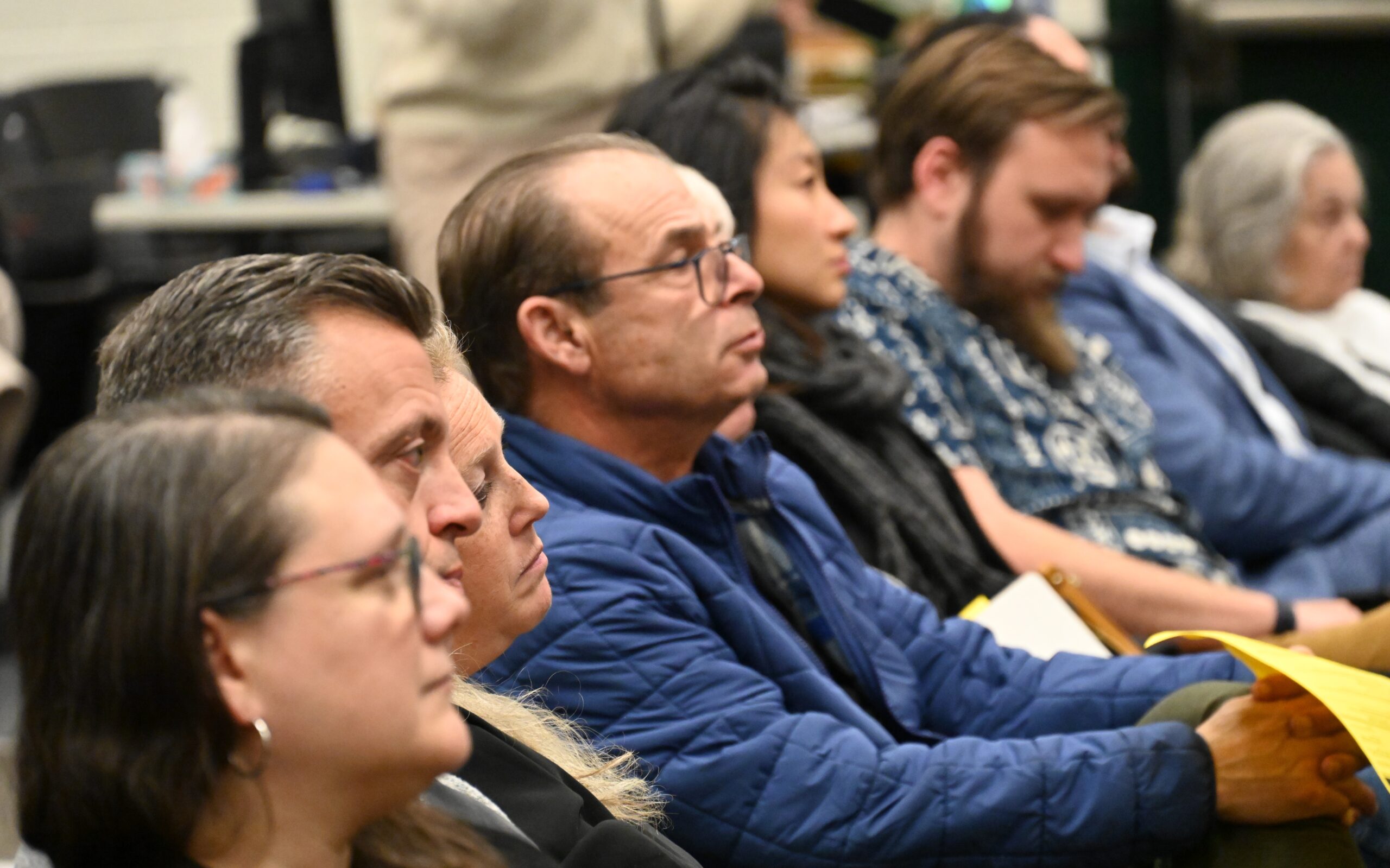
The event provided residents 90 seconds each to voice their questions, concerns, and suggestions.
One speaker highlighted that the full effects of data centers on communities remain understudied, particularly regarding public health and environmental impacts. They stressed the need for more research, noting concerns about serious health risks, including cancer.
“At the end of the day, our neighborhoods weren’t built with a 500-kilovolt transmission line in mind,” said a Loudoun County high school junior. She stressed that undergrounding the lines could help preserve the character of her community and protect the environment.
“Loudoun County is already known for being at the center of the digital world, and now we have the opportunity to show that growth doesn’t have to overwhelm the neighborhoods around it.
Only one 500-kilovolt line in the U.S. has ever been underground,” she added, urging thoughtful planning so future generations inherit a community that values people over convenience.
She concluded, “We are asking for leaders to become an example of thoughtful innovation, the kind where people point to years from now and say they got it right at the end of the day, I am just a teenager standing here trying to speak for the place that shaped me, but I think that’s what makes this human, because one day my generation will be sitting where you sit, and when that day comes, I hope the Loudoun we inherit is one that shows the people over convenience …”
Another constituent, Zach Mattia, raised questions about the potential for federal bailouts of AI companies, noting recent concerns over large investments in the sector.
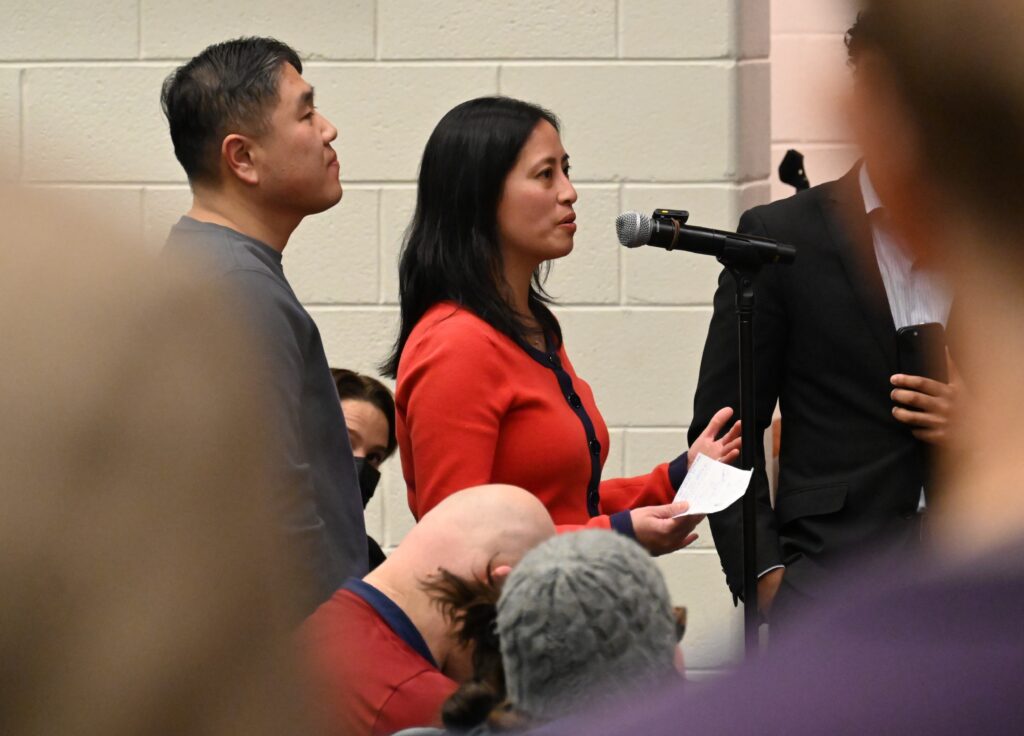
Subramanyam responded that he does not support federal backstops for AI firms, emphasizing the need to prevent an “AI bubble” before it can impact the broader economy.
Eric, a Loudoun County resident, spoke passionately about the proposed 500-kilovolt power lines that could run less than 140 feet from his home, raising concerns for his young children’s safety.
He described moving to the area for its schools, walking paths, and natural surroundings, only to face the possibility that high-voltage lines could disrupt their home life. “It will be impactful if, despite this education—my kids aren’t safe because of these lines.”
He emphasized both health risks and the long-term implications for neighborhoods if such projects set a precedent. He noted that children could be exposed to the lines for thousands of hours over the course of their lives.
Subramanyam acknowledged the community’s frustrations, noting that many data centers and related power infrastructure projects have proceeded without sufficient attention to local voices or health studies. He stressed the importance of community input, scientific study, and federal oversight, saying, “Your story should serve as an example to everyone around the country and to members of Congress that we need to start acting now.”
Supervisor Laura TeKrony explained the county’s efforts to address transmission line concerns.
She highlighted a July initiative she put forward requiring the Board to identify the locations of transmission lines and substations before approving any new data centers. “If we don’t know where they are, they could come through our communities and near our schools,” she warned.
TeKrony noted the Board has made a statement advocating that Dominion underground the Golden to Mars transmission line when it is within 500 feet of homes or schools. She said that coordination with the state delegation is ongoing.
A concerned resident emphasized the importance of protecting trees and promoting clean energy, suggesting that data centers could incorporate solar panels to generate electricity independently and reduce strain on the grid.
Dan said he wanted to “make roots here” in Ashburn even though he moved from California five years ago. I would not like to see “another data center built in Loudoun County for a long, long time, and I want to know what we can do now to push them and our elected representatives to not just worsen the air quality of the communities that we live in.”
Tommy said he’s frustrated that big corporations are “just building and building and building” with little regard for health or communities, using shortcuts like above-ground lines simply because it’s “cheap.” He said it feels like these companies “rule over our lives” and asked what can be done.
Subramanyam acknowledged that communities are “outgunned” and that it can be a “lonely fight,” but emphasized that part of his work is telling these local stories to colleagues. He also stressed efforts to push companies to pay for infrastructure and to protect communities, while highlighting the importance of constituent input in advocating for change.
Julie Bolthouse, Director of Land Use at the Piedmont Environmental Council, highlighted that over 400 residents submitted comments opposing the DEQ’s expansion of backup generator use, while business groups supported it. She stressed that when these diesel generators operate, residents are exposed to noise, fumes, and pollution.
Bolthouse called for battery storage, pausing new large load connections until infrastructure is ready, eliminating tax exemptions, and protecting both public health and the environment at the state and local level. She urged the community to push back and hold both companies and officials accountable for these impacts.
Greg, who lives just 150 yards from a data center in Sterling, described how the facility’s gas turbine power plant “produces as much particulate matter as half of Dallas airport does” and noted that the noise exceeds county limits.
He expressed frustration that the data center’s original plans were misrepresented, with diesel backup generators now on both sides of homes and the facility six times larger than initially presented.
Greg also raised safety concerns about anti-drone defenses and flammable lithium-ion batteries near the community, while describing health and environmental impacts, including neighbors getting headaches and a loss of local wildlife.
Subramanyam acknowledged these concerns, noting that “the clearer we are with our legislation, our rulemaking, the better outcome” to prevent such issues in the future.
Barbara Kilroy urged Loudoun County to explore innovative sustainable energy solutions, like those being piloted in Japan, to help reduce the region’s carbon footprint by 2050.
A speaker, who works in the data center industry, acknowledged the economic benefits of the sector, including job creation, but also stressed the need for careful attention to utility regulations, safety, and community impacts. He urged engaging experts—such as electrical engineers, health physicists, and medical doctors—to ensure decisions are informed and community concerns are addressed.
Subramanyam responded by questioning the industry’s lobbying efforts, asking why data centers “are lobbying so hard against our bills to do just that,” highlighting a gap between their statements and actions.
Another attendee said that there is a significant knowledge gap around data centers, noting that many people in the technology industry have a lack of education and a lack of awareness. He said communities and even industry leaders often underestimate the environmental impacts of data centers.
He also highlighted regulatory shortcomings, observing that “the only way tech industry gets regulated in the United States is through the European Commission,” and recommended more research and education to better inform policymakers and Congress.
A long-term resident living next to a data center described the constant noise from diesel engines as “like being in an airport with an airplane engine next door.” He shared that on high-noise days, it is “unmanageable,” especially while coping with a brain injury.
He expressed deep concern about quality of life, home values, and environmental impacts, urging accountability for the existing facility, cautioning against two new data centers nearby, and calling for restitution for affected neighbors.
Mike Hummer, president of a local primary school, highlighted the lasting impact of high-tension power lines near homes and his school. He noted that regardless of actual health hazards, the stigma associated with these power lines will not go away. Placing the lines above his school, which serves 214 children ages six weeks to 12 years, would have significant detrimental effects on both students and the surrounding community.
Subramanyam said that future District Dialogues will be held throughout the region to give residents more opportunities to share their perspectives. He stressed that citizen input plays a key role in shaping long-term policies around data center siting, environmental protection, and utility management.
Residents who want to participate in upcoming dialogues or provide input on projects like the Golden to Mars transmission line are encouraged to sign up through Subramanyam’s website.
After the meeting, Subramanyam addressed the press, emphasizing the strain on residents from the rapid growth of data centers and the accompanying power infrastructure. “People are angry about these power lines. They’re angry about the number of data centers being built, and on the backs of their own utility bills … That’s not right, and I think we need change, a change at the federal level, the state level and local level,” he said.
He highlighted the need for a national strategy on data center siting, the health and wellness impacts on communities, and the restructuring of incentives for power infrastructure.
Subramanyam also stressed the importance of hearing directly from residents—“The best stories and the best legislation that I put forward always comes from the people who live in our communities and face these problems every day.”
He warned that frustration is mounting not just over costs and infrastructure, but also over the national security implications, noting, “Are you going to make our community a target now of outside actors? What’s going to happen if there’s an attack on our community?”
Continue reading in this news section
Comments
Any name-calling and profanity will be taken off. The webmaster reserves the right to remove any offensive posts.
e-edition