


Virginia Tech’s Innovation Campus opens doors for technology and education
By Valerie Cury
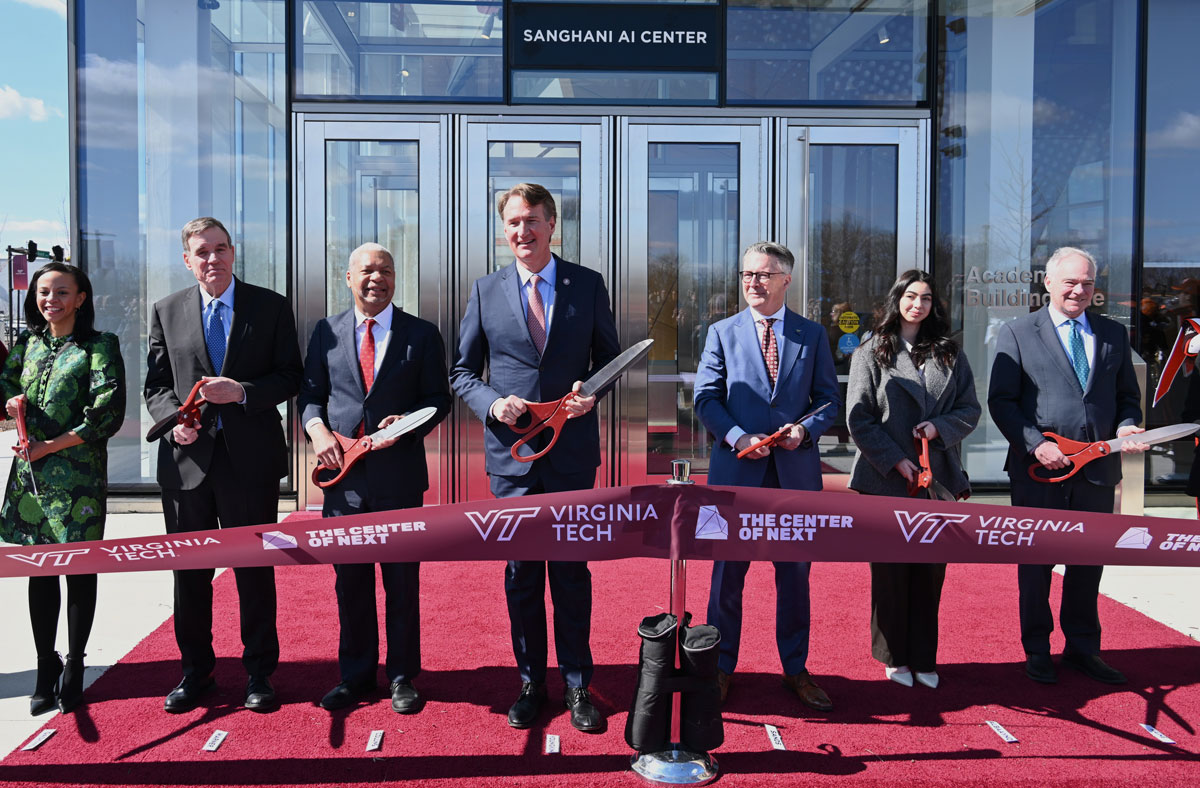
On Feb. 28 a ribbon cutting was held to celebrate the opening of the first Academic Building on the 3.5-acre Virginia Tech Innovation Campus in Alexandria. The 11 story 300,000 square foot building is located in the Potomac Yard neighborhood. The first building opened in January 2025 and offers Virginia Tech graduate programs to include computer engineering and computer science, quantum computing, artificial intelligence and more.
The Sanghani Center for Artificial Intelligence and Data Analytics is located on the fifth floor. The fourth floor houses various programs from the Pamplin College of Business, including the Online Master of Information Technology, as well as programs like the Executive Ph.D. and the Master of Science in Business Administration, with specializations in Hospitality and Tourism Management and Global Business Analytics.
The K-12 program space is on the second floor and the classes offers an introduction to computer science and STEM.
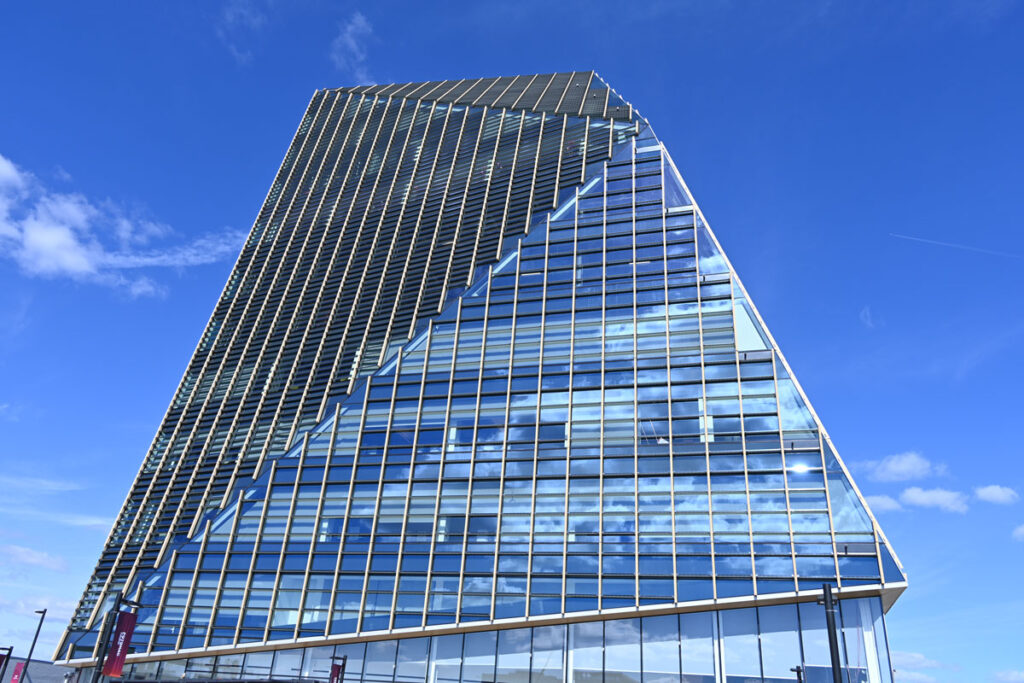
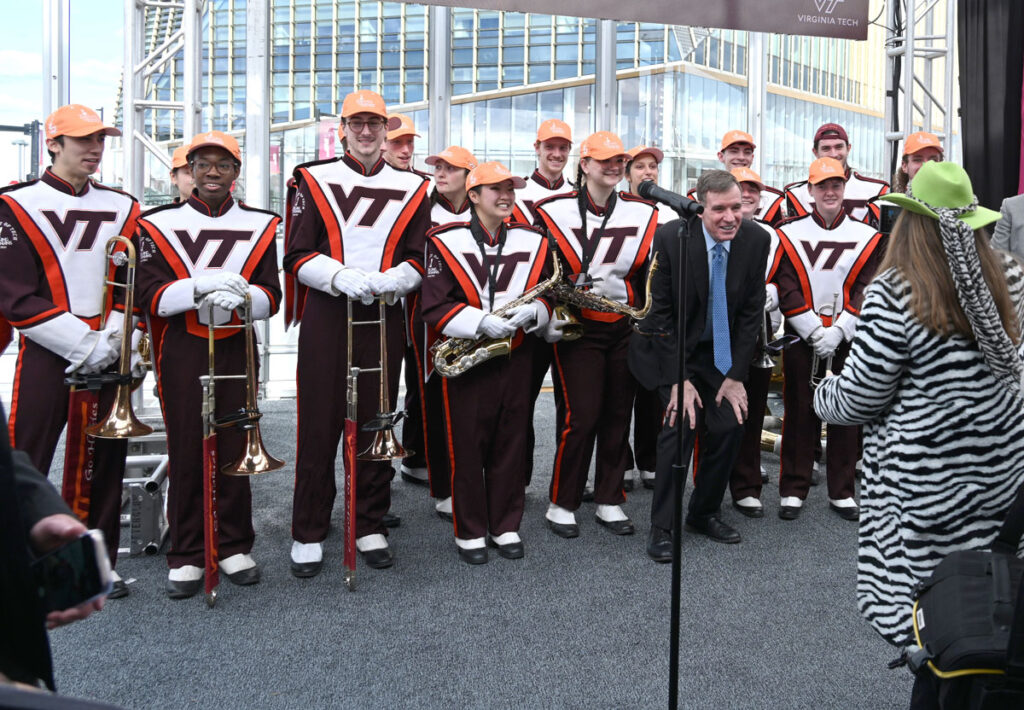
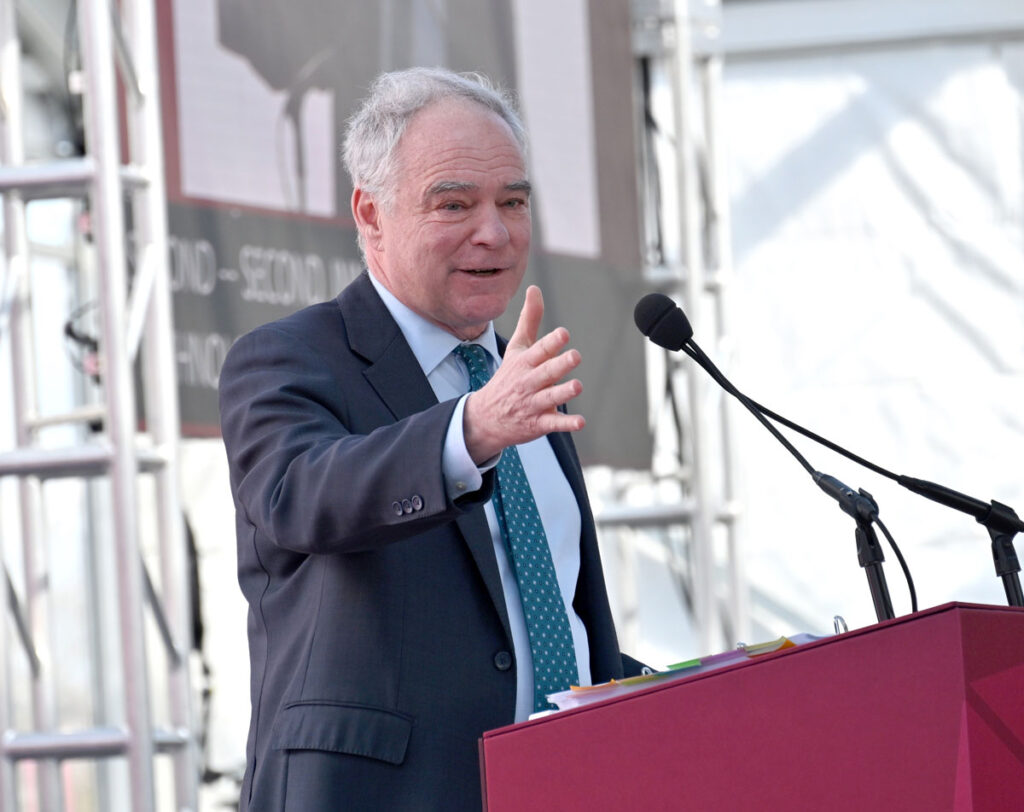

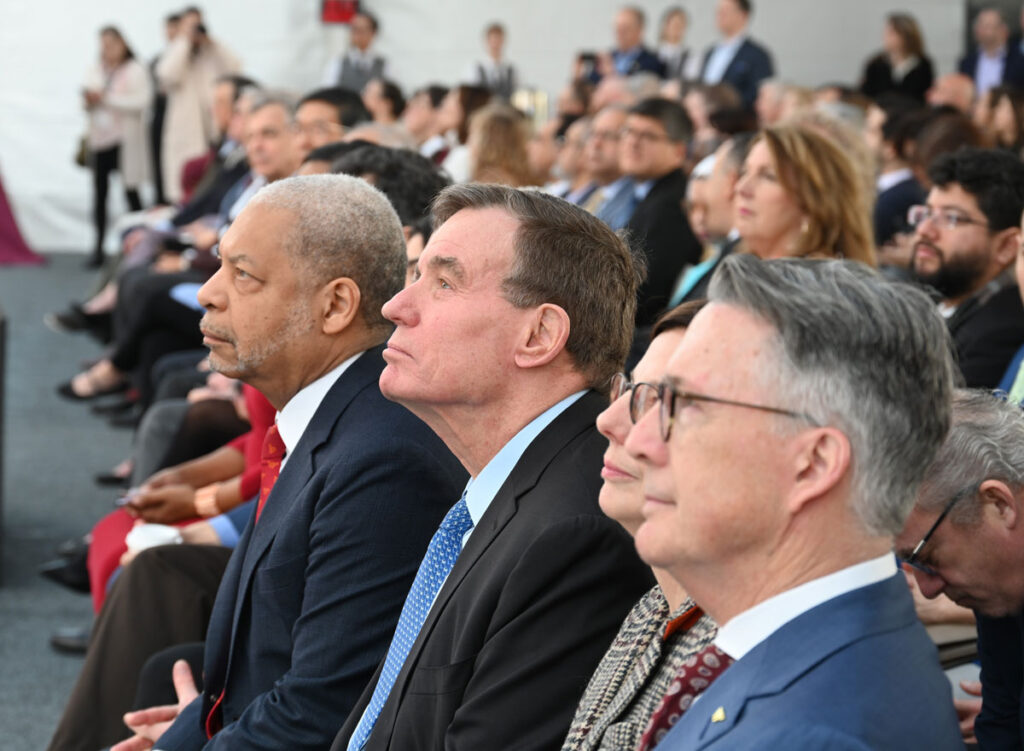
Building one of the Virginia Tech Innovation Campus will support efforts to educate and train students for high-quality technology careers, with a focus on fields to include machine learning, wireless and next-generation technologies, quantum architecture, software development, and other tech disciplines. Additionally, the project fosters a partnership with Alexandria City Public Schools to strengthen STEM education.
Gov. Glenn Youngkin (R), and U.S. Sens. Mark Warner and Tim Kaine (both D-VA), along with other elected officials and Virginia Tech leadership, participated in the grand opening and ribbon- cutting ceremony.
Youngkin said, “Projects like this one last for a long time, and we hand batons to each other in order to progress important things. This is a baton that has started before I became governor, and it’s a baton that was passed to me, and it’s one that I will look forward to passing on to our next governor to make sure that the Innovation Campus and all that it represents are flourishing.”
Youngkin said the ribbon cutting ceremony “is a moment where technology and innovation are unleashing opportunity. I just happened to see a national headline that said 2025 is going to be the year that technology redefines the future. Now the reality is, I think every year is the year where technology redefines the future, but we have an opportunity here to continue to redefine that future every single year, profoundly changing the direction of so many important discoveries and applications.”
He said Virginia has the talent, capacity, and the will to accomplish so much. He said that the first class started in 2020 with 75 “extraordinary students,” before there was even a building. “Today there are 455 students in the program and it continues to grow.”
“I say frequently that in Virginia, we don’t follow, we lead.” Youngkin said the leadership and the students are all leaders and, “I can’t wait to see the future that all of you not only discover, but help define.”
Youngkin said Sen. Warner has already had “an amazing impact on this project and on the Commonwealth of Virginia.”
Warner said he increasingly recognizes that national security is not going to be defined by simply who has the most tanks and guns and ships and planes. It is increasingly a competition around technology, in particular with China, he said. “China is a great, great nation, and they are investing at a rate that, frankly, we used to invest in post COVID.”
That’s why the public, private partnership in innovation, around AI, around wireless, is so critically important—and it will take place at this innovation campus. That’s what these students will be part of. He said the race for both AI and who has enough energy to power that AI, will be probably the most determining factor of who wins in the 21st century.
Warner emphasized the importance of providing universities, consultants, and students with the necessary tools, including funding, to ensure that the U.S. can remain competitive with China. “It is important for Virginia. It is important for America. It is important for the world.”
In introducing Sen. Kaine referred to as “the junior senator,” Warner said they went to law school together but they didn’t meet “in class, we didn’t meet in the library. We met at a party, and we’ve been friends ever since.”
“I love when Virginia Tech succeeds; I love when any Virginia University succeeds. But I got a particular, particular love for Virginia Tech,” said Kaine. He said when he moved to Virginia he lived across the street from a hokey fanatic in Richmond, “when I came here to get married in 1984—and so I kind of got indoctrinated into hokey nation.”
Kaine said there are three kinds of innovation—innovation in technology, innovation and cooperation, and innovation and talent.
“You know, talent is equally distributed among human beings, by God, every country, every race, every background. It’s equally distributed, but it’s not equally developed. And one of the things that we have to do in focusing on talent is recognizing that it comes from everywhere, different skin colors, different languages, different immigration statuses. And our job is to develop it, celebrate it, incentivize it, reward it, and recognize it.
“Talent can come from anywhere under any circumstances,” concluded Kaine.
Comments
Any name-calling and profanity will be taken off. The webmaster reserves the right to remove any offensive posts.