

Sweet Dreams, Roses. See You in the Spring!
By Valerie Cury
The days are growing shorter, the air is turning crisp, and somewhere in gardens across Loudoun County, roses are getting ready for a long winter’s nap.
But before we tuck those beauties into bed, there’s a little housekeeping to do. After all, nobody wants to wake up in April to discover that their beloved roses didn’t survive the winter.
Who better to explain the proper bedtime routine than someone who has spent years helping roses flourish?
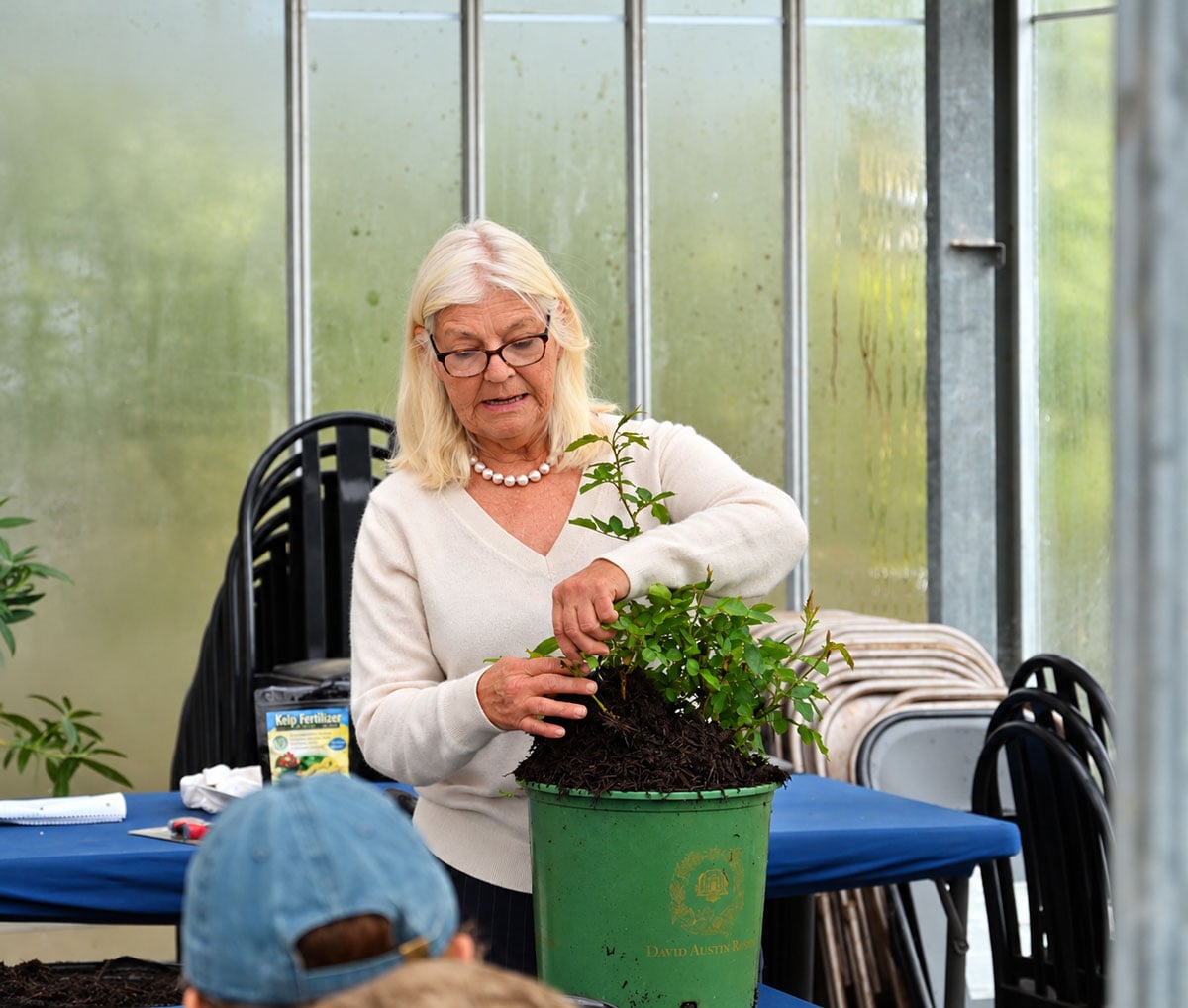
Pam Powers, president of the Arlington Rose Foundation and a nationally recognized rose expert, brought her knowledge, humor and infectious enthusiasm to Abernethy & Spencer Greenhouse and Garden Center in Purcellville on Oct. 11.
Her workshop, appropriately titled “Putting Roses to Bed,” was part gardening lesson, part storytelling and a delightful reminder that a little love in autumn can bring glorious rewards come spring.
Powers has a wonderfully practical way of looking at winter rose care. She calls it insurance.
We insure our homes, our cars and our valuables, she explained. Why wouldn’t we protect the beautiful rose bushes we’ve spent months, sometimes years, nurturing?
And winter, even in Northern Virginia, can be unpredictable.
Powers recalled a fellow rose grower who decided winter protection wasn’t necessary after several mild winters. Then came the bitter cold. The gardener lost roughly a third of her roses.
Powers lost none. Her secret? A little preparation, some mulch and knowing when to leave well enough alone.
First, stop feeding the roses.
As the days grow shorter, roses need to understand that bedtime is approaching. Fertilizing too late encourages new growth when the plant should be preparing for dormancy.
In Northern Virginia, Powers recommends stopping granular fertilizer around Labor Day and liquid fertilizer by late September.
Those faded blooms? It’s time to stop deadheading, too. Some varieties will reward gardeners with colorful rose hips, little red and orange treasures that brighten the winter garden and provide food for birds.
Next comes a little housekeeping.
Remove fallen leaves and garden debris that could harbor diseases and pests over winter. Check the soil, too. Powers explained that roses prefer a soil pH between 6.25 and 7, with about 6.5 being ideal.
Then comes pruning, but not the dramatic spring haircut.
Around Thanksgiving, Powers recommends a light cosmetic trim for most modern roses, particularly long, unruly canes that could snap under heavy snow or ice. Once-blooming old garden roses and ramblers are exceptions because pruning them at the wrong time can sacrifice next year’s flowers.
The serious pruning can wait until March.
And finally, the winter blanket.
Mulch, generously mounded around the base of a rose bush and up the lower stems, helps protect it from freezing temperatures. Potted roses need extra protection, too, whether placed in a sheltered location or insulated with mulch.
But there’s one important catch. When spring arrives, that heavy winter blanket must come off.
Powers described visiting a garden where hundreds of roses were struggling because their protective mulch had never been removed. Even in the heat of summer, the plants were still wearing their winter coats—and nobody wants to wear a winter coat in July.
Throughout the presentation, Powers answered questions about everything from soil testing and troublesome cane borers to the fascinating history of a delicate white rose called Niphetos.
The historic rose, whose name means “fallen snow,” was identified as a variety associated with the journey of America’s Unknown Soldier from France. Once difficult to find in the United States because of its sensitivity to cold, it has been reintroduced to gardens with the help of dedicated rose enthusiasts.
With proper winter protection, Powers explained, even tender roses can return to bloom year after year.
There were door prizes, gardening tips and plenty of questions, but perhaps the most reassuring message was that preparing roses for winter doesn’t have to be complicated.
A little water before bedtime, a tidy garden, a protective blanket of mulch and some patience until spring can make all the difference.
And isn’t that one of the loveliest things about gardening?
While winter settles over Loudoun County, beneath the soil and mulch, another season is quietly waiting.
We can dream of June mornings, warm sunshine, fragrant blossoms and roses spilling over garden fences.
For now, sweet dreams, roses. We’ll see you in the spring.
From Roses to Holiday Wreaths
As the roses settle in for winter, Abernethy & Spencer is turning its attention to another seasonal tradition: holiday wreath-making.
Led by the garden center’s own Desi Lee, the hands-on workshops invite participants to create beautiful, one-of-a-kind holiday wreaths using locally sourced greenery and festive accents. Each participant will design a wreath on a 14-inch ring and take home a handmade creation ready to brighten a front door or home.
Workshops are scheduled for Saturday, Nov. 28, at 11 a.m.; Sunday, Nov. 29, at 2 p.m.; Saturday, Dec. 5, at 2 p.m.; and Sunday, Dec. 6, at 11 a.m.
The fun doesn’t end with the holidays. The garden center plans to offer workshops throughout the winter and beyond, giving gardeners and creative spirits plenty of reasons to return.
Abernethy & Spencer Greenhouse and Garden Center is located at 18035 Lincoln Road in Purcellville. For workshop information and registration, visit shop.abernethyspencer.com/subdept/58/workshops or call 540-338-9118.
Comments
Any name-calling and profanity will be taken off. The webmaster reserves the right to remove any offensive posts.