


Dirty-Coal-Powered Water-Sucking Sprawling Data Centers
By John P. Flannery, II
Multi Gigawatt Data Centers in Loudoun County exist in large numbers, operate at high speeds, full time all the time; they’ve altered forever the residential, farmland and small business community that defined the Loudoun we once enjoyed.
From 1997 to July 2024, the expansion in square feet for the County’s foot print of data centers has grown from over 10 million square feet in 1997, to about 90 million square feet last July, according to “A Holistic Review of Data Center Impacts in Loudoun County,VA,” page 4.

The County brags on its Economic Development web site that there has not been a single day without data center construction in Loudoun for 14 years. Is that really something to crow about?
Data Centers treat “us,” the people who live here, who were here, as no more than a pliable subdivision of their over-extended over-reaching industrial park; they are busy working around us.
You may have heard words of reassurance from the data center reps, the oleaginous apologists for the Data Centers.
You’ve seen their brightly colored sunshiny ads. Be happy, don’t worry. These Centers are a good thing they say. For who? Not for us folks.
The Centers have a capacious appetite for dirty fossil fuel power from coal sites in West Virginia, they daily inhale enormous volumes of our potable water, our drinking water, to “cool” the heat from their ever-busy servers that define the centers, the thousands upon thousands of square acres of boxes in search of an aesthetic.
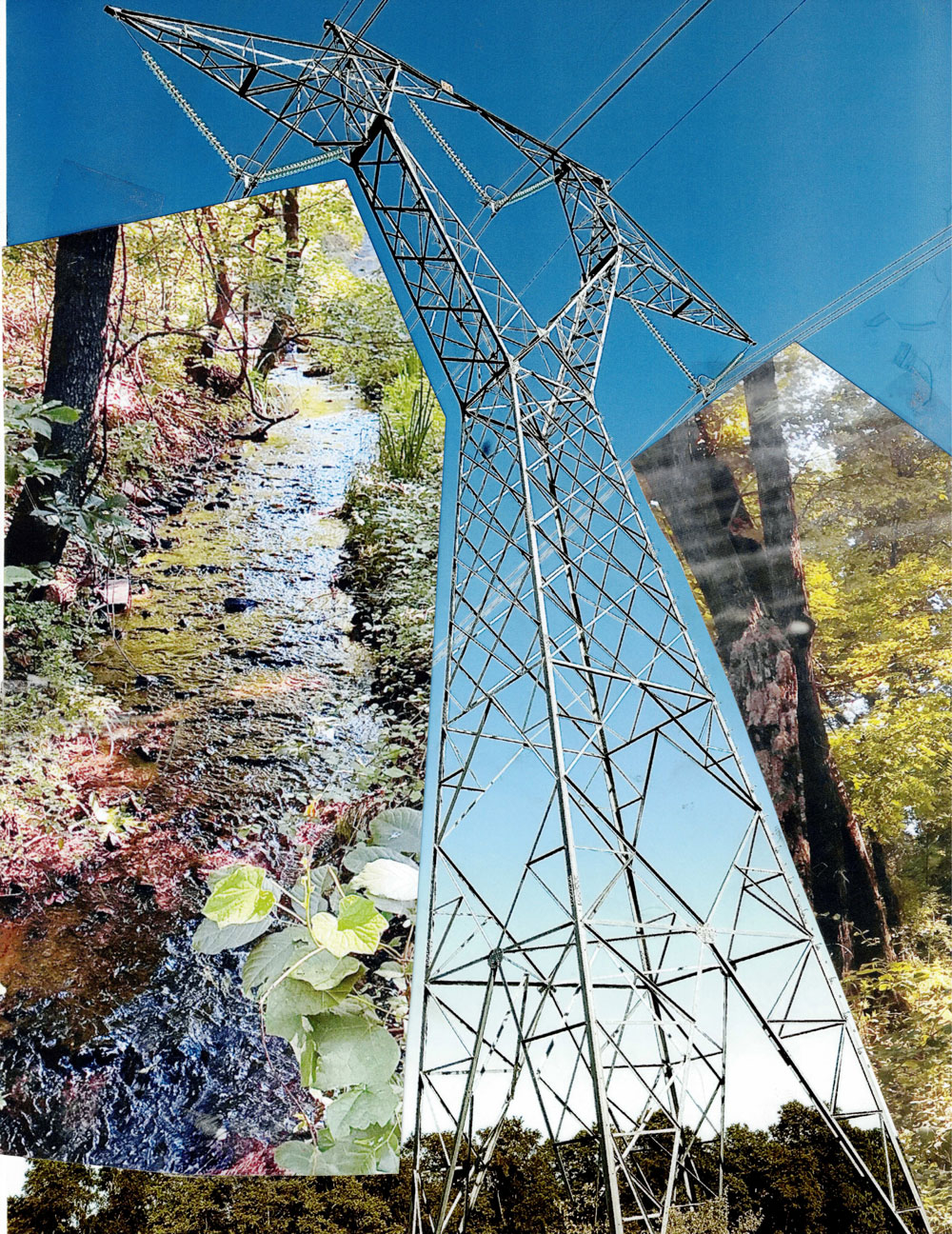
We must beware the power guzzlers drawing upon these coal sites and burying these toxic power lines. Burying is not the answer. It’s more complicated than that. Bloomberg Intelligence reportedly observed that “its research shows data centers … could be responsible for as much as 17% of all US electricity consumption by 2030.” The US Department of Energy has said one data center “can require 50 times the electricity of a typical office building.”
These data center developers give lip service to renewables but, at the same time, the industry is considering re-purposing former coal mines, or coal fired power plants, to be home to data centers. See Darrell Proctor, “Power Demand from Data Centers keeping Coal Fired Plants Online,” Power Magazine, Oct. 16 2024. There appears we have a pivot away from our County’s decarbonization goals and some think nuclear is the viable alternative, in other words, that we may trade the risk of Green House Gasses for radiation.
In Virginia, Data Centers have consumed a staggering 31% of Dominion Energy Virginia’s electricity sales in 2022—according to Data Center Impacts, pages 7- 8.
We must address the looming disparity, as usage may soon exceed capacity. Our community’s sorry profile increasingly is “massive facilities, newly constructed substations, and sprawling transmission lines that now encroach upon green spaces and suburban neighborhoods while residents contend with the constant noise of cooling systems, diesel generators, and ongoing construction.” This is found among the Data Center Impacts, p. 8.
Worse, we will be forced to subsidize this fool fuel infrastructure because the cost will be distributed across all ratepayers, us residents included, to underwrite power lines from West Virginia’s coal fields that we oppose.
What about our water supply? In the last five years demand for potable water, clean drinking water, has increased dramatically, by 266%. Water cooling is how the data centers mostly cool their servers. There has been a modest increase in reclaimed water. One test of good will would have been that the Data Centers only used reclaimed water.
Consider the fact that “[i]n 2023 alone, Loudoun data centers used 1.6 billion gallons of water, nearly 10% of the County’s total water use,” found among the impacts at pages 12-13. Financial Correspondent Camilla Hodgson wrote that “US tech groups’ water consumption soar[ed] in ‘data center alley.’” Silicon Angle’s Mike Wheatley wrote, “Virginia’s datacenters guzzle water like there’s no tomorrow.”
We also have water quality concerns—13% of our perennial streams are considered impaired; data center development directly results in increased impervious surface cover, noted among the Data Center Impacts, p. 15. “Impervious surface cover” means liquid can’t get through the ground cover, a bar to “getting through” in an area of 21 million square miles of build out in Loudoun County. This increases storm water runoff and poor water quality—Data Center Impacts at pages 15-16. The runoff contains “pollutants, oils, fuel, heavy metals, chemical and sediments [that] … can enter nearby watersheds during [Data Center] construction.” This is an assault on the surrounding watersheds.
The Virginia Department of Environmental Quality studied the effect of “4,000 diesel generators to support [the] energy demand,” of Data Centers, ranging in size “between 600 to 3500 kilowatts.” This makes us worry about greenhouse gases. It’s the case that “a single 60 MW data center operating continuously emits about 236,520 tons of CO2 annually.” The data suggests possible adverse human health effects. This can be found on page 16.
Data Centers “increase habitat loss, fragmentation, and deforestation …” Nor does it stop there: “Loudoun has seen housing development that can’t keep up with population growth.” The argument has been made that early zoning laws allowed data centers to develop in residential areas, and this limited the land for residential use, and the effects persist to this day (pages 18-20).
In an ironic turn, the homeowners in the Hiddenwood Lane neighborhood, in Arcola, Virginia, sought to change their zoning from suburban to industrial data centers, to sell their property to data center developers.
They wanted to avoid the industrial construction in the area by selling out. But to grant what they wanted meant that the nearby Briarfield Estates neighborhood would then have to suffer the effects of Hiddenwood’s data center construction.
It was the approval of several data centers by the County Supervisors that resulted in the community of Hiddenwood being almost entirely surrounded by data centers.
It was insufferable. There was “constant construction, noise, debris, and only one access road in and out of the community, mak[ing] it difficult for residents, delivery drivers and emergency vehicles to access the community,” according to page 21.
The saga of Hiddenwood can’t be ignored. It can’t be dismissed as an exception. Hiddenwood suggests the data centers don’t care a digital bit or byte about the burden they place on our citizens who live and work here, who were here long before these perilous ever-humming machines arrived.
Can you imagine paying the user costs for the coal fire energy that the data centers need to power their centers—after citizens opposed these coal fired power lines? Can you imagine the risk to the supply and quality of drinking water, as their usage closes on county-wide capacity?
These data centers are not sustainable. The developers want too much, care too little to serve our community, and it’s high time we had a moratorium on any more data centers in this County, and that means every data center application poised to pass but not yet approved.
We are not a subdivision of the data centers’ business plan. We are talking about power, from coal fire to nuclear, for the needs of the data centers, not us. We need to preserve and protect our water, and not use it so recklessly to cool heated servers. If data centers are to continue, they must reclaim the water—they don’t get to waste our potable drinking water.
We need a deadline for action—it should reflect our concern for the environment—let’s make that date—December 24, 2025—the day “John of the Mountains,” John Muir, passed in 1914. We must begin to restore what we’ve lost, what we got so wrong about these Data Centers.
John P. Flannery, II, Who’s Who in America, an elected director and the treasurer of Loudoun County’s Soil and Water Conservation District. This op-ed reflects only his personal view. He is a former NY federal prosecutor, Asst. Bronx DA, Special Counsel to the US Congress’ Judiciary and Labor Committees. He appears on tv and social media, discussing law, politics and community affairs. Flannery has undergrad degrees in Physics (Fordham), engineering (Columbia), law (Columbia), and a masters in information science (GW Graduate School). Flannery and his wife Holly have a small farm in Lovettsville.
Comments
Any name-calling and profanity will be taken off. The webmaster reserves the right to remove any offensive posts.
1 Comment
e-edition
I’m reading this on a site hosted by a Dirty-Coal-Powered Water-Sucking Sprawling Data Center. We all use the web to read the Blue RIdge Leader, pay bills, shop, and reas news – all hosted by Dirty-Coal-Powered Water-Sucking Sprawling Data Centers. WHat do you suggest as an option?