


“It’s Absurd:” Loudoun Supervisors Criticize Quantum Park Data Center Expansion
By Sophia Clifton
The Loudoun County Board of Supervisors expressed skepticism toward another proposed data center project in eastern Loudoun during an April 15 public hearing on the Quantum Park zoning amendment, with several supervisors openly questioning whether the county has reached a breaking point on continued data center growth.
After a lengthy discussion, the board voted 6-2-1 to move the application to the May 19 Board of Supervisors business meeting for a final decision. Supervisors Juli Briskman (D-Algonkian) and Laura TeKrony (D-Little River) voted against advancing the item, while several other supervisors indicated they are likely to oppose the project when it returns for a final vote. Supervisor Sylvia Glass (D-Broad Run), whose district includes the site, was absent.
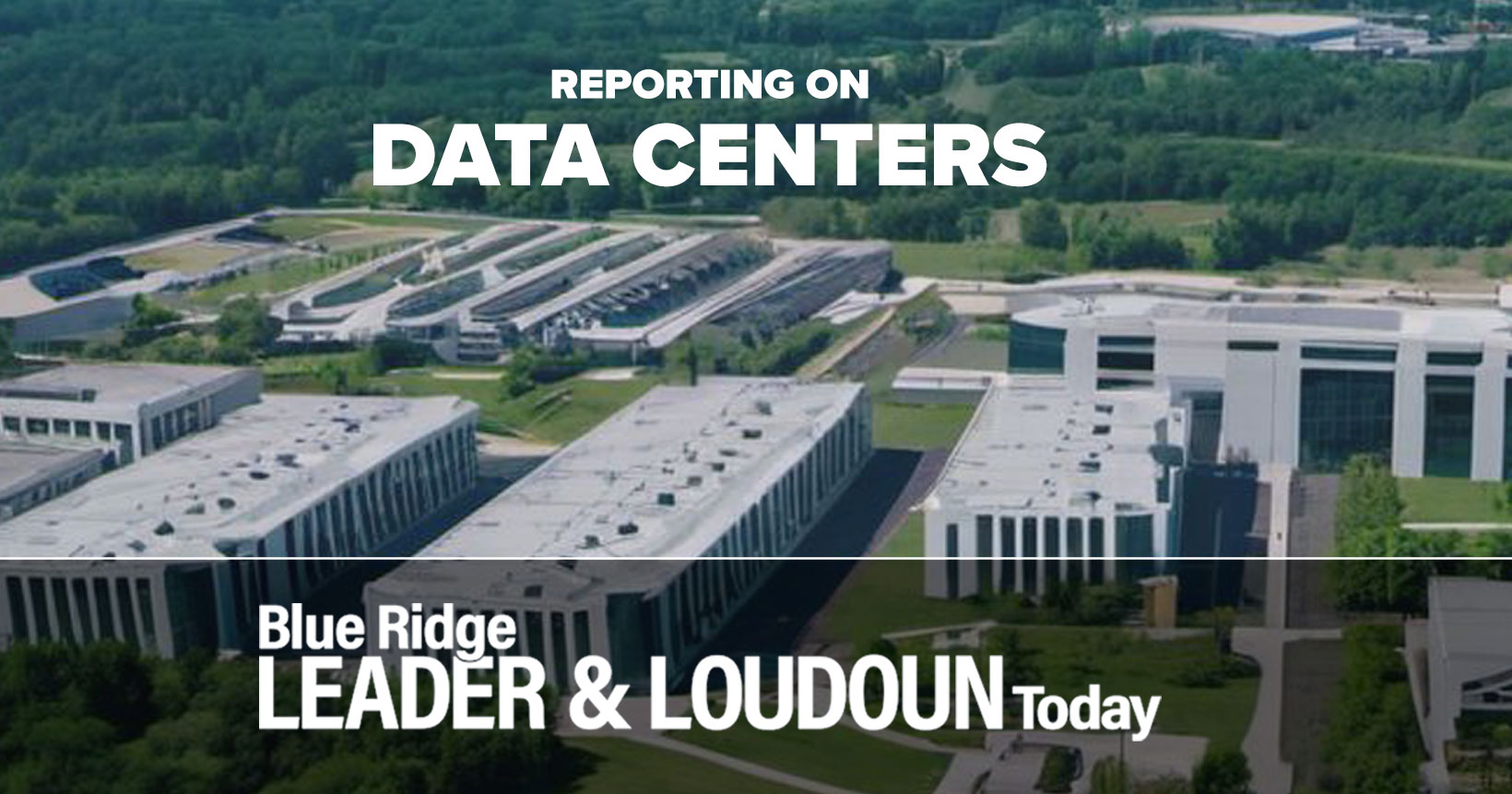
The proposal would allow two new data center buildings and a GIS substation on roughly 40 acres within the Quantum Park office campus near Loudoun County Parkway and Waxpool Road in Ashburn.
County staff said the project includes transportation improvements, right-of-way dedication for future road connections, shared-use paths along Loudoun County Parkway and Waxpool Road, and enhanced landscaping and screening.
Over the course of the hearing, the discussion became less about the specifics of the proposal and more about Loudoun County’s broader struggle over the future of data center development.
Several supervisors repeatedly pressed staff on whether the project could proceed without board approval because of earlier zoning approvals tied to the site’s original WorldCom-era development plan.
Staff clarified multiple times that although the application is “grandfathered” under the county’s older zoning ordinance, the project still requires approval because the original concept plan tied development to a specific site layout.
“They cannot develop, cannot be done without the board approval,” Loudoun Planning and Zoning staff member Hoa N. Dao told supervisors during the hearing.
Supervisor Koran Saines (D-Sterling) repeatedly returned to that point during questioning.
“So regardless if we say yes or no,” Saines said, “if we say no, these are not being built regardless.”
The applicant, represented by real estate attorney Brian Winterhalter of DLA Piper, argued the proposal fits within the long-established technology and telecommunications character of the campus and surrounding area.
“The application before you to add two data center buildings to the campus is not in any way detracting from the office campus that is there,” Winterhalter said.
Winterhalter said the existing office buildings would remain and emphasized that the project had undergone extensive revisions during its review process, including three Planning Commission work sessions before ultimately receiving a recommendation of approval.
“A big part of that effort was reducing the building height … from 100 feet to 65 feet,” he said.
He also said the applicant redesigned the layout to preserve more visibility into the existing office campus from Loudoun County Parkway.
“The iconic, well known portion of the center of the campus will continue to be visible from Loudoun County Parkway,” Winterhalter said.
But supervisors remained unconvinced.
Supervisor Matthew Letourneau (R-Dulles) sharply criticized the proposal, saying the county has reached a point where developers are trying to fit data centers into every square foot of land possible.
“There comes a point where it just becomes egregious,” Letourneau said. “We’re really at the point where we’re gonna take a pond out to put more data centers in, to block an office building? It’s absurd.”
The ponds on the property became one of the hearing’s major discussion points.
The applicant plans to remove one pond entirely and modify another into a stormwater management facility. Winterhalter argued one of the ponds no longer serves any meaningful stormwater function.
“There is absolutely zero storm water management function to the eastern pond,” he said.
Still, several supervisors and county residents argued the ponds remain environmentally and visually valuable.
Tia Earman, speaking on behalf of the Piedmont Environmental Council, described Quantum Park as “one of our last corporate parks” and said the site’s ponds are known locally for bird activity.
Earman argued the proposal conflicts with the county’s planning goals for suburban employment areas and would continue replacing employment-oriented land with data center infrastructure.
“Additional data centers on this property do not advance county goals for the policy area,” she said.
Residents who spoke during the hearing echoed concerns about the cumulative impact of data center growth in eastern Loudoun.
Ashburn resident Jillian Cantor told supervisors the area already feels overwhelmed by industrial development.
“It is already terrible driving past there,” she said, referring to the growing concentration of data centers along Waxpool Road and nearby corridors.
“It makes me so upset. There can be no question at this point that data centers are harmful to people and to the environment,” Cantor added.
Chris Tandy, another resident who spoke during the hearing, criticized the continued expansion of data centers near neighborhoods and referenced growing public concern over noise and environmental impacts.
“The phrase ‘surrounded by data centers’ was mentioned,” Tandy said, “and I can’t help thinking that it really should be the new county slogan.”
Supervisors also questioned the applicant about generators, cooling systems, noise mitigation and setbacks from nearby residential areas.
TeKrony raised concerns about noise from existing nearby data centers and asked whether the applicant would commit to additional noise attenuation measures and Tier 4 generators.
Winterhalter said the applicant would agree to Tier 4 generators and would consider additional noise mitigation measures if needed.
The hearing reflected how dramatically Loudoun County’s political conversation around data centers has shifted in recent years.
For decades, county leaders largely embraced the industry because of the tax revenue it generates. Chair Phyllis Randall (D-At Large) acknowledged that reality during the hearing even while signaling opposition to the Quantum Park project itself.
“The truth is, data centers don’t raise our taxes,” Randall said. “In fact, they lower your taxes by a good little bit.”
But Randall also posed and answered a rhetorical question: “Have we gone over a tipping point for data centers themselves? I would say we have.”
Supervisor Mike Turner (D-Ashburn) echoed that concern, arguing that the cumulative strain on infrastructure can no longer be ignored.
“Every new data center we approve puts another burden on an already overburdened infrastructure in our county,” he said.
Supervisor Caleb Kershner (R-Catoctin) also expressed concern that some newer applications appear driven more by squeezing additional development into leftover spaces than by thoughtful planning.
“What we’re literally trying to do here is put it right up fairly near the road,” Kershner said.
Despite the criticism, the board ultimately voted to move the application forward for procedural reasons. Several supervisors noted that applications expected to face denial generally proceed to a business meeting so formal findings for denial can be prepared before a final vote.
“A yes vote to move an application to a business meeting is not a yes vote for the application,” Letourneau said.
The board is expected to take final action on the Quantum Park zoning amendment at its May 19 business meeting.
Comments
Any name-calling and profanity will be taken off. The webmaster reserves the right to remove any offensive posts.