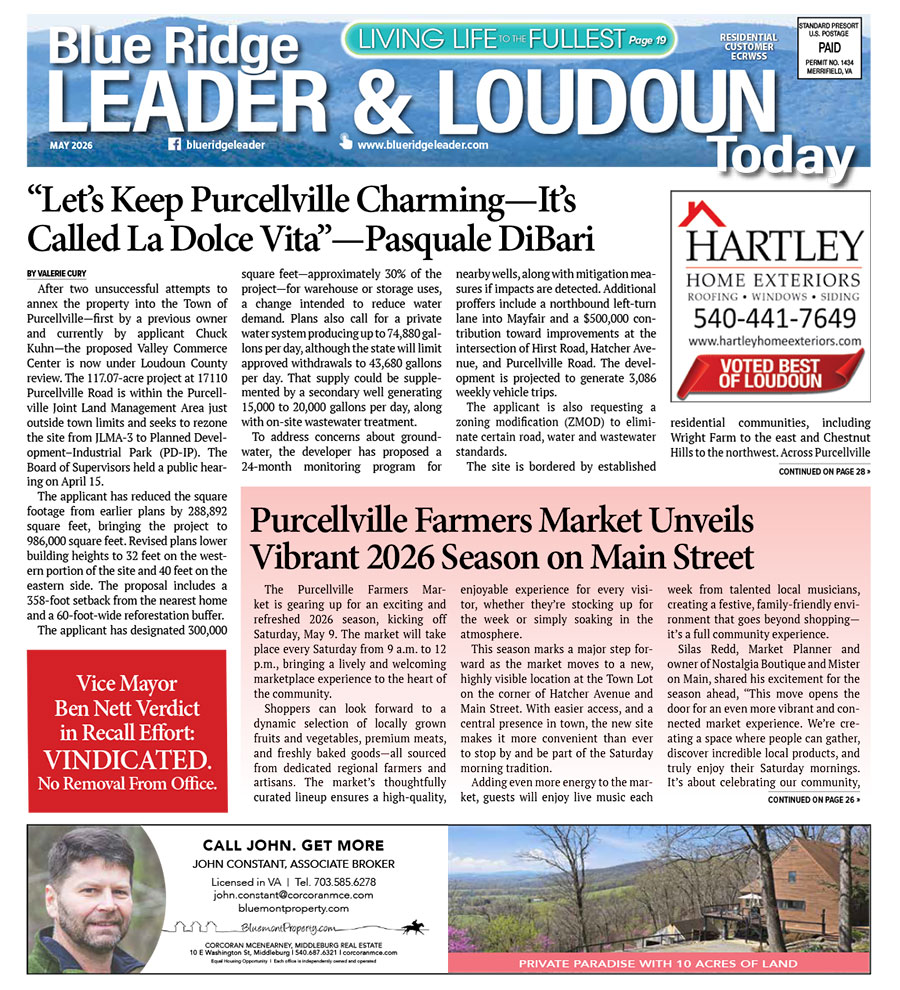


“You nailed it!” Leaders detail momentum behind new Commanders Stadium
By Valerie Cury
Momentum around the future home of the Washington Commanders was unmistakable at the RFK Stadium Palooza Bisnow (Bisnow.com/events) event at the Omni Shoreham Hotel on Feb. 25, where city and team leaders offered a detailed and at times candid look at the 70,000-seat stadium rising at the RFK campus.
On stage were Muriel Bowser, Commanders President Mark Clouse, and moderator Mike Drye of HKS, the lead architect designing the new venue. For fans across the region—including many in Loudoun County who regularly travel into Washington for games—the message was clear—this project is no longer theoretical. It is advancing on a defined timeline with visible progress already underway.
Drye, a partner and director of business development for HKS’s sports practice, the architectural firm leading the stadium’s design, has been closely involved in shaping the stadium’s vision. As moderator, he steered the conversation toward design, atmosphere and fan experience, underscoring HKS’s role in creating a venue that feels uniquely Washington while delivering a one-of-a-kind NFL environment.
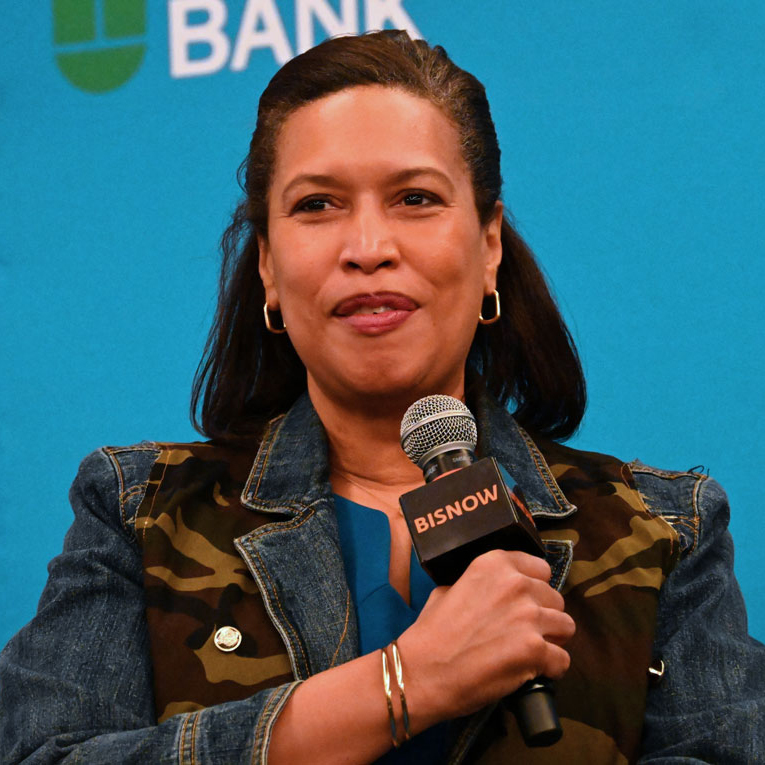
Mayor Muriel Bowser
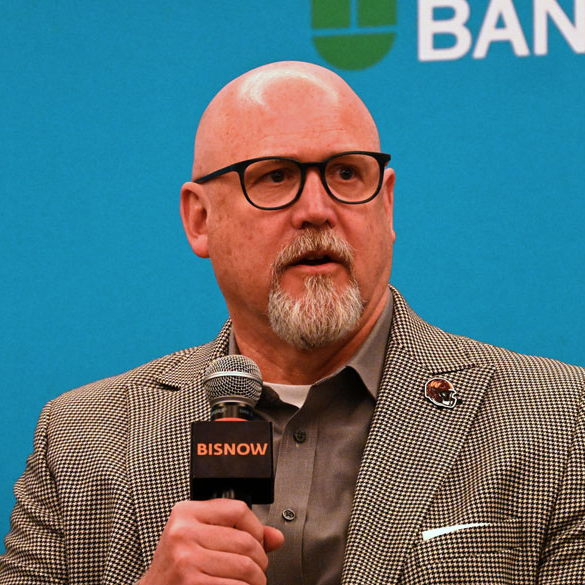
Mike Clouse, President Washington Commanders

Mike Drye, Partner & Office Director HKS Architecture
Mayor Bowser made it clear that before renderings, rooflines or game-day atmosphere, there was one critical first step. “Our number one priority… is to get control of the land, and it’s something that we have been working on for my entire 10 years—180 acres,” she said, referring to the RFK campus. Allowing the site to sit idle, she argued, was not an option. “For that land to continue to be blighted, it would be a disservice to our community.”
Bringing the Commanders back to the site, she explained, fits into a broader push to position Washington as a premier sports city. “People thought I was crazy. Maybe still do,” she said of declaring Washington, D.C. the sports capital. But with championships and major events already hosted—and the NFL Draft and a Super Bowl ahead—she suggested the city has earned that distinction.
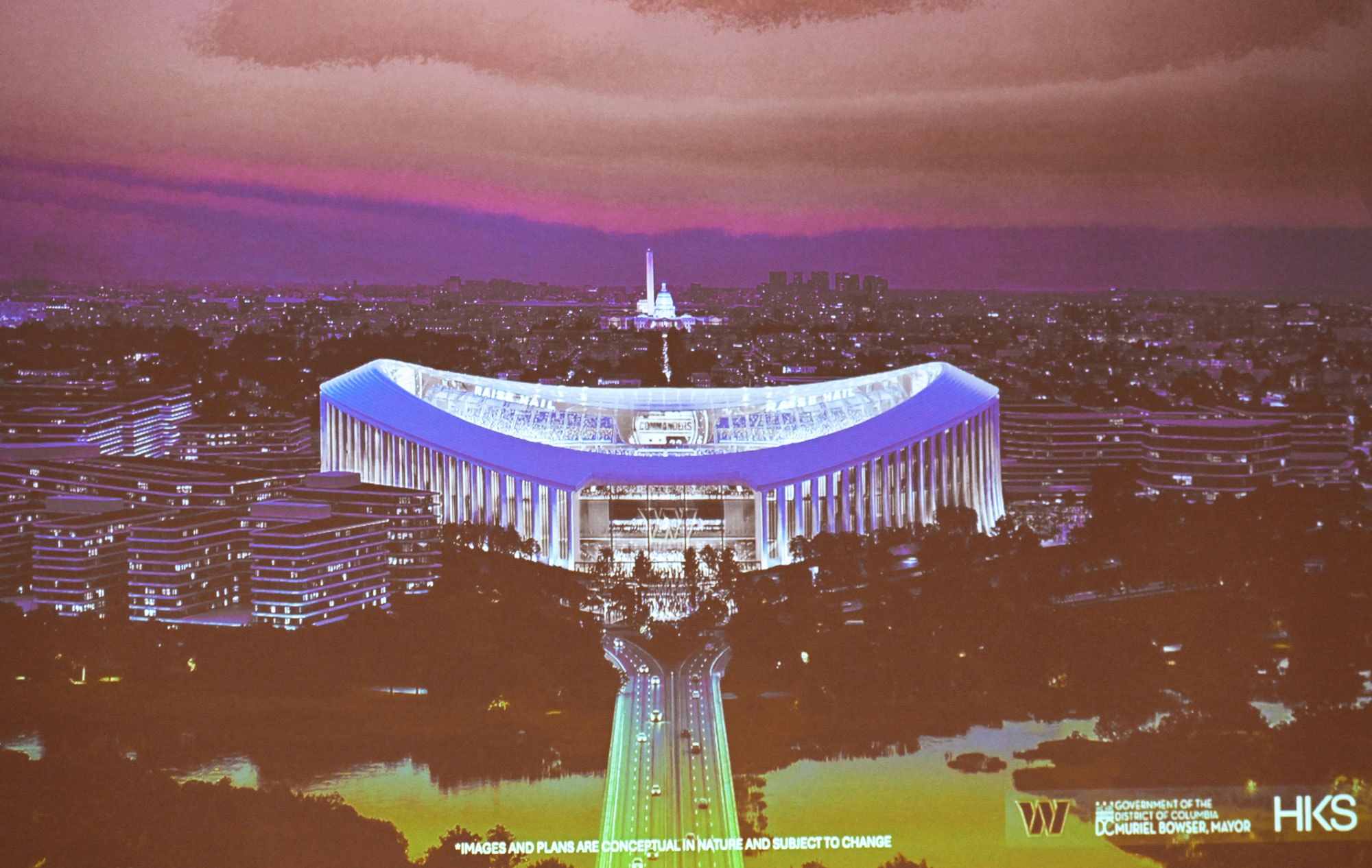
When Bowser first viewed the stadium renderings, she said she deliberately kept her reaction measured, asking questions about neighborhood impact, functionality and architectural compatibility. Then she delivered her conclusion: “You nailed it!” She praised the design for balancing legacy and innovation. “It harkened to its past, but it was very forward looking … It is respectful of the city’s architecture, and it stands on its own.”
For President of the Washington Commanders Mark Clouse, the vision centers squarely on the fan experience. “We wanted the fiercest place to play football in the NFL. We want teams to be afraid to come to the stadium to play the Commanders—the loudest stadium,” he said. At the same time, the building must reflect the character of the nation’s capital. “We still needed to bring this incredible beauty that is everywhere in the city … and we needed to fit into that.”
Clouse emphasized that tangible progress is already visible. “If you were paying attention, you will see that the old RFK is now come down to ground level, and we’re beginning to really prep the site … staying on a very, very tight timeline.” The organization is operating with a disciplined schedule, he added. “I can show you literally a weekly timeline from now until opening that stadium, and every week there are deliverables.”
One of the most discussed elements of the project is the stadium roof, which will allow year-round use. Clouse acknowledged that while there was early urging from the mayor on that feature, he has come to see its broader impact.
“One of the things I’ve really come to appreciate is what the roof not only enables … but it also allows us to employ people at the stadium year-round. So we’re actually giving people careers,” said Clouse. Instead of a venue active only on game days and a handful of summer concerts, the goal is a destination that hosts events throughout the year.
Bowser underscored that urgency and accountability have defined the partnership from the outset. Recalling an early conversation with ownership, she said, “If you throw down with me, I’ll throw down with you. And what that means is, if you’re all in, I’m all in.”
Timelines, she stressed, were not flexible. “If this is the date we have to meet, this is the date we have to meet, because I have an expiration date.” Even with political transitions inevitable, she said the project is being structured to be handed off “in very good shape,” with professionals in place to see it through.
Over the next year, fans can expect to see the structure begin to rise, additional renderings released—including views inside the bowl—and steady progress toward the 2030 opening. The team is also preparing to host the NFL Draft in 2027, another step in reinforcing Washington’s status on the national sports stage.
Still, amid construction schedules and civic strategy, both leaders returned to what ultimately matters most to supporters. “Winning makes everything better,” Bowser said with a smile.
For Loudoun County readers who have followed the Commanders through decades, the takeaway is straightforward—the stadium is moving forward, leadership is aligned, and the ambition is to deliver a home-field advantage worthy of the nation’s capital. As steel begins to rise at RFK, so does anticipation for a new era of Commanders football.
Bisnow hosts local panels on projects and trends shaping commercial real estate.
Comments
Any name-calling and profanity will be taken off. The webmaster reserves the right to remove any offensive posts.