



Subramanyam hosts town hall in Sterling to address shutdown impact
By Valerie Cury
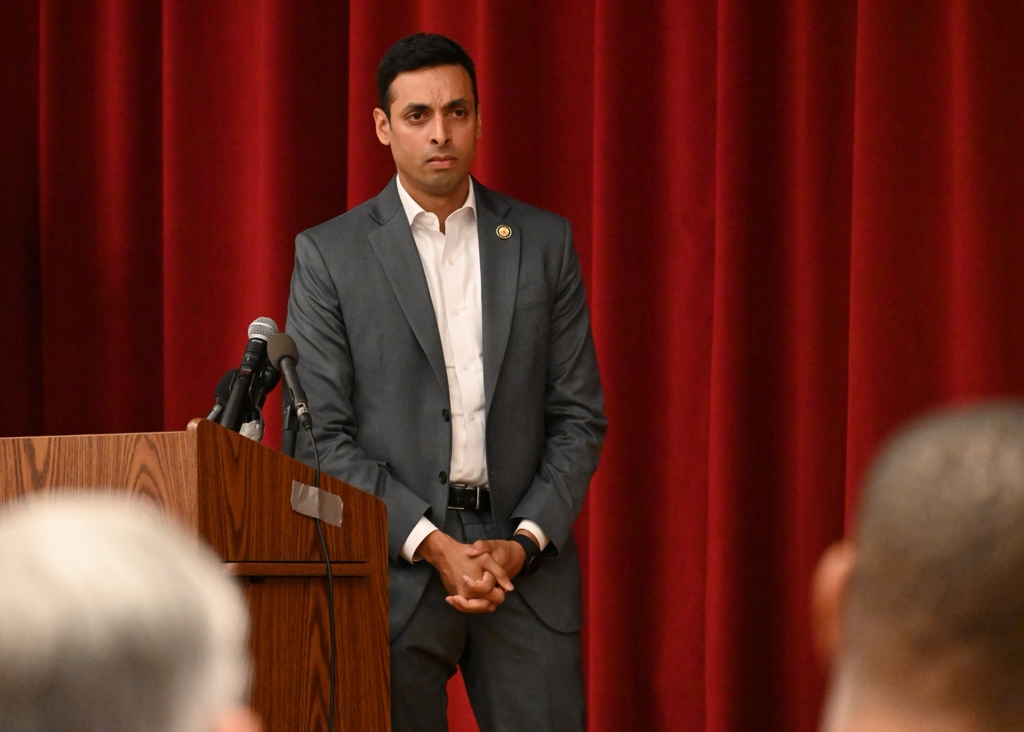
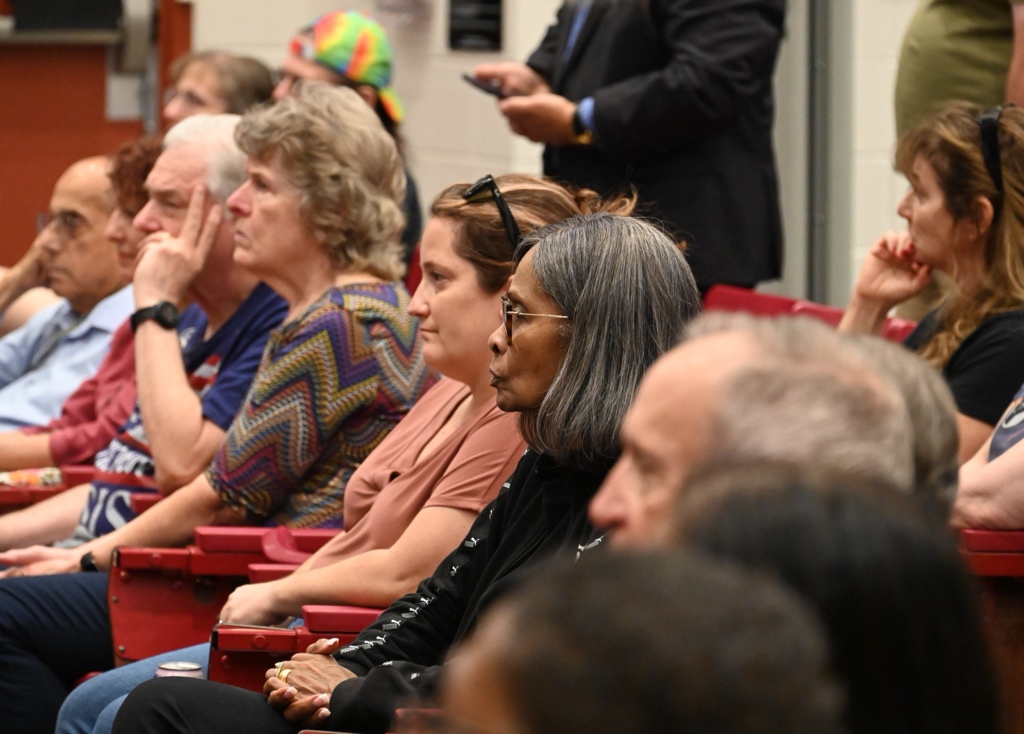
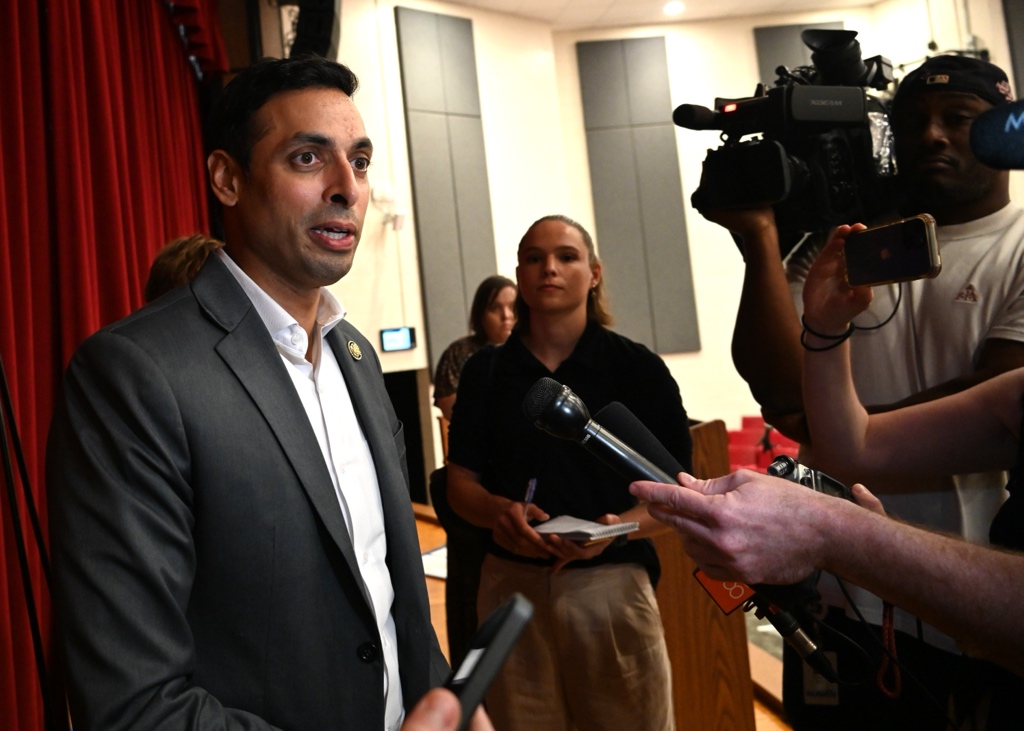
With the federal government shutdown entering its fourth day, Congressman Suhas Subramanyam (D-10) hosted a town hall on Oct. 4 at Simpson Middle School to hear from constituents and share resources for those affected. The event focused on the shutdown’s local and national consequences, particularly for federal workers, contractors, and access to public services.
“Today, I know there’s lots of other things you could be doing—college football, beautiful weather—but you decided to spend it with us, so I appreciate it,” Subramanyam told the crowd. He noted that while his town halls usually focus on legislative updates, this one addressed the absence of progress in Congress, with the government currently stalled due to a lack of agreement on the federal budget.
Subramanyam emphasized that his district is home to a large number of federal employees and contractors, many of whom are now furloughed or working without pay. He shared that federal services such as Social Security and veterans’ benefits are already beginning to experience delays, and some agencies have begun notifying his office of limited operations or closures.
“This will not just hurt our community. This will hurt every single American,” he said.
He cited discussions with air traffic controllers who warned that, as during the last shutdown, workers may stop reporting if they miss multiple paychecks—raising concerns about travel safety and broader economic impacts. He also warned that contractors are not guaranteed back pay, unlike most federal employees, and could permanently lose income depending on their contract terms.
Subramanyam was critical of Congress’s inaction, stating that there have been no sessions scheduled for the upcoming week to negotiate a resolution. “In pretty much every industry I’ve worked in besides this one, if you don’t show up to work, you get fired,” he remarked, calling for bipartisan negotiations to resume.
He also raised concerns about how prolonged shutdowns demoralize the federal workforce, noting that frequent furloughs and funding uncertainty are driving talented professionals out of public service. “We’re losing the best and brightest in our federal workforce,” he said, adding that this loss directly impacts the efficiency and effectiveness of government services for all citizens.
Subramanyam outlined key areas affected by the shutdown, including food inspections, NIH-funded medical research, SBA loans, and Department of Justice grants. He pushed back against claims that the funding dispute is over healthcare benefits for undocumented immigrants, stating, “None of the programs we’re trying to protect are actually [for] illegal immigrants.”
To illustrate the potential consequences of proposed funding cuts, Subramanyam showed an example of a health insurance premium increasing from $787 to over $2,100 a month, noting that eliminating subsidies or cutting healthcare funding could double or triple premiums for many residents.
He reiterated that although some refer to the current spending proposal as a “clean CR” (continuing resolution), it is based on outdated provisions and lacks true bipartisan support. “If you wanted a clean CR, you could do something more like [what was passed] last December,” he said, referencing a prior agreement that received broad support across party lines.
To address the economic fallout of shutdowns, Subramanyam is advocating for several legislative proposals. Among them are bills to provide back pay for contractors, allow federal employees to withdraw from retirement savings without penalty during shutdowns, and require banks to offer flexibility on mortgages and loans for affected workers.
He also pledged to personally decline his own congressional salary during the shutdown and has introduced legislation to suspend pay for all members of Congress during such periods. “The reason this keeps happening is because members of Congress themselves don’t feel the same pain,” he said. He floated the idea of adopting “snap elections”—a mechanism used in other countries—as a potential structural reform to increase accountability.
Before opening the floor to audience questions, Subramanyam closed with a commitment to continued advocacy on behalf of constituents, regardless of agency responsiveness. “Just know that we’re going to continue to call them anyway. We’re going to continue to advocate for you,” he said. “I’m going to show up in DC whether or not they’re there.”
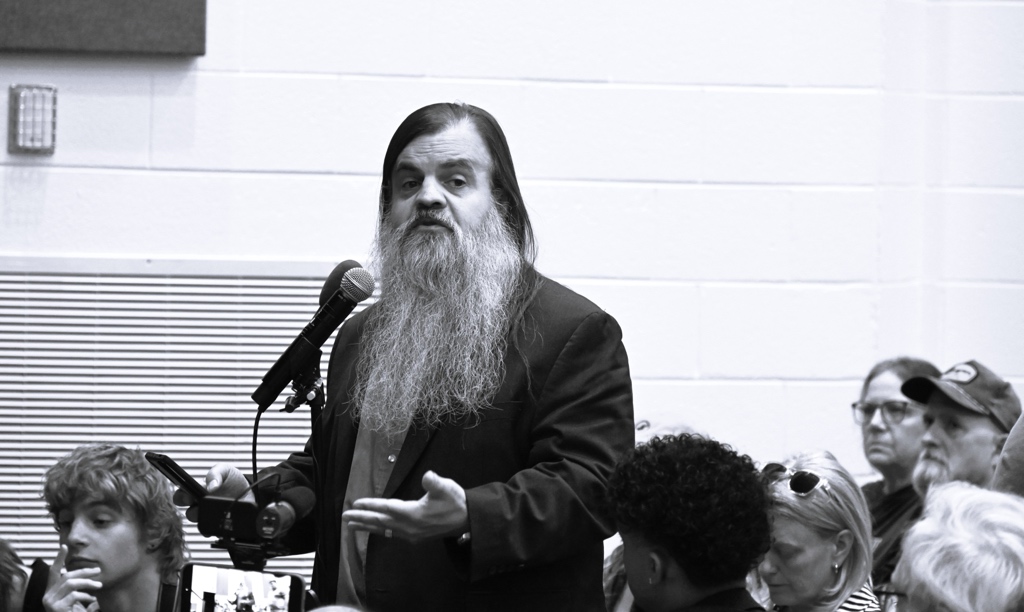
The first speaker said she lost her nonprofit job at the beginning of the year and with that lost her health insurance. “I am unemployed and paying for bare bones minimum coverage in the Virginia marketplace—provided by the Affordable Care Act. I’m increasingly concerned about what the Republicans are doing with our health care and the elimination of reasonable premiums, tax credits and subsidies …What are you and other Democrats doing about health care for Virginia workers”—and about protecting our democracy?
Subramanyam said that he wants to see real changes “to the way they’re treating our community and federal workers in our community—and contractors, because right now, assurances aren’t enough for me.”
Kimberly Weber said she sees her First Amendment rights and those of all American’s being stripped away.
Another speaker said she lost her job a few months ago and now she has only minimum health insurance that she can’t afford—and she is going to get pushed on to state assistance. “What power do we have” because this weaponization is real, she said.
Subramanyam said he has heard so many stories like this one and indicated that the job market is currently really tough. He said there was a job fair a few months ago and even though there are a lot of employers who attended, “there’s not a lot of jobs out there.”
“So, a lot of the wealth in our country is not making its way to everyday Americans,” said Subramanyam. “This administration is using their power to fire people in the federal government that do incredible work for our country.”
Bob, a Loudoun resident said the Israeli’s military action in Gaza is criminal, and the government is “committing war crimes.” He urged Subramanyam to “reject our government’s military and financial support of Israel’s immoral and legal action,” and urged Subramanyam to reject contributions from APAC.
Subramanyam reiterated that he and his colleagues do not want to take away people’s access to affordable health care—and don’t want to see the doubling and tripling of premiums that will affect every single American.
A Leesburg resident expressed concern about the nation’s economic state, criticizing the influence of Wall Street, Silicon Valley elites, and the military-industrial complex, which they believe are draining resources from the country’s productive sectors.
A Georgetown University professor said there are attacks on academic freedom, climate change research, and huge cuts to federal funding for research—and for “education in general, this has been a very, very hard year.”
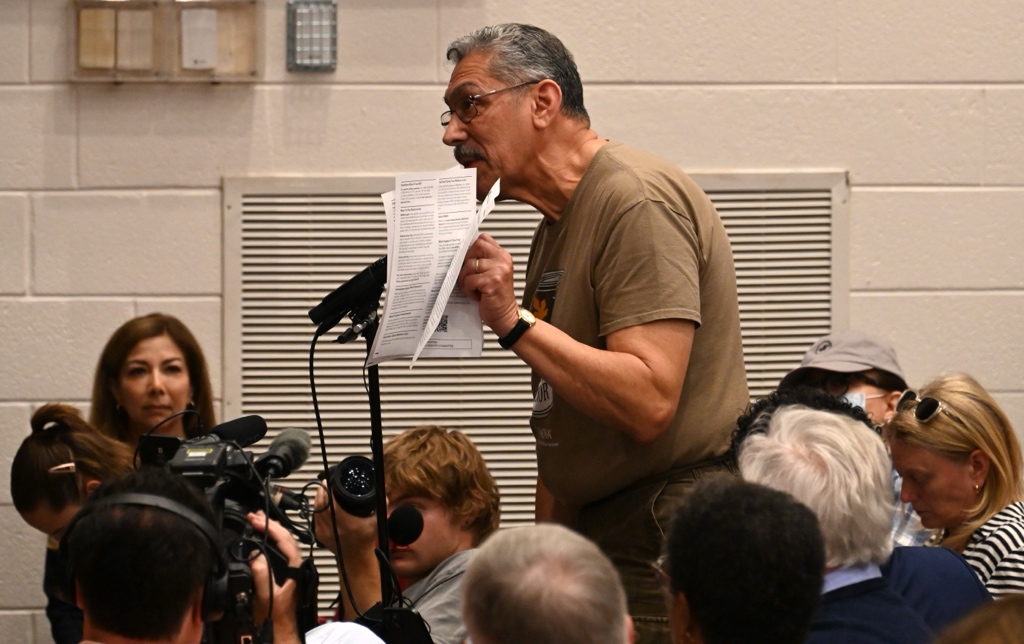
An Ashburn resident who works for a nonprofit federal contractor supporting people with disabilities voiced concerns about the impact of government shutdowns on contract workers. Representing a workforce of about 1,000 employees—many of whom have disabilities—the resident emphasized that, unlike federal employees, contractors do not receive back pay after shutdowns and often face immediate financial hardship. He urged lawmakers to consider reforms, such as automatic continuing resolutions or suspending congressional salaries, to prevent future shutdowns from being used as political leverage.
Subramanyam said that there is one bill that says “if you don’t get a budget together, we will automatically continue the government until you figure it out. I think it would give the executive branch a lot of power. So that’s what I’m thinking about. It’s why I’m trying to figure out if there’s an alternative way to both do continue the government during so there’s not never a shutdown again, but also not give a ton of leverage to the executive branch at the same time.”
Subramanyam said he plans to continue showing up at the Capitol this week in hopes of reaching a compromise. He emphasized that some of the proposals on the table, such as extending Affordable Care Act tax credits, have attracted bipartisan interest. A Republican member of Virginia’s congressional delegation, he noted, even introduced a bill to extend the credits for one year.
While acknowledging the political challenges, Subramanyam said that bipartisan solutions remain popular with the American people. “Sometimes it’s hard to tell whether both sides are negotiating in good faith,” he said. “But I’m committed to continuing the conversation and finding a path forward.”
Comments
Any name-calling and profanity will be taken off. The webmaster reserves the right to remove any offensive posts.