



Subramanyam hosts Medicaid Matters Town Hall which sparked emotional testimony
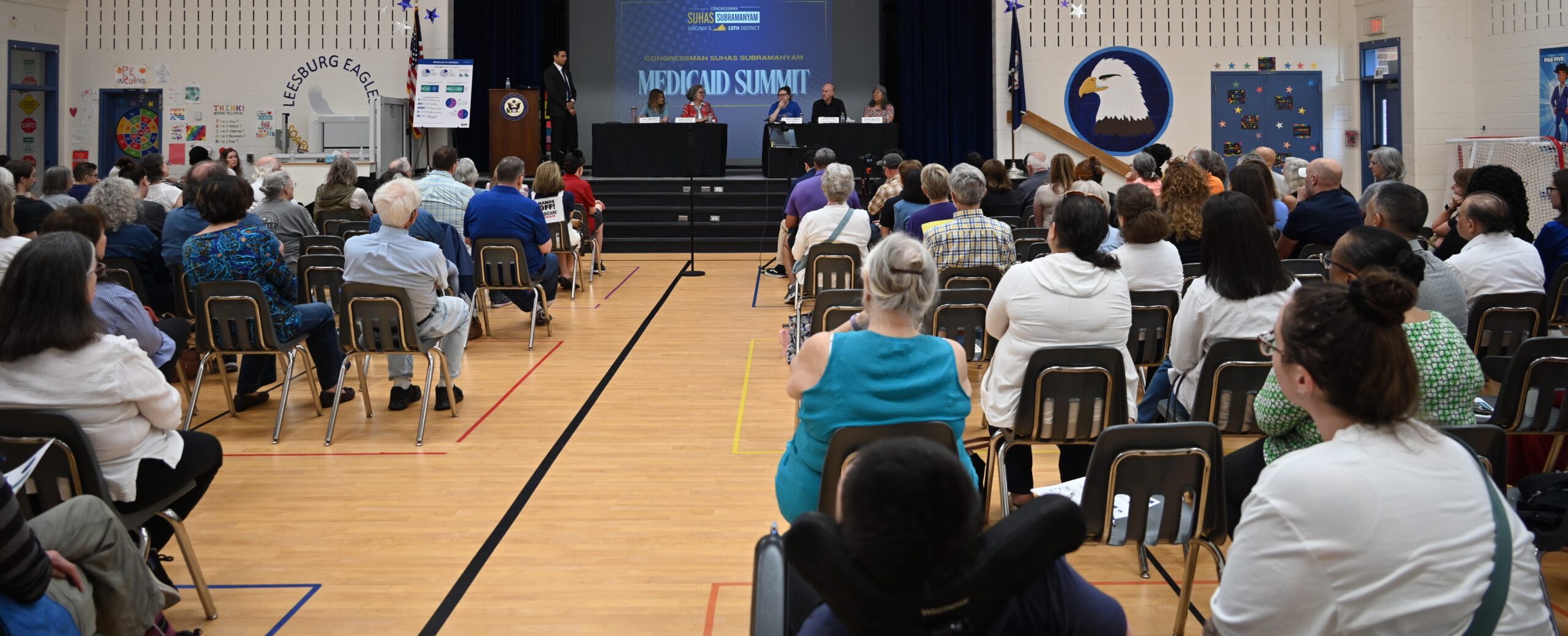
With federal leaders proposing changes to Medicaid, Congressman Suhas Subramanyam (D-VA-10) urged members of his district to get involved and speak out.
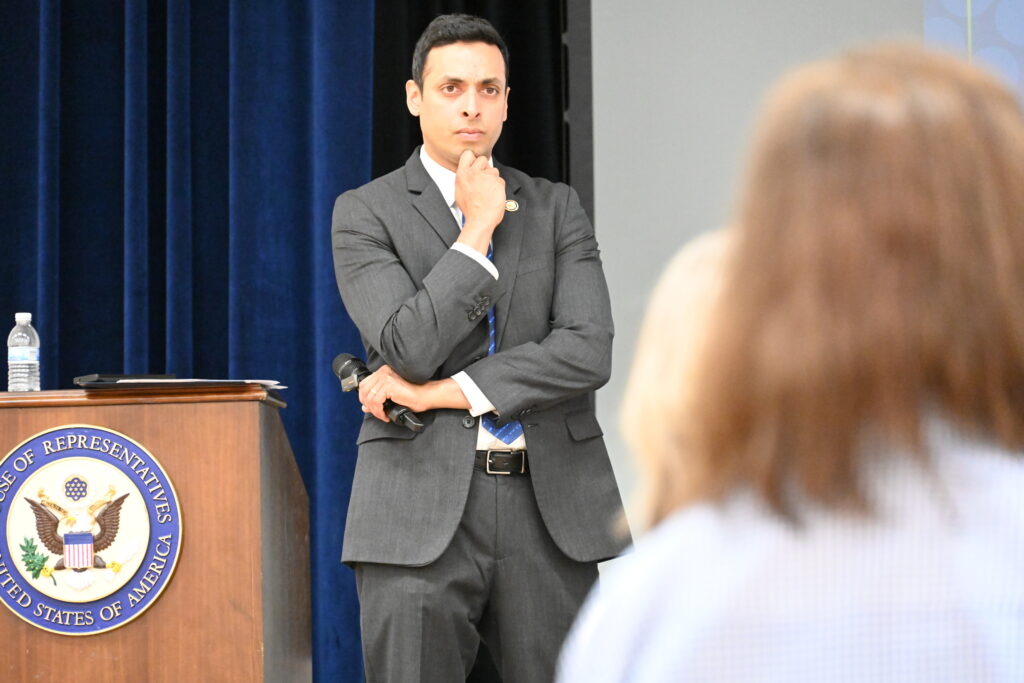
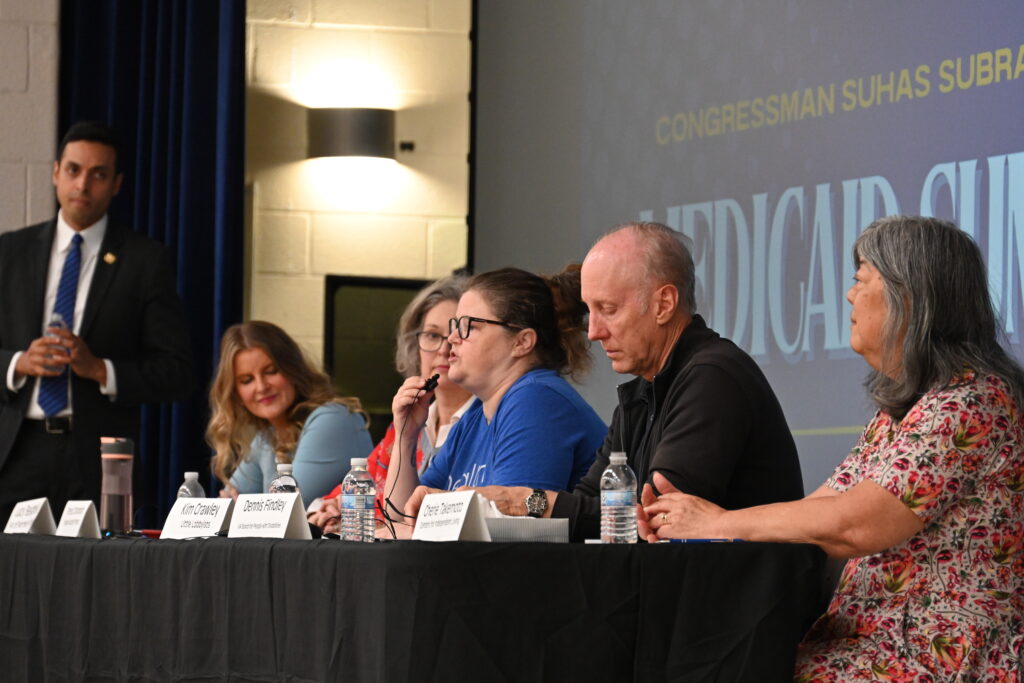
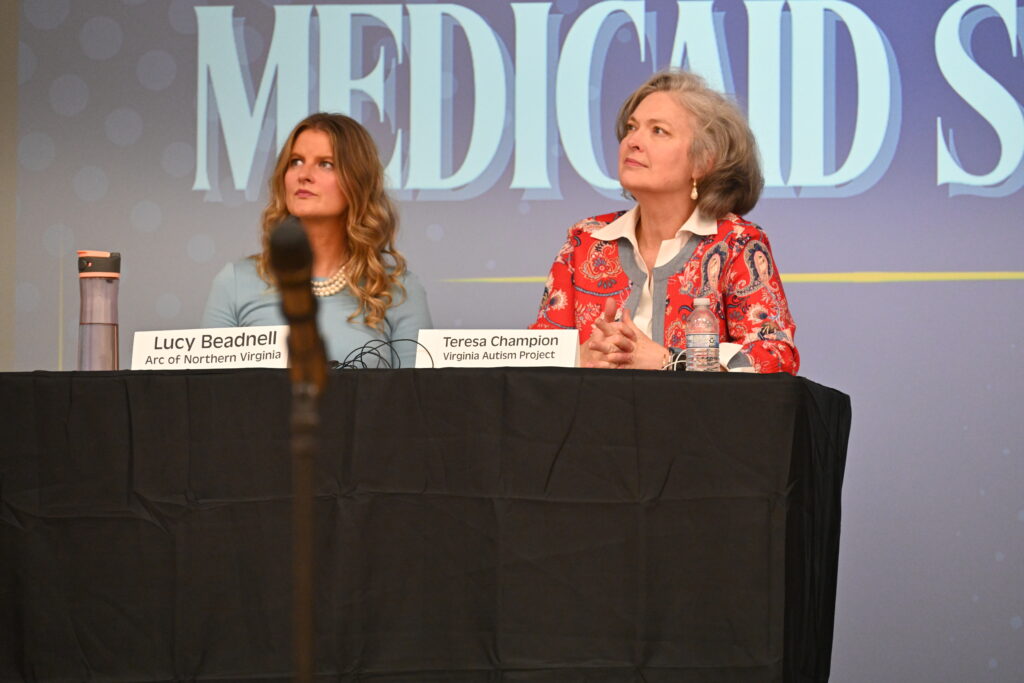
On May 3, Subramanyam held a town hall at Leesburg Elementary School to discuss why Medicaid matters. Panelists at the meeting included Lucy Beadnell of The Arc of Northern Virginia, Teresa Champion of the Virginia Autism Project, Kim Crawley representing Little Lobbyists, Dennis Findey of the Virginia Board for People with Disabilities, and Cherie Takemoto of the Centers for Independent Living.
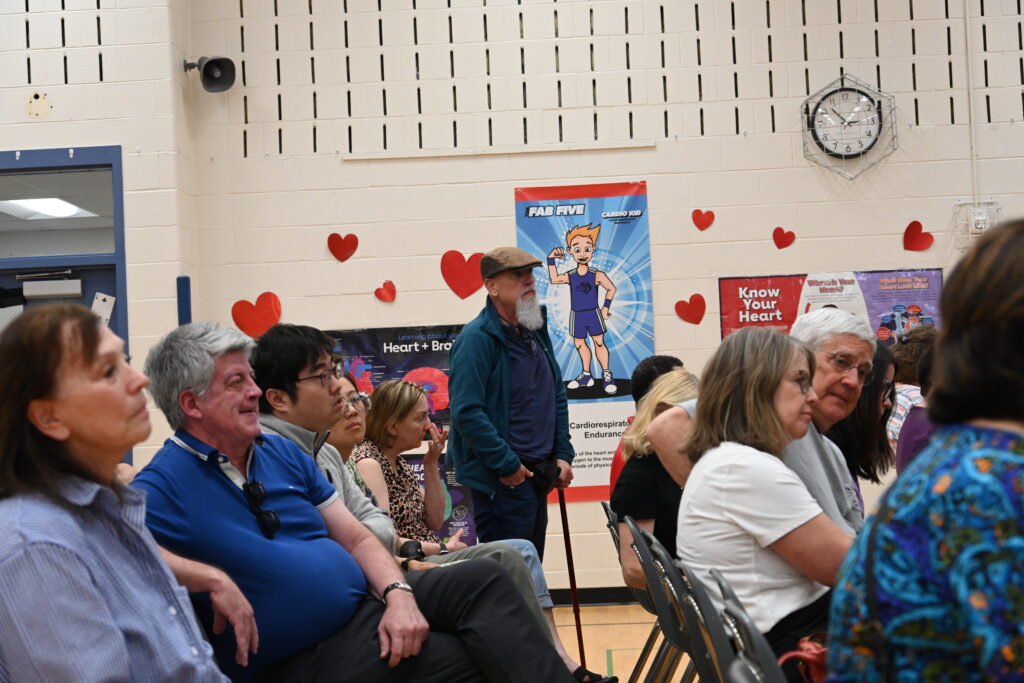
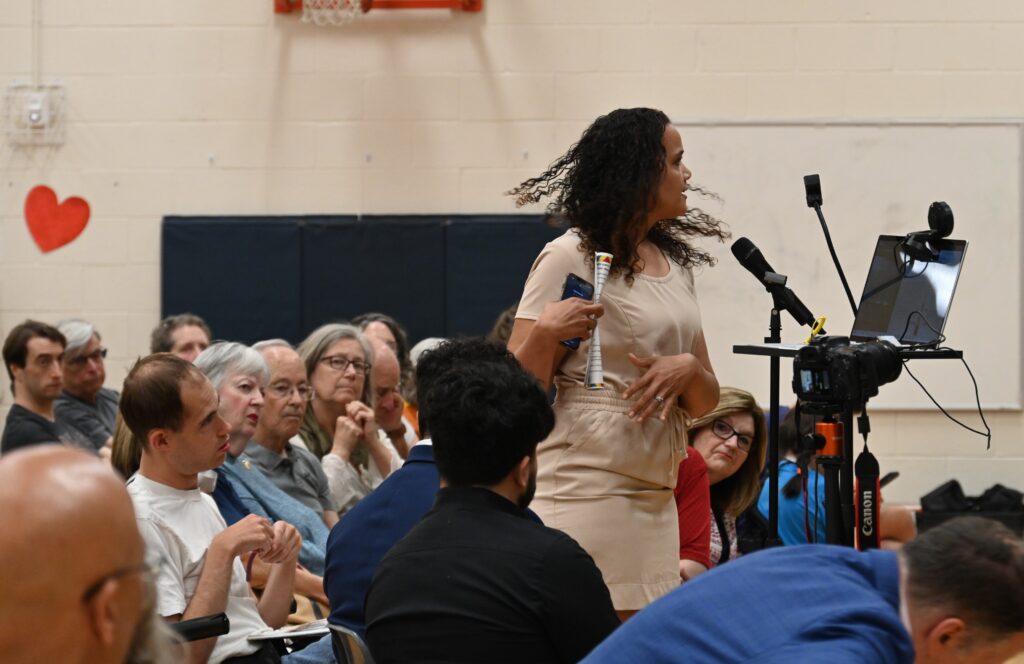
Subramanyam said he wanted to have a town hall to focus on Medicaid because cuts would “really hurt our community—and communities across Virginia—and across the country. This is also a forum for people to share their concerns, their questions and their stories,” he said.
He said Medicaid should be covering more things. “I think we should be expanding Medicaid, but instead, we’re in a position right now where despite being the most richest, powerful country in the world, we’re not willing to cover health care for our kids or our seniors or the people who need it most. So that’s a shame.
“It’s shameful and we should fight that every step of the way.” Subramanyam said that Medicaid is being looked at to make cuts. “Virginia is one of a few states that passed Medicaid expansion recently.” He explained that if the federal government cuts even 1% of its contributions to Virginia’s Medicaid program, “then everyone who benefited from Medicaid expansion over the past eight years loses access to Medicaid—that’s about 600,000 people across the Commonwealth.”
He said that the committee that oversees the budget has been told to cut $880 billion out of the budget.
“What does a cut to Medicaid mean generally? The committee that oversees Medicaid has been told to cut that much money from the budget. They’ve made public and private statements that Medicaid is one of their targets and because the math only works out if you’re cutting Medicaid, to get to that much money in cuts.”
Subramanyam also said there is a proposal to impose work requirements. He noted that half the people on Medicaid already work and half can’t work, “and simply can’t work in most cases or have trouble finding employment because of maybe some implicit discrimination towards people and their situation.”
He said that 1.8 million Virginians are enrolled in Medicaid, and about 11% of people are on Medicaid in his district. He said if people don’t have access to Medicaid anymore, they will be using emergency services at the hospitals more, and that will be difficult for everyone because it will raise premiums.
He said there is another proposal to cap an amount “and anything over that, you’re in charge of paying
for it yourself. So this will hurt not just the 11% on Medicaid who are friends and neighbors, our seniors, our kids.” Medicaid also serves as an eligibility qualifier for free and reduced student meal eligibility in Virginia, and that’s something that can’t be overlooked, he said.
Lucy Beadnell with the Arc of Northern Virginia said the Arc does a lot for people with developmental disabilities across the lifespan. “We are hearing constantly from people who rely on Medicaid and who are struggling. We are seeing people across the disability spectrum all day, every day, and our special needs trust and services program work with people who also have mental health and aging related needs.”
Beadnell said Medicaid supports a wide range of people, including those navigating Alzheimer’s and dementia in nursing homes, as well as individuals moving in and out of institutional care, homelessness, and mental health crises.
“I just can’t tell you how often the word Medicaid comes out of my mouth at my office, because it is meant to be the program of last resort—and boy is it. By the time people get to us, there is nothing else.” They have long waiting lists, she said.
Beadnell said uncertainty around potential Medicaid cuts is causing significant anxiety, especially in communities that depend heavily on these services and may struggle to navigate complex policy changes. She emphasized that for many, Medicaid isn’t optional—it’s what ensures basic needs are met, like getting out of bed, receiving meals, and avoiding serious health risks such as bed sores.
Teresa Champion with the nonprofit Virginia Autism Project which was formed in 2009, brings insurance coverage to families with a diagnosis of autism. “We work on issues about criminal justice reform, people who are in crisis with disabilities, encountering law enforcement, social services, Medicaid, housing—anything. She said there are 61 million people in the United States who live with disabilities—”that’s one in four adults.”
Kim Crawley, with Little Lobbyists, said the organization is the only national family led organization that advocates for kids with all types of disabilities. She said she became an accidental advocate, in 2010 when her son lost his health care when he hit a $2 million lifetime maximum at 15 months old.
“I started just telling his story to anybody who would listen. Because I realized when you put a face behind the speech, it actually is meaningful and a little bit harder to ignore.” In 2017 she ran across more families who had the same idea on a huge level—and that was the inception of a “little lobbyist.”
“We tell our kids stories,” said Crawley. “We’ve walked the halls of Congress and the Senate and talked to representatives for families who can’t come to DC and tell their stories. We tell our own stories.” Crawley really puts a face to Medicaid—behind the statistics and policy debates are real people, and those numbers carry more weight when you personalize the story and explain what’s at stake. ‘This is what you’re taking away from them, or you know an adult and tell them that this is what you’re taking away from their family.
“For us, Medicaid is a lifeline. It’s you know Isaac has primary health insurance but Medicaid covers the things that primary health insurance does not, which is an incredible list that nobody realized exists. You know, physical therapy, occupational therapy, speech therapy, durable medical equipment.
Crawley said Medicaid is really the safety net and “it’s really the reason why our kids are at home and thriving and living in their communities and sharing their joy and participating in school and functions. In telling their stories it helps to put a face to the numbers.”
Parents are not hiding their children, she said. “They’re not hiding they are ready to go out and take to the streets and be great human beings. They have dreams like everybody else,” concluded Crawley.
Dennis Finley, whose son has significant intellectual disabilities, said his son’s entire quality of life depends on Medicaid—from his group home and daily care to meals, medication, and community involvement. Without that support, he could face institutionalization, hospitalization, or even incarceration due to behavioral challenges.
Finley works to educate the General Assembly, the governor, and the public on issues affecting Virginians with disabilities and advocates for all Medicaid recipients across the state.
Cherie Takemoto, the disability justice lead at the Center for Independent Living of Northern Virginia, explained that her organization is one of 177 nationwide centers that support people with disabilities seeking advocacy or assistance. She emphasized that disability is not a choice but a reality that affects everyone, whether directly or indirectly. Rather than defining people by their limitations, she said, we should focus on their potential. Medicaid plays a vital role in supporting independence, dignity, and community involvement—often making the difference between living fully and facing unnecessary institutionalization.
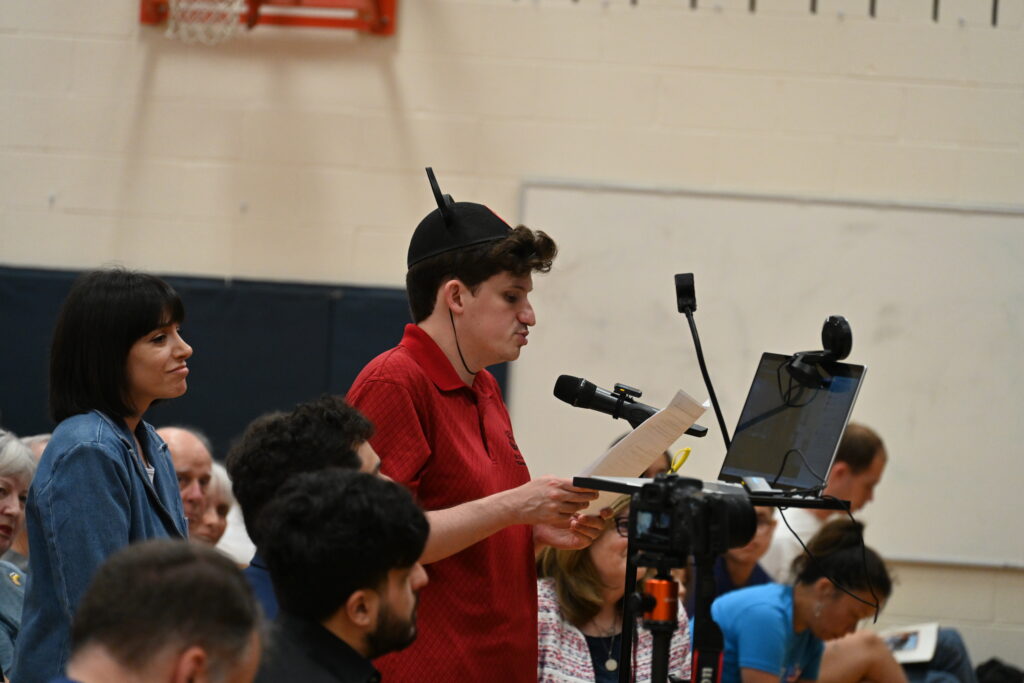
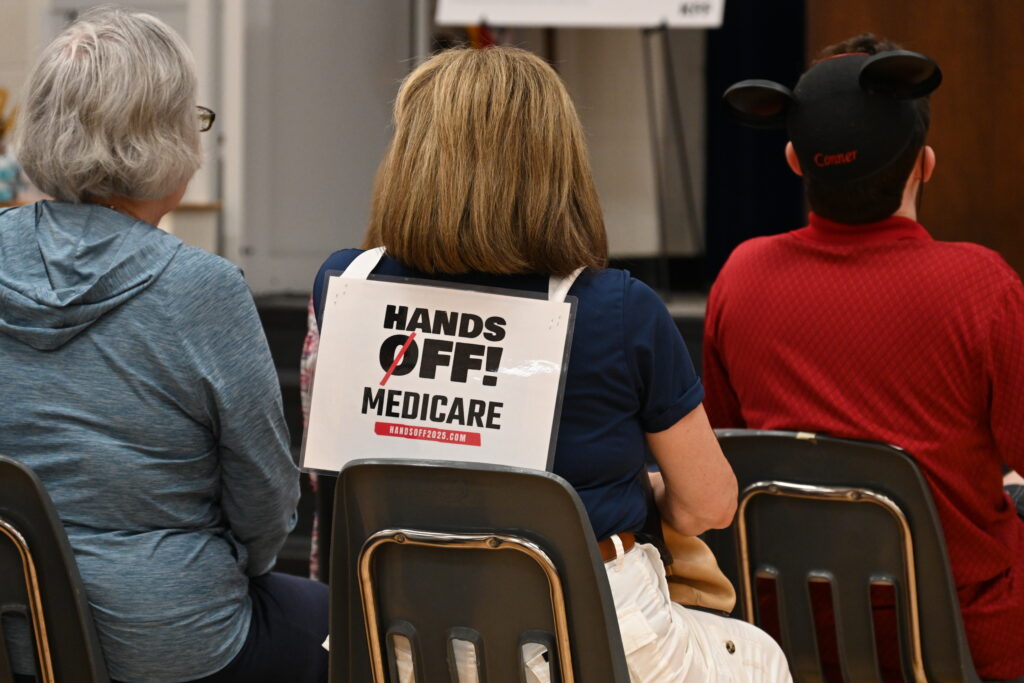
“My name is Connor Cummings,” said the first speaker, and introduced himself as proudly autistic and explained that wearing Mickey Mouse ears helps him feel confident and at ease. He emphasized that one person can make a difference and spoke about the essential role Medicaid plays in supporting older adults, low-income individuals, and people with disabilities.
He noted that Medicaid funds healthcare and long-term services, helping his friends with daily tasks like getting out of bed, getting dressed, working, and living independently. He added that Medicaid not only preserves dignity but also saves money by reducing reliance on hospitals and nursing homes.
Addressing President Trump, Cummings said, “You have a power to assure that no one with these needs” should have benefits cut. “A cut is an emergency.” He added that he has heard President Trump’s promises many times: “saying that you will not cut back Medicaid, Medicare or Social Security. You are a smart man. You are the president of the United States. You can do one of the most important things ever for all people, even if people don’t receive Medicaid themselves. I guarantee they have a loved one.”
He said that Trump tasked Elon Musk with reducing the budget: “He seems he’s doing that all right. All the millionaire and billionaire men I saw speaking together, they could save not only money, but lives and not cut Medicare, Medicaid, or Social Security just like all you pledged to do.
“I believe together, that together we can all make such a difference—a United States and a world we all dream of. You, Mr. President Trump, can lead us by not making cuts.
“I, Connor Cummings, and my mom will help you anywhere we can. Together we could be part of a solution. Then the fear that so many families are feeling at this point—not only to keep the benefits we have, but to enhance them—could turn that fear into a magical joy.”
Tina Ghandchilar, a speech-language therapist at a Title I school in Sterling Park, shared a sobering account of how deeply Medicaid impacts her students. Ghandchilar said that over 80% of her students are enrolled in Medicaid. “The majority of our students qualify for free and reduced lunch,” she said. “I see that a lot of our students come in hungry. Some are homeless.
Many have special needs. They rely on Medicaid.”
Several speakers echoed concerns over national spending priorities. One participant pointed out that U.S. foreign and military aid far exceeds what is spent on Medicaid. Another speaker, who said she is unemployed and uninsured, added that it’s hard to watch healthcare funding shrink while military budgets grow.
Subramanyam said that Medicaid dollars that are being cut are going to go towards defense spending. He sees other countries who have universal health care “and it’s not so bad. Hopefully we can get to where everyone can have health care. We are taking money from the people who need it most, and we’re taking away people’s access to care.
“But we’re still spending money on new firefighter jets and increasing defense spending when they’re not even asking for it and giving tax cuts to the wealthiest corporations who also aren’t asking for it. So our priorities are off. Our number one priority should be the health and safety of every single American.”
A mother of two severely autistic children and a grandmother to a severely autistic grandchild shared how critical Medicaid has been to her family. “My children have the Medicaid waiver, and without it, my husband wouldn’t be able to work. I wouldn’t be able to get them all the therapies they need, and they wouldn’t be able to participate in the community the way they should. Basically, Medicaid has saved our life.”
Bridget Wolf from Warrenton said she is a certified registered nurse, anesthetist, and she works at the hospital. She asked Subramanyam to support HR2713. It improves access care and access to nurses. It would eliminate practice barriers for certified registered nurse anesthetists and other advanced practice nurses to provide more equitable care throughout the country, she said.
Chris Brown was on Medicaid for three or four years and he was recently removed from it because he got a job that pays him $19 an hour with no benefits. He said the regulations need to be changed on how much you can make and how much money you can have in a savings account.
He suggested the foreign aid budget needs be eliminated for two years. “We have veterans sleeping in the streets.”
A sponsored residential provider for a young man named Kirby, emphasized how essential Medicaid is to his well-being. “Everything about Kirby’s care depends on Medicaid—his whole life is supported by it,” she said. “If you take away what we do with him, what happens? He’s grown so much in just a year.”
Subramanyam reaffirmed that people who rely on Medicaid matter and emphasized his commitment to standing with the community. He expressed hope for bipartisan support to oppose any cuts to Medicaid, and said he is working toward expanding coverage in the long term.
Comments
Any name-calling and profanity will be taken off. The webmaster reserves the right to remove any offensive posts.