



Just like nothing (else) on earth: Leesburg Presbyterian Churchyard
By Tim Jon
I am not one to dwell in the past; in the performance of my six-day-a-week job, my colleagues and I generally work at such a frantic pace that we joke about forgetting our own names. That’s not as far from the truth as you might guess, what with mail carriers expected to organize every letter, catalogue, magazine and parcel for roughly five hundred individual households.

Then we load the items into an antiquated – often cantankerous – vehicle and safely and correctly deliver each piece on a route stretching anywhere from 10 to 60 miles – all the while scanning hundreds of items along the way with a device many of us believe was constructed in Hades.
Having described the greater portion of my day-to-day work schedule, I also find it deeply therapeutic – perhaps even lifesaving – to find various means of stress relief – or de-compression – both after a particularly arduous day, and at the end of each work week. After serving – essentially – as the tip of a spear being thrust into the gearworks of time and space, I simply slow down – stop, even – long enough, not only to literally remember who I am, but to allow the past to catch up with me.
This long introduction pretty much describes each journey I take in approaching one of these stories. I step out of the continuously turning wheel of chronology and capture moments – both on camera and etched upon the soul – which remain – if I’m doing THIS job correctly – indelible, and immune to decay or mutation. Then, mission accomplished, I quite literally leap back into the spinning wheels of time and hurl myself headlong into the rapidly-approaching future.
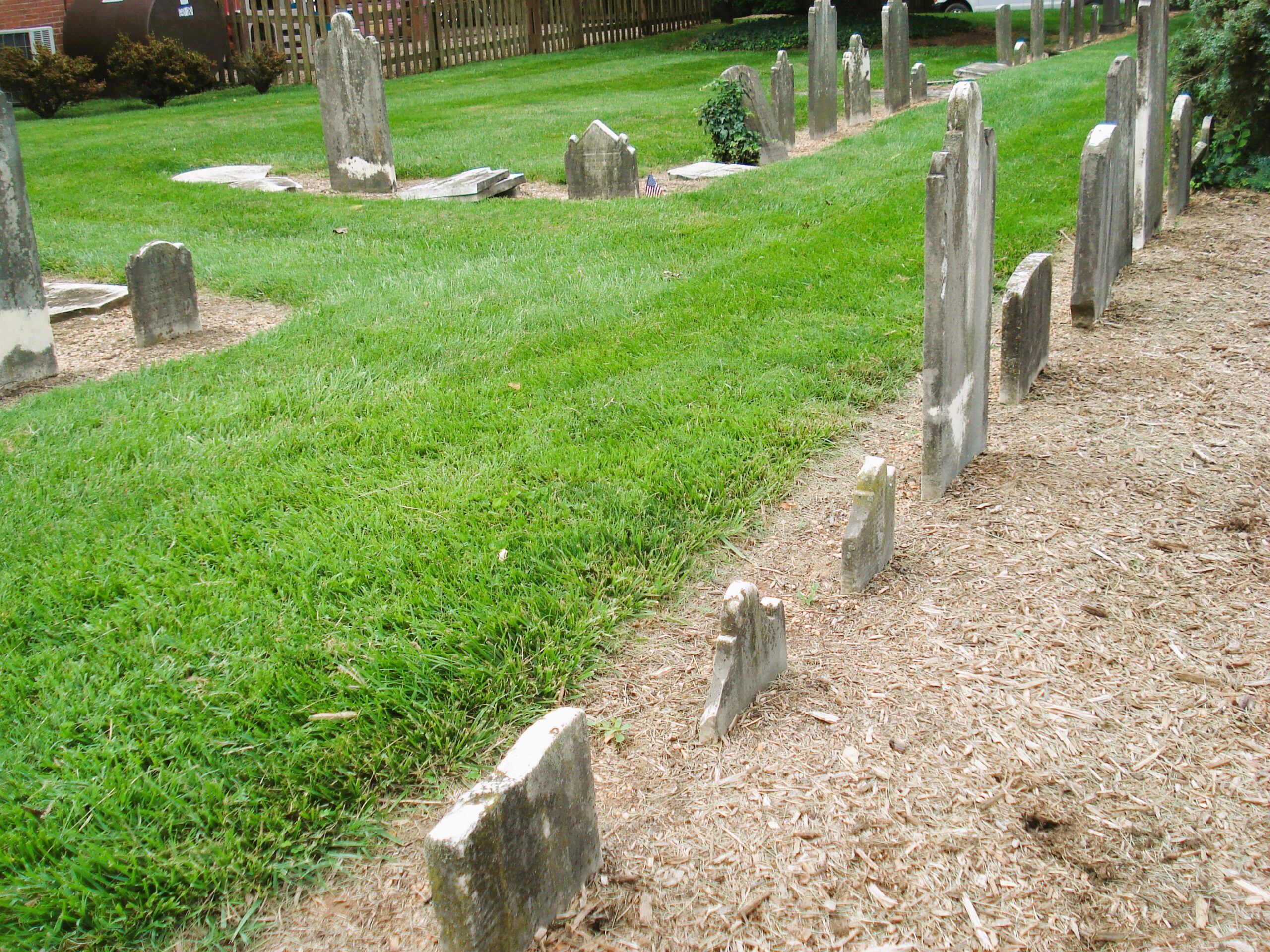
Now, it’s hard to deny the existence and importance of the past in a historic churchyard. Worn gravestones, some dating back hundreds of years, carefully-tended grounds remaining essentially unchanged for a similar time period, and of course the house of worship – serving as a familiar landmark for the whole community.
When I last paid a visit to the Leesburg Presbyterian Church, artifacts from the past greeted me at my car door and accompanied my tour along the entire length. You see, much of the property at the local religious facility remains devoted to ancient burial plots – stretching from the parking lot on the west side of the Church to the walkway on the east side of the original brick structure.
The years can speak volumes. Many of the gravestones reveal a two-hundred-year-old chronology, and portions of the brick-and-mortar worship space date back to the Year 1804.
I find it far less pressing to succumb to present-day worries of grappling with malfunctioning technology and other cumbersome implements as I walk the grounds of an historic congregation, literally fertilized with the clay and dust of those who came before us. The uncounted remains beneath the heavy stones expressed absolutely no care for my recent tribulations, or my intermittent worries of the foreseeable future. I find it much easier to let go of the momentary rules, orders and taboos of my workaday world when in the company of such a healing audience.
Admittedly, I pick up many of my troubles almost as soon as I jump back into my 21st Century motorized vehicle – to return home and prep for the next day. But it seems the load got just a little lighter, and I can vividly recall the sensations of release from my recent visit.
Interestingly, to me at least, my former local theatre company – Not Just Shakespeare – rehearsed one of its last shows in one of the meeting-rooms of the Leesburg Presbyterian; you may – or may not – remember that in one of Shakespeare’s most popular history plays the protagonist Henry V essentially spends his first scene in sounding out the stance of the Church on the possibility of war against France.
He eventually gains their blessing to go ahead with the venture and the rest of the play deals with his effective leadership in the quest. The young King at several key junctures in the story asks himself, “Am I doing the right thing?” Henry – no doubt – had his own family of ancestors to answer for, as well as the entire nation back in England.
We all, I trust, ask ourselves this same question; I found, in rehearsal of this Play, and during respite from a hectic grind of daily mail duties, a suitable answer from the souls associated with the headstones at the historic place of worship at 207 West Market Street in Leesburg, Virginia.
Comments
Any name-calling and profanity will be taken off. The webmaster reserves the right to remove any offensive posts.
Dear Tim,
i have written about several old cemeteries myself. Colonial cemeteries often retain early immigrant history. Once a province of the home, relatives cared for the deceased, hosting wakes, and burying loved ones in local church cemeteries or on the family farm. The body was washed and wrapped in shrouds. A local wheelwright supplied an ordinary pine box. Family and friends gathered with the minister and shared the appropriate church services before transporting the coffin to the graveyard.