



Candidate for Purcellville Special Election Q&A – Chris Reed
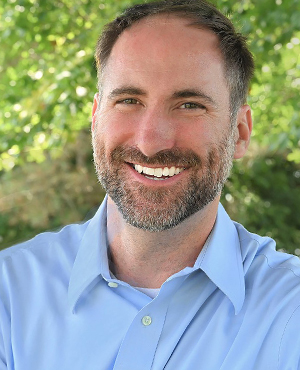
Chris Reed lives with his wife and two children on Main Street in the Town of Purcellville. He and his wife worked for several years to restore their historic home. Often citizens would stop by to meet them and talk about the progress of their renovation. Reed, a Penn State University graduate, holds two bachelor’s degrees – one in biology and one in environmental resource management. In his spare time, Reed enjoys kayak-fishing, landscaping, and running and biking on the W&OD Trail.
Blue Ridge Leader: Why are you running for town council?
Chris Reed: I am running for Town Council to be an advocate for citizens’ views and their vision for preserving the unique character of our small town. I will promote responsive, citizen-centered government and intend to meet the needs of our residents without catering to nonstop developer pressure.
I chose to live in the Town of Purcellville because I love the architecture, incorporation of green space and the sense of calm I get when I drive into town. It’s a great community where families feel safe, and neighbors look out for one another. I would like to see our historic downtown area become a tourist destination by encouraging small businesses, such as quaint shops, eateries and even amenities that promote our location along the W&OD trail.
I am running in support of slow growth, environmental stewardship, debt reduction and controlled spending. I ask for your vote in the Town of Purcellville Special Election on November 7. Early voting starts on September 22.
BRL: Is the Rt.7/690 Interchange good for the town; why or why not?
Chris Reed: Loudoun County is approved to build three of the four proposed on/off ramps, which would be part of a modified diamond interchange design. The fourth ramp is encumbered by impacts to the Catoctin Meadows subdivision and flooding of the South Fork Catoctin Creek and remains the only ramp subject to Town Council decisions. The three unencumbered ramps would provide town residents, as well as those to the north, access to both eastbound and westbound Route 7. The fourth ramp only restricts access to Route 690 for those traveling eastbound on Route 7, where minimal volume is anticipated.
While town residents may experience some short-term conveniences from the interchange, County engineers have said that the purpose is to improve traffic outside town, yet Purcellville’s residents want traffic to improve inside town.
There is also an unsafe aspect of the design, which includes the use of roundabouts. However, unlike other roundabout locations, this one introduces pedestrian crossings into the mix of heavy traffic entering and exiting a major highway and clearly creates a dangerous situation. To date there has been no safety analysis.
If the Town of Purcellville were to re-zone the encumbered area and facilitate the building of the fourth ramp, without the County mitigating any of the issues, it could be held liable for any future repercussions. Therefore, I do not feel that this interchange will be good for the town in the long run. In my opinion, the current plan potentially saddles the town with unnecessary risk and literally “paves the way” for more sprawling development.
Therefore, my goal is to work on fixing the existing Rt.7/287 Interchange first as it appears to be the best path to solving any traffic issues in Purcellville.
BRL: Do you support the Vineyard Square project on 21st Street which is approved for a 6-story commercial and 40 condo building – and the extension of O Street to support it?
Chris Reed: I do not support the plan, as approved, for multiple reasons. First, a 6-story building of any kind does not fit the character of our downtown area. Second, while the plan includes much needed retail space, the area cannot accommodate the number of vehicles that will result from a 40-condo building, which could be 80 permanent cars. Where would patrons and town visitors park? Finally, the O-Street extension from 21st Street to Hatcher Avenue would likely compound the Town’s existing traffic problems and could be difficult for fire and rescue vehicles to access.
Instead, I could support either the rehabilitation of the buildings that would be demolished to make way for Vineyard Square or the construction of new buildings that are in keeping with the scale and character of the other buildings in our historic downtown area.
BRL: Do you support the north west corner of 287 and Rt. 7 Cardinal Corner proposal?
Chris Reed: Cardinal Corner is a proposal to develop the 7-acre parcel of land, which is located north of the Town, fronting Berlin Turnpike (Route 287) and the corner of St. Francis Court. A group of developers is proposing that the Town annex this land and give them zoning for a 130-room hotel, a conference center, a restaurant, a market and a fueling station with a convenience store. The plan would require the Town to supply the developers’ project with water and sewer infrastructure.
At this time, I do not support annexing this property, as it seems extending water and sewer service across Route 7 would be complicated and costly to the Town. Additionally, I don’t support suburbanizing Purcellville by expanding the footprint of our town in this direction, especially when there is so much potential in the revitalization of our downtown area.
The developers said that extending commercial to this area would take traffic off Main Street and would deter people from coming into town, while also offering alternatives to some of the restaurants in town. This goal of taking business away from Main Street is the opposite of what we should do. I would rather see the property remain zoned for one house per three acres, like the surrounding homes in the area and have a smaller hotel within walking distance to downtown. This encourages foot-traffic and supports our unique small businesses.
BRL: Would you support the annexation of the Kuhn property located on Purcellville Road?
Chris Reed:The Kuhn property totals 117-acres, located north of town, along the east side of Purcellville Road, across from the Mayfair development. Currently, the property is zoned Joint Land Management Area (JLMA)-3, which according to the County Comprehensive Plan, is supposed to be used for “a low density, rural mix of residential and business uses around the town that are distinguishable from the intensity and character of development in Purcellville.”
The Kuhn plan is for the development of an industrial park, but due to the property’s JLMA-3 limitations, would require some zoning changes and would also need to be annexed into the Town of Purcellville for the purpose of having access to water and sewer infrastructure. It is my understanding that supplying this service costs the town more than it receives from developers’ tap fees. This is obviously unsustainable. Likewise, since we are already near the capacity of our fresh water supply, we would likely have to seek costly alternative sources of water, in order to service any newly annexed properties of this size.
One of the stated goals of the Kuhn plan is to move businesses out of the center of town and into the proposed industrial park. This goal does not align with either the County or the Town’s Comprehensive Plans, which reflect the vision of the citizens. Likewise, due to the potential scale of this development, there would be less ability for the town to regulate future land use in the surrounding area.
Therefore, I would not support the current proposal for annexation of the Kuhn property, as it would unnecessarily expand the borders of the Town, as well as assume additional costs and risk. Alternatively, I would support a small-scale version of the Kuhn plan of relocating businesses to a more conducive location, perhaps utilizing potential infill areas already available within the town.
BRL: How would you keep utility rate increases to a minimum?
Chris Reed: The town water system is budgeted as an enterprise utility fund, designed to be self-sustaining, with the cost of operation and maintenance (O&M) equal to the income from user fees. It is to be funded by our water bill payments, not our taxes. In actuality, the town water rate currently fluctuates, based on the cost of servicing our inherited debt for construction of the wastewater treatment plant and based on O&M costs associated with running the plant. Since large payments on this debt are coming due in the near future, we will likely see substantial increases in the cost of our water, unless we find alternative sources of revenue and practice fiscal restraint.
First, I will remain open-minded and seek out additional recurring revenue streams, like cell tower rentals, as well as new and creative, one-time revenue opportunities, like the nutrient credit program at the town’s Aberdeen property, which generated almost $1 million.
Second, I will consider keeping the town’s cash reserves at a level that maintains the fiscal balance of the system without maintaining an excess. The excess cash could be used to pay down the debt.
Third, I would continue to be cautious toward unnecessarily annexing properties into the town, which would incur costs associated with supplying water and sewer infrastructure to new developments, without resulting in a net-positive benefit to the town.
Comments
Any name-calling and profanity will be taken off. The webmaster reserves the right to remove any offensive posts.