

Data Centers, Growth Concerns Dominate Subramanyam Town Hall
By Valerie Cury
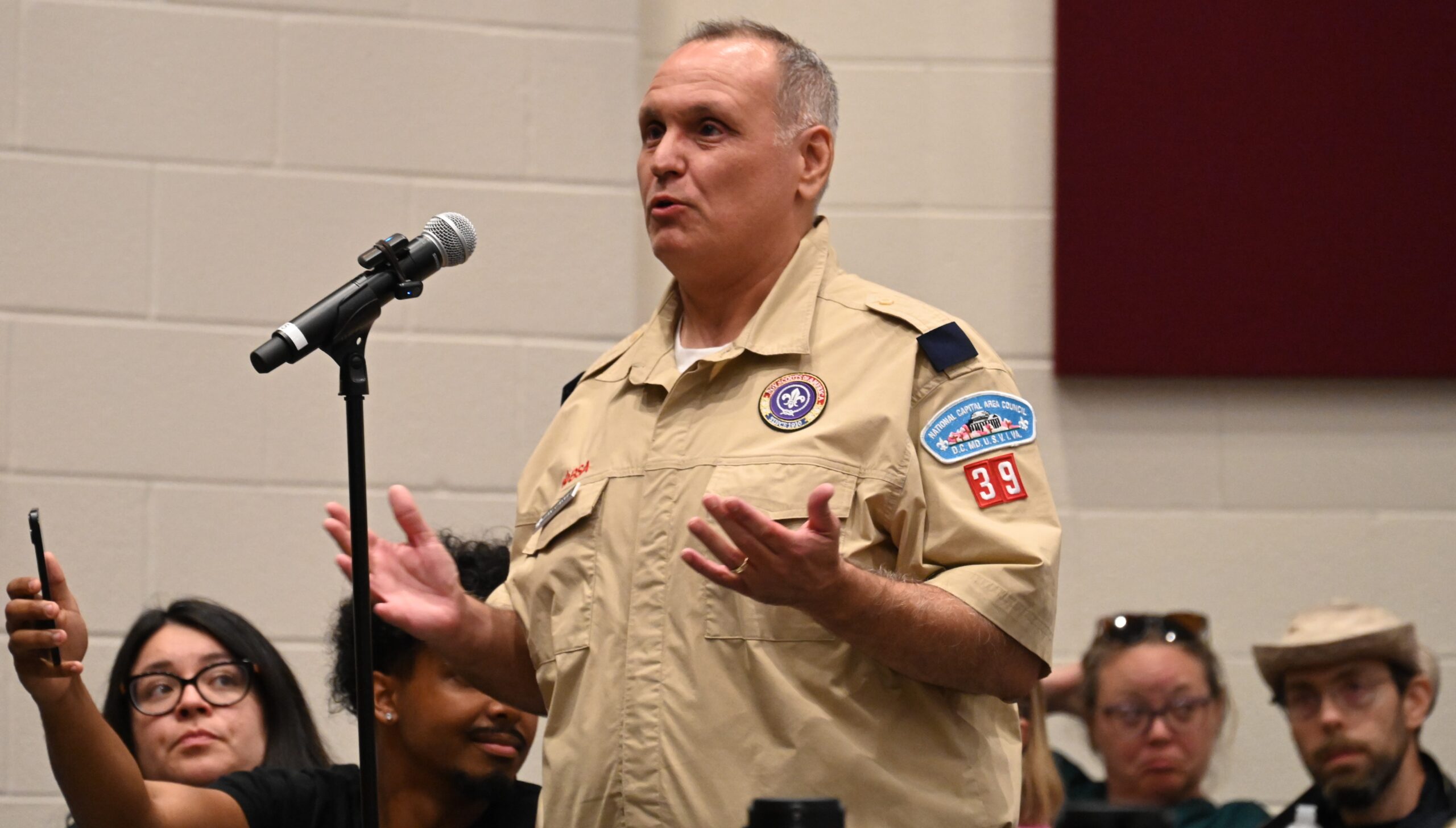
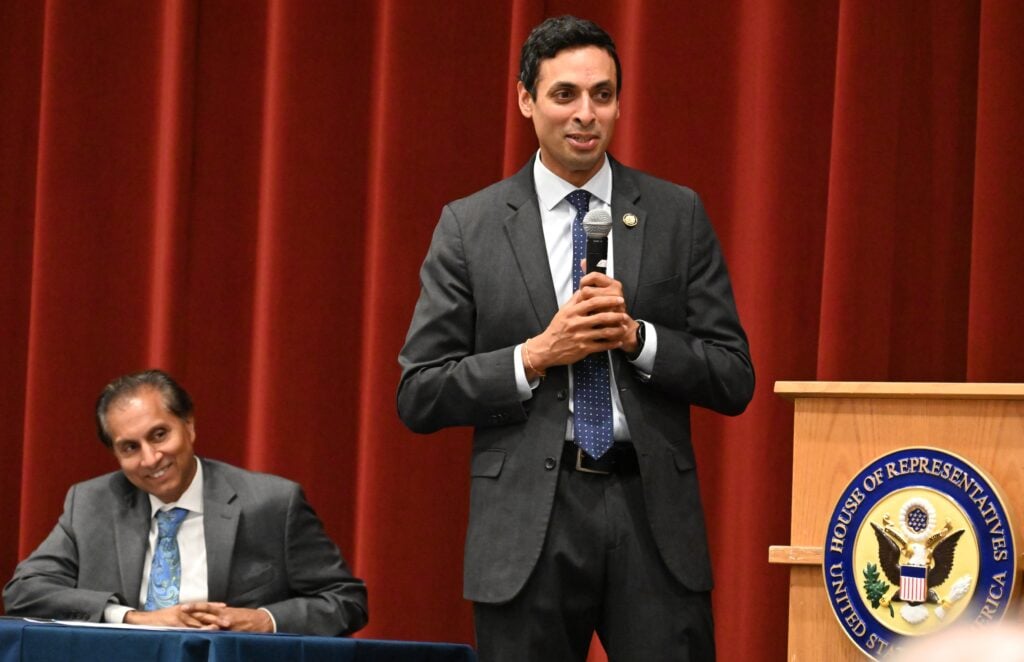
Concerns over data centers, transmission lines, growth and the preservation of western Loudoun County’s rural character dominated a town hall hosted by U.S. Rep. Suhas Subramanyam, D-Va., at Harmony Middle School on June 22.
Subramanyam was joined by Ash Jain, a senior fellow with the Atlantic Council and former State Department official. Jain participated in portions of the town hall, helping answer audience questions on international affairs and national security issues.
The event drew residents from across Loudoun County, who questioned the congressman on issues ranging from energy infrastructure and housing to the national debt, health care, artificial intelligence and immigration.
Much of the evening focused on the impact data center growth in eastern Loudoun is having on communities farther west.
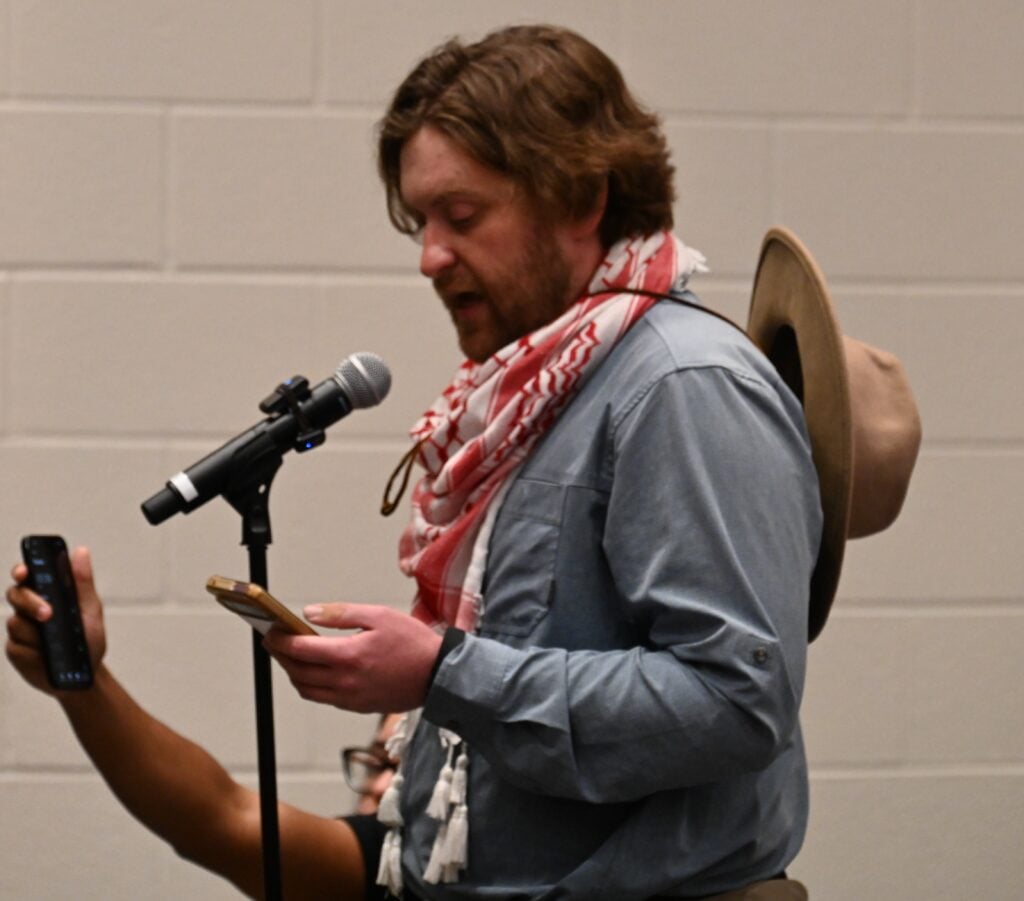
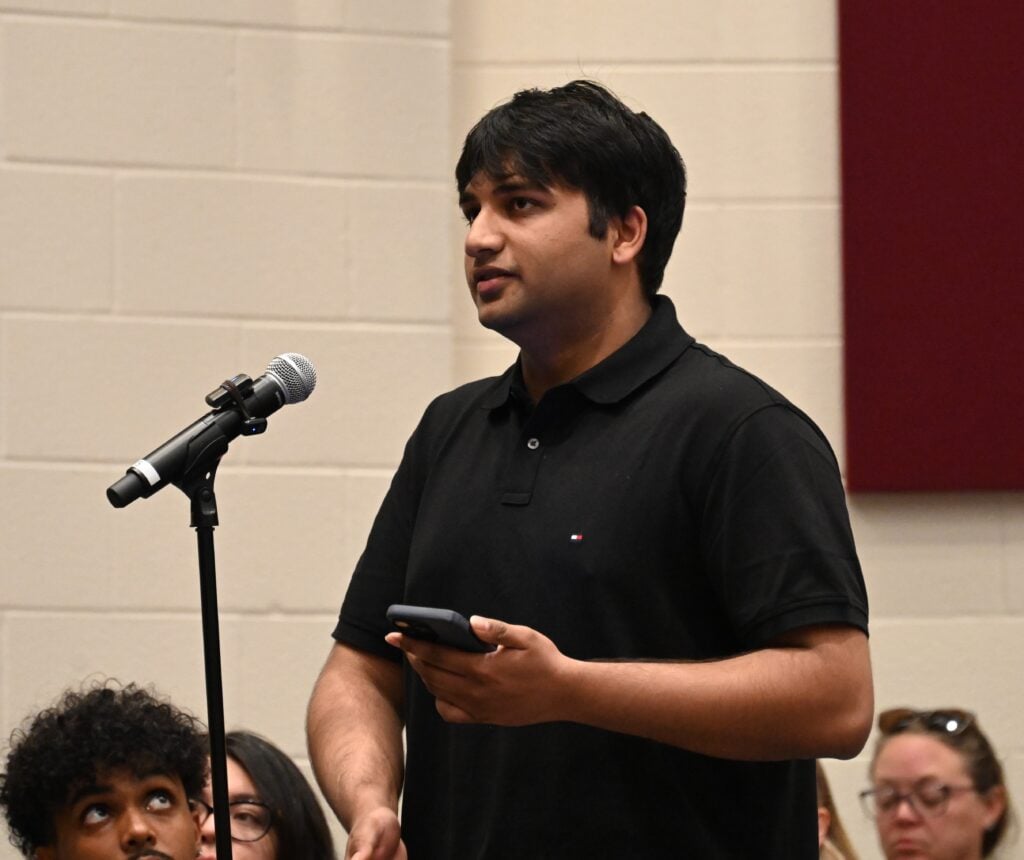
Early in the meeting, a Loudoun resident noted that the county has approved hundreds of data centers and questioned the need for additional overhead transmission lines, urging elected officials to support underground infrastructure instead.
Subramanyam agreed, arguing that data center operators should bear more responsibility for the infrastructure required to support their facilities.
“If the data centers want to come here, that’s great, they should be paying for their own power infrastructure, and they should be paying for the undergrounding on these lines, not us,” he said.
The congressman also reiterated his opposition to continued data center expansion in Northern Virginia.
“One is just, we’re building way too many in our community,” Subramanyam said. “I don’t think we should be building them here anymore.”
Lovettsville resident Theresa Ghiorzi delivered one of the evening’s most pointed appeals, warning that western Loudoun communities are increasingly being asked to absorb the infrastructure needed to support development elsewhere in the county.
“We do not want to be a 600-foot-wide infrastructure corridor for eastern Loudoun County,” Ghiorzi said.
Ghiorzi described concerns about proposed transmission lines, electric grid reliability and the concentration of infrastructure supporting the region’s growing data center industry. She urged federal officials to explore new technologies and policies that would encourage underground transmission lines rather than additional overhead corridors through rural western Loudoun.
Subramanyam thanked Ghiorzi for her suggestions and said his office would review the ideas she raised.
Questions about growth pressures and the future of western Loudoun resurfaced later in the evening when Purcellville resident Dan Carvill addressed the congressman.
Carvill said residents in western Loudoun are increasingly concerned that development pressures originating in eastern Loudoun are spreading westward as available land becomes scarcer.
“We’ve had all these data centers blowing up in Ashburn and Sterling,” Carvill said. “One of the byproducts people will remember when looking at this is now because we have all this square footage that’s pushed out. A lot of development now seems to be pushing out into western Loudoun.”
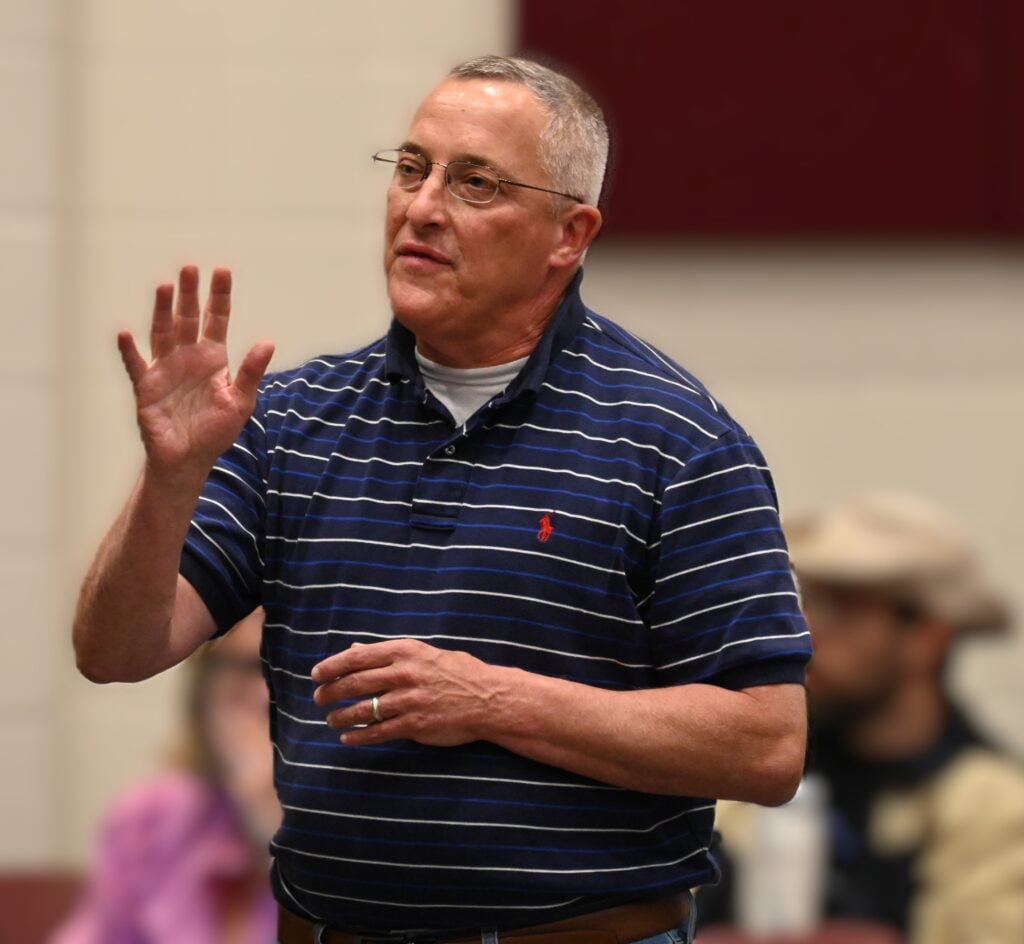
Carvill said the area is already facing pressure for additional housing and industrial development while also confronting concerns about water availability and the preservation of rural communities.
“We have all this infrastructure because it’s being pushed out in one area, it’s being pushed out here, but yet we don’t necessarily have a lot of the natural resources here in this area to cover that,” he said.
Noting projections that Northern Virginia could add hundreds of thousands of homes over the next decade, Carvill questioned whether the region has sufficient resources to sustain that growth.
“We don’t have the wells, we don’t have the water, and we’re also seeing our rural character kind of being butchered up here in western Loudoun,” Carvill said.
He asked what role the federal government could play in helping communities protect water resources and prevent western Loudoun from becoming “another Ashburn.”
Subramanyam acknowledged that most land-use decisions are made at the local level but said he supports efforts to preserve western Loudoun’s unique identity.
He added that western Loudoun remains one of the region’s defining assets.
“We have the East—there’s a lot to offer in the East—but then we have the West, which is so unique and so beautiful that way,” Subramanyam said.
Subramanyam acknowledged that most land-use decisions are made at the local level but said he supports efforts to preserve western Loudoun’s unique identity.
“I think the community here agrees that we want to protect the rural character,” he said. “I think the community should be listened to.”
While local growth concerns generated some of the strongest reactions from attendees, residents also raised questions about broader national issues.
One resident questioned how Congress plans to address the nation’s growing debt, which he described as approaching $40 trillion.
Subramanyam said elected officials too often focus on short-term political considerations rather than long-term fiscal challenges and said lawmakers must begin addressing the issue more seriously.
A veteran reminded Subramanyam he represents constituents across political, racial and socioeconomic lines and urged him to lead from principle rather than partisanship. He said he was “appalled” by what he viewed as a lack of bipartisan support during moments such as the State of the Union.
Other residents raised concerns about Social Security, health care costs and nursing home oversight. Subramanyam said his office continues to hear from constituents struggling with rising medical costs and difficulties accessing government services.
The future of artificial intelligence also emerged as a topic of discussion. One attendee questioned whether Congress is moving quickly enough to address potential risks associated with advanced AI systems.
Subramanyam argued that lawmakers should establish stronger safeguards and oversight mechanisms for emerging AI technologies, saying Congress has been slow to respond as the technology rapidly evolves.
Subramanyam acknowledged residents’ concerns and said he would continue listening and working to ensure community priorities are reflected in decision-making.
Comments
Any name-calling and profanity will be taken off. The webmaster reserves the right to remove any offensive posts.