

Candidates for Lovettsville Mayor

Christina Grace
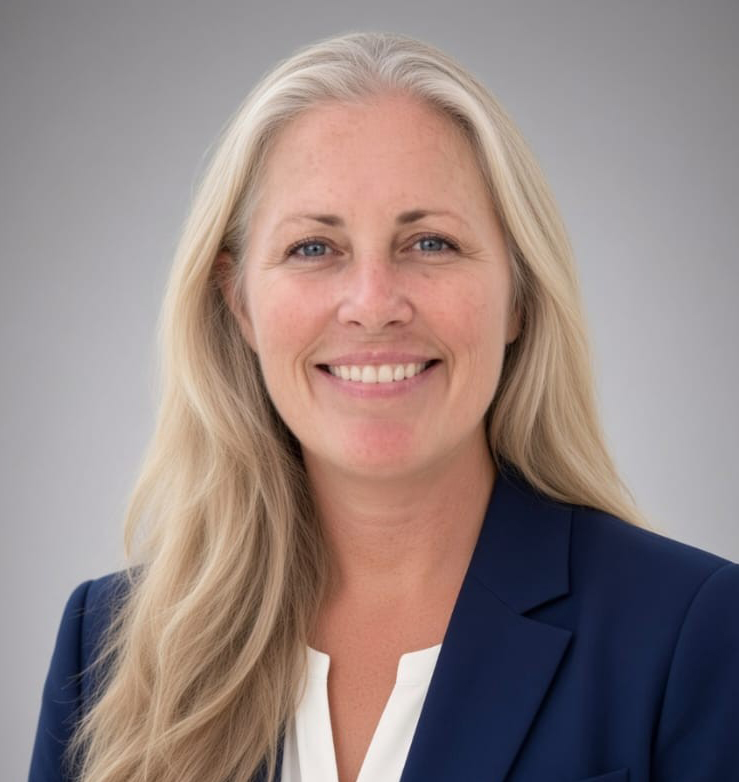
Christina Grace grew up in Fredericksburg, Virginia, with a love of horses and an adventurous streak. She pursued nearly every equestrian sport she could find, even full-contact jousting. In the early 2000s, Grace was among the first women in the United States to successfully compete in the sport against an otherwise all-male field.
After graduating from high school, Grace became a licensed insurance agent but soon realized that her real passion was working with animals. She changed course and began a career in veterinary medicine, working in small-animal clinics and mobile equine practices before joining the Marion duPont Scott Equine Medical Center in Leesburg.
Her desire to continue learning eventually led Grace into medical research. She worked with the National Institutes of Health, the U.S. Army Medical Research Institute of Infectious Diseases at Fort Detrick and the Walter Reed Army Institute of Research in Silver Spring.
At Walter Reed, Grace became a registered animal surgical technician and led a surgical research unit supporting studies focused on battlefield trauma and care. She trained officers, soldiers and contract employees in specialized medical techniques, and her work contributed to research aimed at improving treatment for service members who sustained traumatic injuries in the field.
Grace has called Loudoun County home for 15 years. Away from work and public meetings, she enjoys the rural life that first helped draw her to the area, her love of horses, farming and conservation—and time with her dog, Carl.
Over those 15 years, Grace has also watched Loudoun change dramatically. She said it can sometimes feel as though change happens to residents, rather than by them or for them. That realization helped inspire her to become more involved in shaping the future of a community she has come to love.
Grace said she wants to bring the “love” back to Lovettsville by cultivating a stronger sense of connection and involvement, with residents having a meaningful role in decisions about the town’s future. She values the experience of the Town’s current administration and hopes to build upon what Lovettsville has already established.
She also wants to encourage more residents to participate in local government and to consider running for office themselves. Grace supports bringing greater awareness to ranked-choice voting and believes voters benefit from having choices on the ballot rather than seeing candidates run unopposed.
“Lovettsville is full of very smart and talented people,” Grace said, adding that she looks forward to working with residents to help pave a fresh path forward for the town.
Blue Ridge Leader: Lovettsville has traditionally relied on events such as Oktoberfest and Mayfest to attract visitors and support local businesses, but these events do not provide year-round economic growth. With nonresidential taxes and fees now making up only about 10% of the Towns budget, what specific steps would you take to support existing businesses, attract appropriate new businesses, and expand the Town’s revenue base while preserving Lovettsville’s small-town character?
Christina Grace: Economic development should begin with the businesses and commercial space we already have. Lovettsville has available commercial and retail space, and I would focus first on attracting businesses that fill genuine needs in our community and give residents more reasons to spend their time and money here.
Basic healthcare is one example. Residents should not always have to leave Lovettsville to see a primary care physician or obtain other routine services. Childcare and other family-oriented services are also important. I would work with property owners, businesses and economic development partners to identify these needs and actively recruit appropriate businesses to our existing commercial areas.
We should also recognize that Lovettsville’s history and small-town character are economic assets. I support stronger historic preservation and conservation efforts and would pursue available state programs and funding that can help us protect those assets without placing unnecessary burdens on property owners. I would also like to see the Town build upon its history with additional events and activities that attract visitors throughout the year and give them reasons to patronize our local businesses.
Oktoberfest and Mayfest are wonderful traditions, but economic development cannot depend on a few successful weekends each year. We need businesses that serve residents and generate economic activity throughout the year.
Expanding our commercial tax base does not have to mean changing the character of Lovettsville or pursuing development simply for the sake of growth. We have opportunities within the Town today. Filling existing commercial space, supporting the businesses already invested here, attracting services our residents need, and using our history and character to our advantage can strengthen the Town’s revenue base while preserving what makes Lovettsville special.
BRL: Many residents have expressed concerns about the Valley Link North transmission project. Beyond passing resolutions, holding meetings, and voicing opposition, what specific actions should the Mayor and Town Council take to protect residents and property owners and to ensure future land-use decisions do not contribute to additional transmission infrastructure in or near Lovettsville?
CG: We are asking County, regional, state and federal leaders to reconsider the policies driving extraordinary new electricity demand. I believe there is one important commitment we should add: Lovettsville should hold itself to that same standard.
We should review the decisions within our own control to make sure we are not contributing to the very infrastructure pressures we are asking others to address.
For Valley Link North, the Town should commit to active participation when the project comes before the State Corporation Commission. That means more than passing a resolution. Lovettsville should formally participate in the process where appropriate, make sure the concerns of our residents and property owners are part of the record, provide relevant land-use and planning information, and coordinate with Loudoun County and other affected communities to present the strongest possible case for protecting Lovettsville.
At the same time, we need to examine our own zoning, annexation, development and infrastructure policies. Our zoning should account for modern technologies and land uses that can create extraordinary demands for electricity and other infrastructure. Annexation and development decisions should be evaluated not only for what may be built on a particular property, but also for the infrastructure those uses could require beyond that property.
We cannot control every decision made by PJM, utilities, regulators or neighboring jurisdictions. But we can control what Lovettsville does.
That means protecting our water resources, small businesses, historic character and existing residents just as carefully when the decision is ours as when the decision belongs to someone else.
We also need to stand with our neighbors who are fighting these transmission lines, whether they live within Lovettsville’s boundaries or just outside them. Transmission infrastructure does not stop at the Town limits, and neither should our concern for the people, farms, homes and landscapes that surround our community. What happens to our neighbors affects Lovettsville, and we should use our voice as a Town to support them throughout this process.
A resolution puts Lovettsville on the record. Our actions should prove that we mean it.
BRL: As Lovettsville updates its Comprehensive Plan, the Town must make important decisions about growth, annexation, and water and sewer capacity. What goals should the new plan prioritize to ensure that future development remains consistent with the Town’s infrastructure limits, financial interests, and community character?
CG: The Comprehensive Plan should begin with a simple principle: growth must fit within Lovettsville’s resources and infrastructure, rather than requiring our resources and infrastructure to continually expand to accommodate growth.
A major priority should be completing or formally addressing the existing Comprehensive Plan requirements related to groundwater and wellhead protection, including coordination with Loudoun County. We need reliable data about our wells, groundwater resources and available capacity before making decisions that could create additional demand on our water system. That is particularly important given that Lovettsville also provides water to Brunswick.
Before expanding the Town’s boundaries, we should also determine whether proposed uses and future development needs can reasonably be accommodated on land already within Lovettsville. Annexation should not be the first answer when opportunities may already exist inside Town.
The plan should also strengthen protection of Lovettsville’s historic character and identify appropriate tools, including consideration of a residential historic preservation overlay that protects the character of established neighborhoods without imposing unnecessary restrictions or burdens on individual property owners. Conservation should be an integral part of our planning decisions, not something considered only after development proposals arrive.
Finally, every growth decision should consider its long-term financial impact. New development should not place infrastructure, utility or service costs on existing residents that exceed the benefits it brings to the Town.
The Comprehensive Plan is our opportunity to decide what we want Lovettsville to become before individual development proposals begin making those decisions for us. Our infrastructure, finances, natural resources and community character should establish the limits within which growth occurs.
BRL: The Town is currently reviewing its largest annexation application since 1998. Given that the Comprehensive Plan update is underway, should any revisions to the annexation ordinance be considered as part of that planning process rather than amending it now, and if so, why is that approach important for maintaining public confidence in the fairness of the process?
CG: We should not change the Town’s annexation process now to accommodate or benefit a particular developer’s proposal. Annexation policy should be established based on what is best for Lovettsville as a whole, not rewritten in response to the application currently before the Town.
With the Comprehensive Plan update already underway, that is where we should have this discussion. We should hear from our residents, determine what they want Lovettsville to look like in the years ahead, and then decide whether changes to our annexation policies are warranted. The Comprehensive Plan should guide annexation decisions—not the other way around.
Changing the process while the Town is considering its largest annexation application since 1998 risks undermining public confidence, even if that is not the intent. Residents should be able to trust that the rules are established fairly, transparently and independently of any particular applicant.
If, after that public planning process, the Town determines that its annexation ordinance should be changed, then we should change it prospectively and apply those rules fairly to everyone.
Whatever annexation process we ultimately establish, the Town must also enter any negotiations from a position of strength. Economic development is not simply a matter of granting a developer valuable land rights, water and sewer capacity, and flexibility and then hoping the Town benefits later. Before negotiations begin, the Town should clearly understand what it is giving, what it is worth, what the project will cost, what risks residents may carry, and what enforceable benefits the community will receive in return.
That means establishing clear standards for water and sewer use, infrastructure costs, environmental protections, allowed and prohibited uses, construction deadlines and enforcement. It also means using independent legal, financial, utility, engineering and land-use experts who work for Lovettsville—not the developer. Residents should not have to subsidize the professional review of a proposal that could substantially increase the value of private property.
We also need an independent fiscal and infrastructure analysis before making commitments. Council should know how much capacity a project will use, what infrastructure it will require, what its long-term costs may be and whether the promised economic benefits justify those commitments.
And every promise that matters must be in writing. Commitments should be measurable, enforceable and, where legally possible, binding on future owners. If promised investment, infrastructure or public benefits do not materialize, the Town must have meaningful remedies.
Council members do not have to be experts in everything. Good leadership means recognizing when expert help is needed, asking the right questions and being willing to walk away from a deal that is not good for Lovettsville.
As Mayor, I will make sure the Town approaches annexation deliberately, transparently and with the interests of our residents first. Economic development should benefit the whole community, not simply increase the value of a developer’s investment.
Christopher Hornbaker

As a 40-year resident of Virginia and 20-year resident of Lovettsville, current Lovettsville Mayor Christopher Hornbaker has a long record of service to and within the Town of Lovettsville, including stints on the Planning Commission (2017-2018, including serving as Vice Chair), all major Town committees and boards, including multiple Comprehensive Plan rewrites (2016 and 2021), as a mainstay in volunteering at or emceeing most major Town events and ceremonies since 2012, and the Town Center HOA Board (serving as Board President in 2017).
Hornbaker grew up on a farm in neighboring Clarke County, graduated from Clarke County High School, holds a Bachelor of Science in Business Information Technology with Minors in Global Business and Business Leadership from Virginia Tech, where he developed a questionably unhealthy passion for Hokies football and graduated Magna Cum Laude, a Masters in IT Management from Georgetown University and a Masters Certificate in IT Project Management from George Washington University.
Hornbaker is a Certified Planning Commissioner, has over 22 years of experience in Information Technology and Cybersecurity and is currently employed as a Cybersecurity Director for a Financial Services firm.
He lives in Lovettsville with his wife, Ryan, their three daughters, Kaitlyn, Ellie and Ginny, and three dogs, Rusty, Wyatt and Böcephus “Mr. Bö” Jangles.
Blue Ridge Leader: Lovettsville has traditionally relied on events such as Oktoberfest and Mayfest to attract visitors and support local businesses, but these events do not provide year-round economic growth. With nonresidential taxes and fees now making up only about 10% of the Towns budget, what specific steps would you take to support existing businesses, attract appropriate new businesses, and expand the Town’s revenue base while preserving Lovettsville’s small-town character?
Christopher Hornbaker: As a 14-year volunteer of both Lovettsville’s Oktoberfest and Mayfest, as well as the other year-round LOVE Summer and LOVE Winter events, I understand the value and opportunity for both businesses and residents to enjoy these “quality of life” events.
However, I do not agree with the premise that these events have not, part, provided year-round economic growth since (1) a number of new businesses, especially restaurants, have cited these events as one of the main drivers of them investing and opening their doors in the Town of Lovettsville and (2) the only major General Fund revenue category to see a more than THREE FOLD increase (even when adjusting for the base rate of 3.5%) during my time on the Town Council and Mayor is the meals tax, which is directly tied to the town’s economic growth. This revenue stream increased from its original $120,000 budget in FY’18 to a little over $453,000 at the end of the FY’26 budget year. In fact, the Meals and Sales tax revenue now far exceeds the Real Estate tax revenues (by around $150,000) when it barely covered a third of the revenue when I originally came on the Town Council in 2018.
While businesses opened in part because of our events, for many, it’s their ability to draw others as a dining and shopping destination during all times of the year that fuels their own growth and we appreciate those businesses that have regularly partnered with the town year to promote our events.
One of the biggest drivers in the Town’s efforts to reshape Oktoberfest this year was because, simply put, we missed the mark in 2025. When 60% of Fest attendees responded that they never left the Town Green to visit our shops and restaurants, which was backed up with numbers shared by many of those adversely impacted, we knew we had to change direction.
That is why this year’s fest is going back to its roots in downtown Lovettsville and we are relying on the restaurants and businesses to provide the food and beverage aspects of the Fest.
This strategy has been met with overwhelming positivity by our business owners and I look forward to sharing their success in three short weeks. This new approach can be the right balance that allows the Town to run those aspects of the Fest in which it has historically excelled (the community games, marketing, merchandising and sponsorships) to cover core event expenses while allowing the businesses to reap much of the “day of” revenue.
As Mayor, my job is to also balance the economic development opportunities of new commercial growth with the foundation tenets of providing new services to our Town’s residents while ultimately remaining a small town under the state-mandated population cap of 3,500.
This is the ultimate lens by which I evaluate past, current and future proposals. During my tenure, that has meant that we have had to say no to projects that are not at the size and scale that defines Lovettsville, including those that have proposed unplanned residential growth. On the other hand, we have approved smaller-scale projects to expand the commercial footprint which will allow for new businesses to flourish.
Finally, no greater example of our Town’s continued investment in our current and future businesses will be bolstered by our Community Engagement and Economic Development Coordinator, who has worked diligently with the Loudoun County Department of Economic Development businesses to help attract and retain Lovettsville businesses through increased engagement.
BRL: Many residents have expressed concerns about the Valley Link North transmission project. Beyond passing resolutions, holding meetings, and voicing opposition, what specific actions should the Mayor and Town Council take to protect residents and property owners and to ensure future land-use decisions do not contribute to additional transmission infrastructure in or near Lovettsville?
CH: The Town has been actively engaged with the Valley Link North project since April 2026, when we partnered with representatives from Loudoun County and the Town of Hillsboro to provide documentation of all current businesses, conservation easements, planned commercial and residential development, historic, environmental and cultural impacts posed by the proposed routes. Many of these same impacts were provided by those in and around Lovettsville directly impacted by the routes themselves.
As Mayor, I will continue to advocate for alternative routes and undergrounding the proposed line as we enter the next phase of the Valley North Project. In addition, I have already met (and will continue to consult) with Loudoun County leadership, County leadership in neighboring jurisdictions and our state leaders, including Lt. Governor Hashmi, to seek their assistance in reaching an alternative that will minimize the impacts to those in and around the Town of Lovettsville.
I will also seek assistance from the Council and the Coalition of Loudoun Towns to increase its participation in the public hearing phases of this project through SCC testimony and other means.
While the Town of Lovettsville does not have the direct decision-making authority in the matter, we have already cited nearly two dozen goals and policies in our Comprehensive Plan which demonstrate that a project of this size and scale (including its eighteen-and-a-half story towers that are currently seen nowhere else in Loudoun) is not right for our Town, nor Western Loudoun County.
BRL: As Lovettsville updates its Comprehensive Plan, the Town must make important decisions about growth, annexation, and water and sewer capacity. What goals should the new plan prioritize to ensure that future development remains consistent with the Town’s infrastructure limits, financial interests, and community character?
CH: As this will be my third time reviewing Lovettsville’s Comprehensive Plan, our top three priorities should be as follows:
- Double-down on “Quantitatively” Staying a Small Town: If we want to stay under 3,500 residents, we must ensure that new policies and residential forecasts take into account both residential and commercial uses which can result in additional unplanned residential growth.
- Codify the Town’s Commitment to Conservation: As the only Mayor to place any in-town property into a perpetual conservation easement which is not part of a residential development proffer, including 3 parcels covering nearly 12 acres from 2023-2025, the goals and objective of our Comprehensive Plan should promote the consistent practice of the Town serving in Grantee of future easements to ensure they are enforced in perpetuity.
- Infrastructure Redundancy and Operational Efficiency Over Increased Capacity: Prioritize new elevated water tower and increase priority to Utility Infrastructure projects that are needed to minimize service line disruption by adding second lines where possible. In addition, identify and address any stormwater inflow into our sewer system, including efforts to identify and correct downspouts and sump pumps tied into the system.
- Ensure Fiscal Responsibility from the Beginning: While the Town has won one-off awards in the past, it has never been consistently recognized again-and-again for its achievements until now. Specifically, during the last four years as my tenure as Mayor, the Town be awarded the Government Finance Officers Association’s (GFOA) Distinguished Budget Presentation Award for its commitment of the governing body and staff to meeting the highest principles of governmental budgeting.
The Comprehensive Plan should incorporate many of the practices over the last eight years that prioritized automatic designation of year-end surpluses to the General and Utility Fund reserves, increasing reserve minimums and, above all, providing transparency (financial or otherwise) to the public that was a severe deficiency I witnessed by a Town Manager and Council prior to me being elected to the governing body in 2018.
Finally, while Councils prior to my service prioritized a “buy now” strategy that took cell tower rental income from the Utility Fund and taxed (or attempted to implement new taxes on) town residents for things it already paid for like trash fees and utility chargebacks, during my tenure, we have invested in planning through transportation and water/sewer master plans which we were able utilize to wisely spend over $3 million in CARES Act and ARPA funds, as well as obtain over $20 million in additional county, regional, state and federal funding to fund street improvement, water and sewer and safety project at a size and scale not seen in town before.
BRL: The Town is currently reviewing its largest annexation application since 1998. Given that the Comprehensive Plan update is underway, should any revisions to the annexation ordinance be considered as part of that planning process rather than amending it now, and if so, why is that approach important for maintaining public confidence in the fairness of the process?
CH: As I stated during a recent Planning Commission meeting, the Annexation Policy is in imminent need of revision and should be prioritized ahead of the long eighteen-month Comprehensive Plan Review process.
While the current 10-year-old plan (which was adopted prior to my service to the town) promotes the right concepts of seeking commercial growth and only considering residential growth to complete planned communities, it’s a failure in practice.
Through the implementation of the policy, past Councils implemented the Commercial/Residential Annexation (CRA1) district to be a “temporary holding space” for annexed parcels intended for immediate rezoning to one of the existing or a new commercial district. However, in practice, the parcels under this “temporary” district came into town 7 years ago (…not so temporary…) and appears to be resulting in at least 3 by-right unplanned residential parcels and more pressure on the 3,500 cap.
The Council’s request to the Planning Commission intends to shore up this gap in policy vs. practice through two ways. First, it decouples residential zoning from commercial zoning for any new annexation considerations to fully realize the goal of the current policy.
Second, it calls for Planned Development Districts which only consider the proposed uses of the proposed annexation and provides reasonable assurance to the town that what is promised from the annexation is what becomes reality.
To boot, and to counter attempts by some in town to misinform the public of the contrary, a planned development district would result in INCREASED opportunity for public engagement, as it would provide for additional, separate public hearings for the rezoning in addition to the existing ones required for the annexation.
It is also important to note that these policy changes would not apply to existing applications currently in the annexation process. However, based on these benefits outlined above, I implore the Planning Commission to act timely and before the completion of the Comprehensive Plan to enhance our resident’s confidence in the fairness of these processes.
Continue reading in this news section
Comments
Any name-calling and profanity will be taken off. The webmaster reserves the right to remove any offensive posts.