

After Years of Residents’ Pleas, Loudoun Pauses to Rethink Data Center Rules
By Valerie Cury
After years of complaints about noise, air pollution, transmission lines and the encroachment of industrial facilities into residential neighborhoods, Loudoun County residents again filled the Board of Supervisors meeting room Tuesday, Nov. 17, urging the board to pause consideration of new data center applications until stronger protections are in place.
Supervisors voted 7–1–1 to approve a temporary pause on certain data center and substation applications while the county completes the second phase of its data center zoning and land-use regulations.
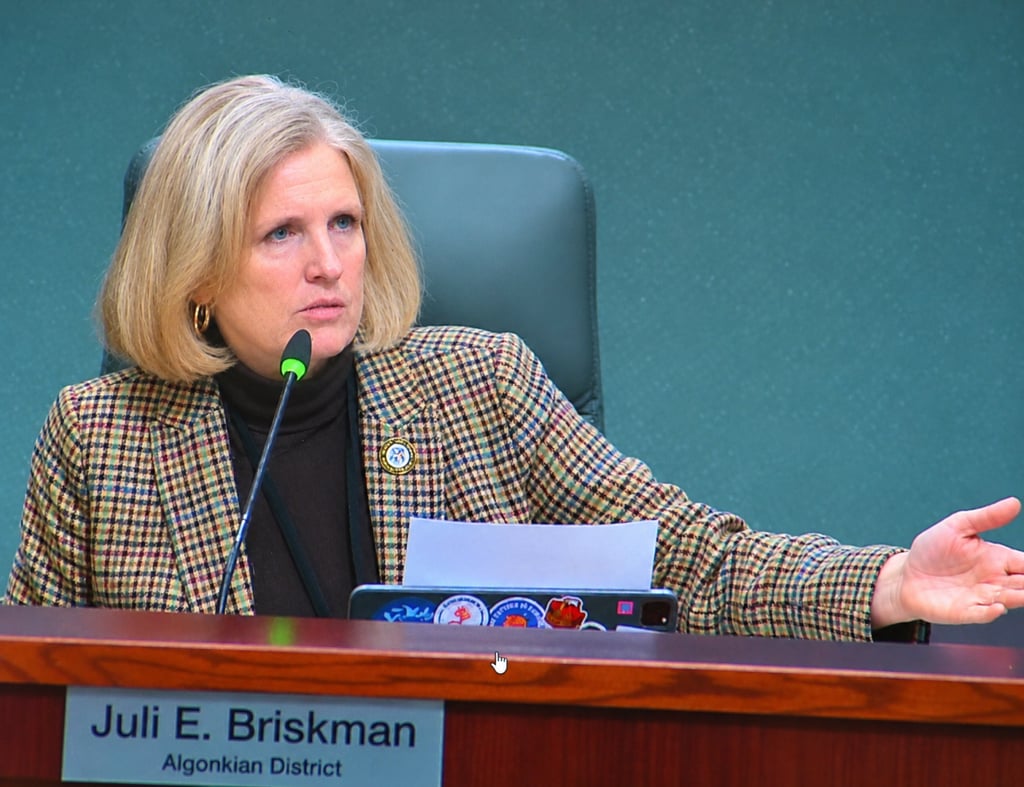
The measure was first proposed in July by Supervisors Juli Briskman (D-Algonkian) and Laura TeKrony (D-Little River), who pushed for a temporary halt to consideration of certain data center applications while the county develops stronger zoning and land-use standards.
Their initiative culminated in Tuesday’s vote, following months of debate and delay over the industry’s impact on Loudoun’s neighborhoods, infrastructure and quality of life.
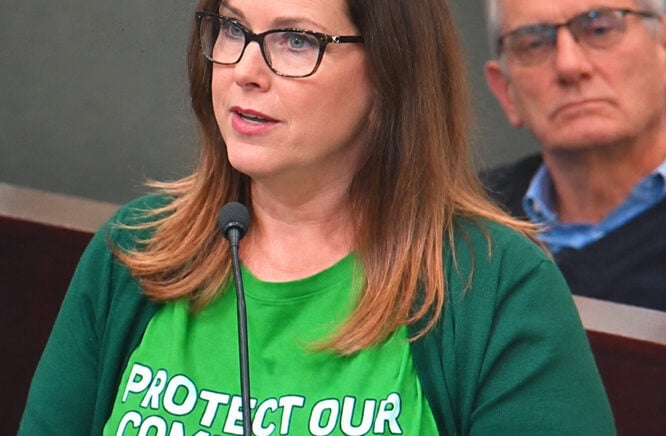
Residents wearing green filled the boardroom, many describing the personal consequences of living near data centers and the electrical infrastructure needed to power them.
Industry representatives and land-use attorneys warned that delaying applications could jeopardize investments, damage Loudoun’s business reputation and expose taxpayers to costly litigation.


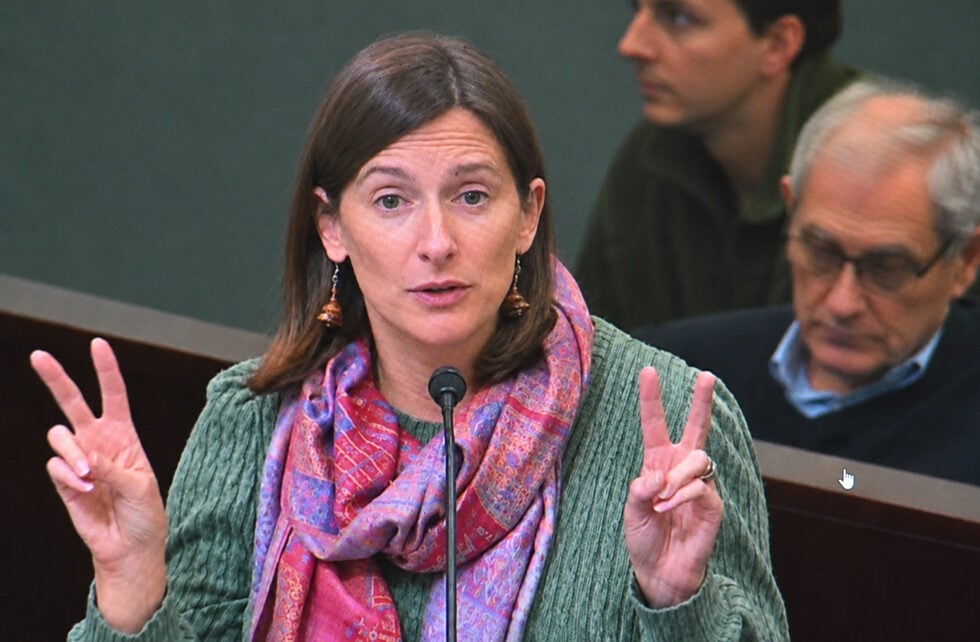
Greg Pirio, director of the Trail Side Homeowners Association in Sterling, described living approximately 150 to 200 yards from the Vantage VA2 data center campus on Glenn Drive.
Pirio said the facility operates around the clock on natural gas turbines because it lacks a grid connection, switching to diesel generators when necessary. He reported respiratory illnesses among neighborhood children and said he has been hospitalized more than once. In July, he said, diesel generator emissions caused breathing difficulties that forced him to leave his home.
He described persistent noise that penetrates his house, despite mitigation measures undertaken by Vantage.
“If I wake up at night, often I have a hard time going back to sleep,” he said.
He urged supervisors to complete the new regulations before approving additional facilities under existing standards.
Mary Badger, a delegate for the homeowners association at Regency at Belmont, a community for adults 55 and older, described the prospect of living approximately 200 feet from an approved data center and 600 feet from a planned transmission line.
“Most of our residents have chosen their homes as the last home they will buy, and no one expected to live 200 feet from a data center,” Badger said.
She added that many residents cannot afford to sell their homes at a loss and relocate.
For residents in western Loudoun, the concerns extend beyond the data centers themselves to the transmission lines proposed to deliver electricity to the industry.
Ashley Warmeling, co-chair of the coalition opposing the Valley Link North transmission line, urged supervisors to recognize the relationship between approving data centers and creating additional electricity demand.
“By pausing data center development, you are addressing the root cause of the so-called grid reliability issue behind future transmission lines,” she said, warning that additional lines could follow even if the current proposal is stopped.
Warmeling also called for state legislation requiring large electricity customers to bear the costs of transmission infrastructure built to serve them, along with stronger protections for landowners and conservation properties.
Maura Walsh-Copeland, a member of the Loudoun County Preservation Conservation Coalition Executive Committee, reminded supervisors that residents had raised concerns about data center noise and setbacks as early as 2013.
She urged stronger protections addressing low-frequency noise, on-site power generation and groundwater use, along with another opportunity for public input. “It’s time to take a pause, to do it right, and to do it now,” she said.
Sreepreethi Sundaram of Brambleton described a proposed data center campus and substation near residential homes. She said the proposed facility would include 114 diesel generators less than 250 feet from residences.
“We are not opposed to having data centers, but just the location,” she said.
Sundaram presented 863 signatures opposing the proposed substation and said residents’ objections had prompted their homeowners association to reverse its earlier support.
Ben Keethler, chair of the Loudoun Coalition of Homeowners and Condo Associations, acknowledged the industry’s economic contributions but said the county has repeatedly found itself addressing problems after development has occurred.
“The county cannot get ahead of its development challenges if it continues to create new ones while trying to address the existing ones,” Keethler said.
Not everyone supported the pause.
Izza Yahya, a recent Loudoun County Public Schools graduate preparing for a career in the data center industry, described the educational and employment opportunities the industry provides.
She pointed to approximately $1.3 billion in projected data center tax revenue for fiscal year 2027 and warned that delaying development could send future investment elsewhere.
Colleen Gillis, a land-use attorney, said that the proposed pause amounted to a moratorium prohibited under Virginia law. She warned that abandoning the county’s established development process could trigger lawsuits and undermine investor confidence.
Nicole Riley, director of Virginia Government Affairs and representing the Data Center Coalition, similarly warned that a pause would create uncertainty for businesses, property owners and workers.
Other industry representatives described projects already involving substantial financial commitments, including infrastructure deposits, construction expenditures and contractual obligations.
Therese Kerfoot, executive vice president of strategy at EdgeCore Digital Infrastructure, said her company’s Sterling project had received zoning and site-plan approvals and represented more than $1 billion in investment. She warned that delaying the Firehouse substation could threaten the project’s ability to obtain the electricity it needs.
County Attorney Leo Rogers explained that Virginia law does not authorize a blanket moratorium on a particular land use. However, he said the board has authority to delay consideration of legislative applications within the time permitted under state law.
The distinction is significant. Legislative applications require board approval, such as rezonings and special exceptions. Applications already proceeding through administrative approvals are not subject to the same pause.
Rogers explained that the county generally has 12 months to act on legislative applications, with that period beginning when an application reaches the Planning Commission for its hearing.
He acknowledged the possibility of litigation, telling supervisors he had consulted representatives of 12 entities and heard concerns about contractual damages, financial losses and the county’s reputation.
When Supervisor Kristen Umstattd (D-Leesburg) asked whether the threatened lawsuits were credible, Rogers replied, “I do not.”
Rogers maintained that the proposed pause was legally defensible. He recommended excluding certain Route 28 Tax District zoning applications because of their particular legal protections.
Briskman said the county’s regulations have failed to keep pace with the industry’s expansion.
She noted that Loudoun already has more than 245 data centers and warned that additional development could bring the county’s total data center space to approximately 92 million square feet.
“This development of data centers has moved a lot faster than the board has been able to respond,” Briskman said.
She said that completing the new regulations before considering additional applications would allow the county to establish stronger protections governing noise, environmental impacts, substations and the location of future facilities.
TeKrony agreed, emphasizing that the county should not continue approving projects while attempting to correct shortcomings in its regulations.
“There are some things that matter more than additional tax revenue: our land, our water, our roads, our quality of life, and our community character,” she said.
Umstattd opposed the measure, expressing concern that applicants could pursue constitutional claims against the county.
Supervisor Caleb Kershner (R-Catoctin) also questioned the approach, saying that supervisors already possess the authority to consider, defer or reject individual applications without adopting a broader pause. He warned of significant litigation costs and damage to Loudoun’s reputation.
Supervisor Matt Letourneau (R-Dulles) acknowledged the industry’s concerns but said the county faces unprecedented uncertainty over future electricity demand and supply.
Having supported some data center projects and opposed others, Letourneau said he could no longer confidently tell constituents what the future would bring.
He supported the pause, while suggesting its practical consequences might be less dramatic than either side anticipated.
Chair Phyllis Randall (D-At Large) acknowledged the industry’s financial contributions and the importance of maintaining Loudoun’s economic reputation. But she also compared developers’ investments with the financial and personal investments residents make in their homes.
Randall said the public’s concerns have changed in recent years, with residents increasingly questioning data center development near their neighborhoods.
She said elected officials must respond when community priorities change.
“I’m also hearing the heart, the heart of homeowners,” Randall said.
Before the vote, Briskman said supervisors had received more than 200 emails supporting the pause. She rejected the suggestion that potential lawsuits should prevent the county from acting.
“I will not be cowed by the threat of lawsuits and intimidation tactics,” she said.
Briskman moved to approve the resolution excluding Route 28 Tax District zoning applications, with TeKrony seconding the motion. Supervisors also accepted an amendment removing language emphasizing further economic growth and enlargement of the tax base.
The resolution passed 7–1–1, with Umstattd voting against it and Kershner abstaining.
For residents who have spent years asking supervisors to address the impact of data centers on their neighborhoods, the vote marked a step toward addressing those concerns.
Victor Block, president of the Loudoun Valley Estates HOA, reminded supervisors that residents, too, deserve predictability. “The industry keeps asking for predictability, so do we. Our community has now lived with uncertainty for years, not knowing what gets built next to our homes or when,” he said.
Comments
Any name-calling and profanity will be taken off. The webmaster reserves the right to remove any offensive posts.