

A New Era Takes Flight at Dulles International Airport
By Valerie Cury
For generations of travelers, Washington Dulles International Airport has been known for its soaring terminal, international connections and those unmistakable mobile lounges—the large, bus-like vehicles that have carried passengers across the airfield since the airport’s earliest days.
They have become part of the Dulles experience. And now, after more than six decades of service, the airport’s famous people movers are gradually approaching retirement.
Their eventual departure is just one chapter in an extraordinary transformation underway at one of the nation’s premier international gateways.
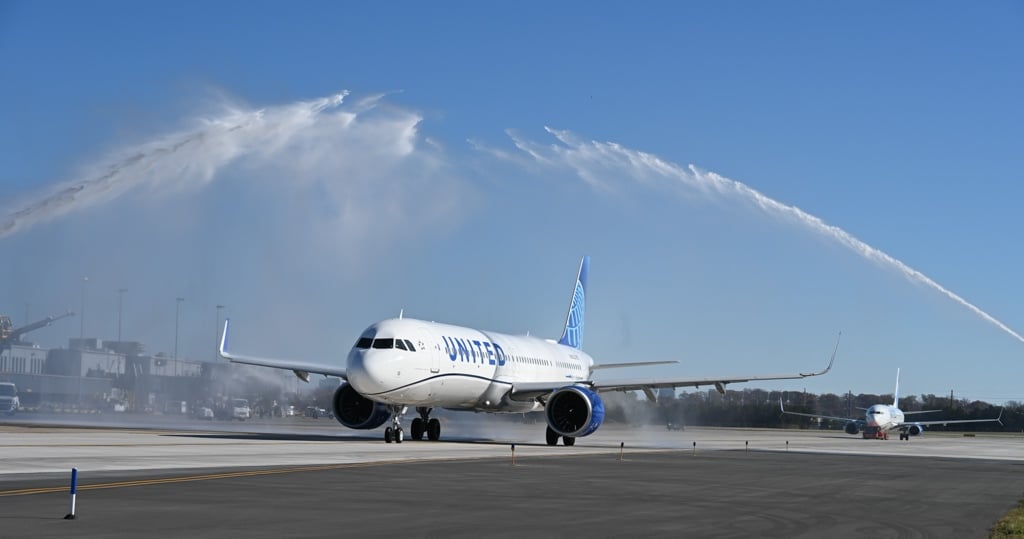
On Monday, Nov. 9, the Metropolitan Washington Airports Authority and United Airlines unveiled Concourse E, a 435,000-square-foot facility featuring 14 new gates, expanded passenger amenities and direct access to the airport’s AeroTrain system.
The following morning, Nov. 10, the new concourse welcomed its first departing passengers as a United Airlines Airbus A321XLR departed for Chicago. The inaugural flight marked a milestone in the airport’s history and the beginning of a much larger modernization effort, with planned investments totaling more than $20 billion.
The opening also completed the first of four planned construction phases, paving the way for a substantial expansion of the airport’s domestic and international flight capacity.
For travelers throughout Loudoun County and Northern Virginia, the improvements promise greater comfort and convenience, easier connections and new dining and shopping options.
Concourse E is the airport’s first new concourse in nearly two decades. It features spacious seating areas, abundant natural light, bright restrooms with luggage-friendly stalls, in-seat power outlets and wireless charging stations.
The facility also includes a nearly 40,000-square-foot United Club, among the largest in the airline’s network, with seating for more than 600 passengers. Its interior incorporates design elements inspired by Washington’s cherry blossoms, the airport’s iconic architecture and the Blue Ridge Mountains.
Despite its contemporary design, Concourse E also pays tribute to the airport’s architectural heritage. The gate numbers incorporate the distinctive typeface associated with Eero Saarinen’s original Main Terminal, while wood finishes and colors echo those found at the terminal’s ticket counters. These subtle details connect the airport’s celebrated past with its ambitious future.
The 14 new gates are designed to accommodate domestic and international flights, including wide-body and narrow-body aircraft, providing greater flexibility as United Airlines expands its operations at Dulles.
One of the most significant improvements is direct access to the AeroTrain, the airport’s underground passenger transportation system. The connection makes it easier for travelers to reach their gates from the Main Terminal without relying on mobile lounges for that journey.
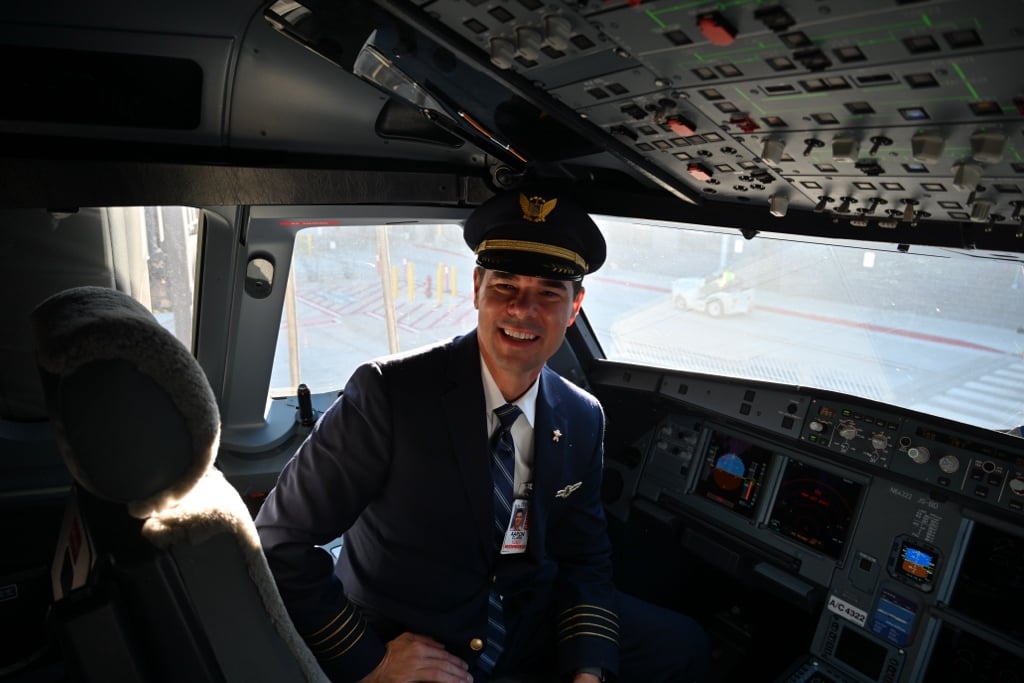
United Airlines Captain Aaron Clark, assistant chief pilot for Washington, D.C., who was aboard the inaugural departure, described the opening as a dream come true. He expressed particular excitement about the AeroTrain’s direct connection to the new concourse and the additional gates and facilities planned for the future.
The new facility is part of the Dulles Global Gateway initiative, an ambitious investment program involving the Airports Authority, United Airlines and the U.S. Department of Transportation that is intended to reshape the airport over the next decade.
In July, U.S. Transportation Secretary Sean P. Duffy joined President Donald Trump in announcing the expanded modernization initiative, increasing the scope of an earlier $7 billion capital improvement program to more than $20 billion.
The long-range plans include more than five million square feet of new or renovated facilities, replacement of the aging Concourses C and D, expanded AeroTrain service, improved baggage handling, additional parking and a new U.S. Customs facility.
The project also calls for preserving the airport’s landmark Main Terminal, designed by architect Eero Saarinen, while modernizing the facilities surrounding it.
Duffy described the opening of Concourse E as an early glimpse of the airport’s future, saying the transformation would improve the travel experience for millions of passengers while creating economic opportunities throughout the region.
Deputy Transportation Secretary Steven Bradbury said construction of Concourse E has supported approximately 2,700 jobs and generated $1.3 billion in economic activity throughout the National Capital Region.
“The Airports Authority is making strategic investments today to transform Dulles International into the National Capital Region’s ‘airport of the future,’” said Airports Authority President and CEO Jack Potter.
“Opening Concourse E is the first step in expanding the airport’s capacity and enhancing the passenger experience, building momentum for the broader modernization efforts that will shape Dulles and serve the traveling public for generations to come.”
United Airlines, which has operated a major hub at Dulles for 40 years, views the expansion as an important part of its future growth.
The airline currently offers more than 250 daily departures from Dulles to 135 destinations worldwide. With the additional gates, United expects to operate more than 300 daily departures next summer, increasing connections to other markets by nearly 30 percent during peak travel periods.
United has added six international destinations this year and announced plans for additional long-haul service to Toulouse, France, and Milan, Italy, next year. The airline also plans to introduce international service from Dulles to Amsterdam and Dublin aboard its new Airbus A321XLR aircraft in December.
“Washington Dulles is a critical part of United’s global network and growth strategy as it connects our nation’s capital to the world,” said United Airlines CEO Scott Kirby.
“Concourse E delivers the kind of elevated experience our travelers and employees deserve today, and it’s only the beginning as we work with the Airports Authority and the U.S. Department of Transportation to transform Dulles into one of the greatest airports in the world.”
The new concourse also introduces an expanded collection of restaurants, shops and passenger services, including several businesses with ties to the Washington metropolitan area.
Travelers will find dining options that include Ellie Bird, Good Company Doughnuts & Cafe, Honor Brewing, Aventino, Bonchon, Dos Toros Taqueria, Rusty Taco and Starbucks. Other offerings include MurLarkey Distilled Spirits, Travel Tech and Gameway, an immersive video gaming lounge.
The expansion carries particular significance for Loudoun County, where Dulles has long served as a major economic engine, supporting businesses, employment and development along the Rt. 28 and Dulles Toll Road corridors.
According to the Airports Authority, Dulles and Ronald Reagan Washington National Airport together serve more than 50 million passengers annually and generate more than $20 billion in regional economic activity, supporting more than 200,000 jobs.
Future phases of Concourse E are expected to add as many as 36 additional United gates, bringing the total to 50, along with a new international customs processing area for connecting passengers and one of the airline’s largest Polaris lounges. The expanded facility is also part of a long-term plan to replace the aging Concourses C and D, which were originally constructed as temporary facilities decades ago.
And then there are those mobile lounges.
When Dulles opened in 1962, the futuristic vehicles were considered an innovative solution that transported passengers directly to their aircraft, eliminating long walks through airport terminals.
For many travelers, climbing aboard one of the oversized vehicles became an unforgettable part of flying through Dulles. They offered a close-up view of aircraft and the activity unfolding across the airfield.
Over the years, however, the airport grew, aviation changed and the once-revolutionary people movers became less practical for handling increasing passenger volumes.
The AeroTrain, which began operating in 2010, offered a faster way to move passengers between the Main Terminal and airport concourses.
There is no immediate farewell scheduled. The familiar vehicles will continue transporting certain international passengers to customs as the airport’s modernization proceeds and new passenger facilities are completed.
But eventually, those rolling lounges—part bus, part waiting room and unmistakably Dulles—will make their final trips across the airfield.
For travelers who remember when the airport first opened, their departure will mark the end of a distinctive chapter in aviation history.
For a new generation, the changes promise a different kind of Dulles experience, with modern concourses, expanded flight options and more convenient connections.
And while Concourse E represents a substantial investment on its own, its opening is only the beginning of a transformation that will change the appearance and operation of Washington Dulles International Airport for generations to come.
Continue reading in this news section
Comments
Any name-calling and profanity will be taken off. The webmaster reserves the right to remove any offensive posts.