

Western Loudoun Farming Costs Some Serious Moooo-lah: Just Ask Ms. Kisses
By Ria Narayan
My prayers were answered. Cyclospora showed up this summer. Add E. coli and Salmonella, and my parents couldn’t force feed me lettuce and salad anymore. For once, I could look them in the eye and say eating veggies can actually be dangerous!
But then the CDC declared the lettuce outbreak over, and it was back to negotiating greens. My offer was simple: Give me a puppy, and I’ll swallow my broccoli whole. No puppy. No deal.
With no golden retriever in sight, McDonald’s it was. But this debate about my food got me thinking. Didn’t Old MacDonald, like, have a farm?
I told my mom to go on tour with me. My Great Loudoun Farm Tour: a journey to find the farmers who were after my nutrition.
Now, before we begin, can you keep a secret? Yeah, same.
Somewhere along our tour, I felt weird standing next to animals that might end up next to my broccoli someday. I don’t speak chicken, but as these chicken tender minions pecked at my boots, I imagined them boasting that if their T. rex ancestors were still alive, I’d be kibble.
I recently learned some of T. rex’s relatives had feathers. Ginormous fluffy chicken with an appetite to kill? That was enough for me. This felt less like a farm tour and more like Jurassic Farm, so I ran my first 5K over to the calmer looking animals.
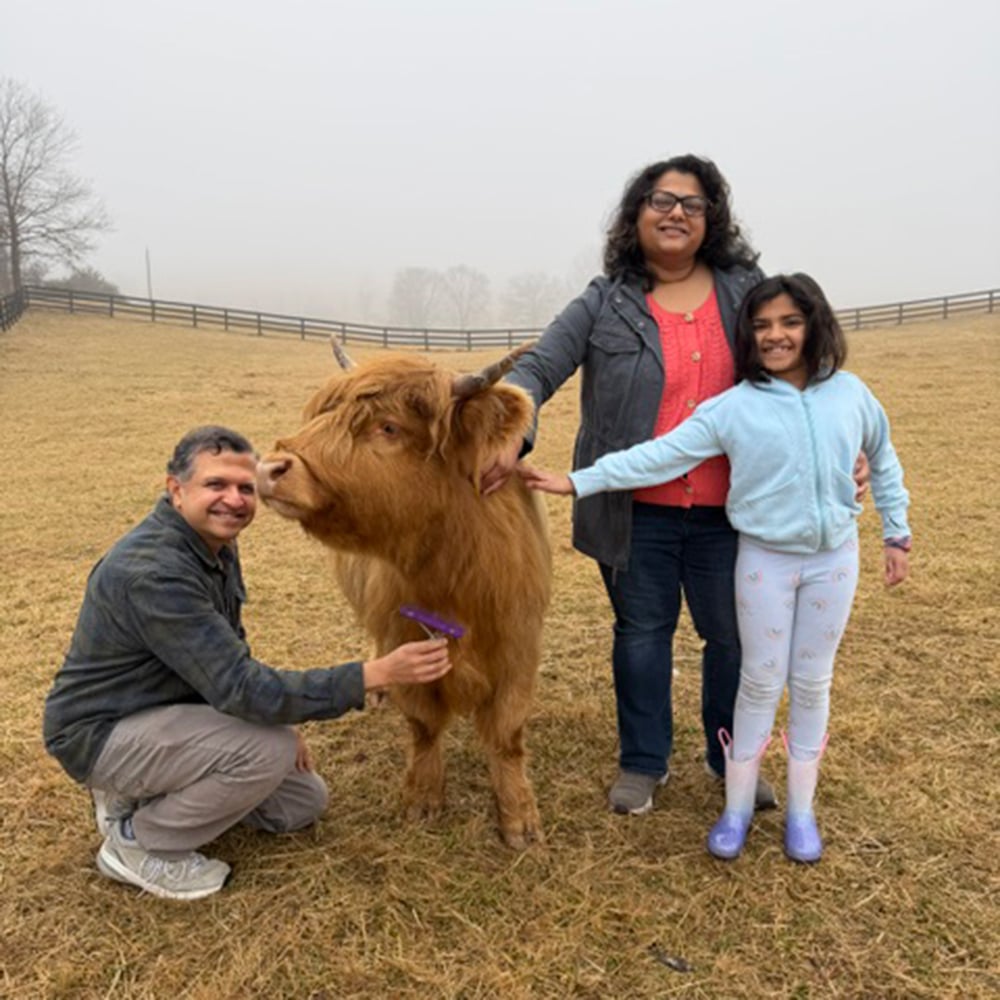
Some were really big. Some were magically small. Ever met a Highland cow? Visit Sterling Hills Farm and you’ll see why you can’t look away. They had me at their NeeDoh noses. Love at first sight. I needed one, and she would be known as Ms. Kisses.
I was sure this would fly with Dad. She could be our lawn mower AND make fertilizer!
That was before we got to Ms. Laura Immelman of Scarlet Springs Farm. She took time to teach me about her farm, including that while her sheep and goats looked uber cute, some of her sheep could cost thousands of dollars, and her cows could cost $10,000 or more.
HOLY COW. Lamborghini cattle.
Asking Dad for Ms. Kisses was getting challenging.
Mr. Ghorley Gregg of Twin Maple Farm broke down what it costs to keep a farm running. So let’s talk Moooo-lah. Sorry, I had to.
First, equipment. Remember, people, you’re not picking up a tractor for $19.99 at Target. Mr. Gregg told us tractors can easily cost $100,000 or more. Suddenly, Ms. Kisses’ lawn mower service wasn’t looking so free.
Then there’s diesel. Mr. Gregg said his tractor crosses the field at least five times to make a bale of hay. With diesel costing him about twice as much, plus fertilizer, Ms. Kisses’ dinner isn’t looking cheap either.
Mr. Gregg said southern Virginia has been hit harder by the hay shortage. The problem is so serious that Virginia recently declared a state of emergency to help get more hay to farmers. Here in Loudoun, his bigger concern is the cost of producing it. Twin Maple is absorbing some higher costs to keep customers, but he said that isn’t sustainable forever.
Near my home, Mr. Michael Bertozzi owns Cavallo Farm, a competitive Hunter/Jumper show barn. He told us his horses go through about 12 bales a day, and competition horses need premium hay, so cheaper hay isn’t an option.
There’s no hay shortage there, but he’s stuck paying premium prices. And once prices go up, Mr. Bertozzi doesn’t expect them to come back down.
At Sterling Hills Farm, Ms. Robin Darter told us they make their own hay and use rotational grazing, which keeps the cows grazing longer and reduces how much hay they need.
Things were starting to click. Farms don’t always depend on just one way of making money.
Ms. Molly Kroiz of Georges Mill Farm raises goats and makes artisan cheese. She said people are often more willing to pay for an experience than pay more for food. Visitors can eat cheese and even bottle-feed baby goats. I learned that’s called agritourism: another way to make money for the farm.
Ms. Darter built agritourism into Sterling Hills after starting with five Highland cattle, while Ms. Immelman does it with animals like her goats.
That matters if a vineyard has a bad harvest or crops get hit by drought, pests or disease. Animals still need to eat. Having more than one way to make money can help keep a farm going.
Ms. Kroiz, Ms. Immelman and Ms. Darter taught me that having more than one source of income was always part of the plan, not a backup.
My Great Western Loudoun Farm Tour taught me what farmers actually worry about. It’s hay, diesel, equipment, fertilizer and customers, while somehow still putting those darn veggies on my plate.
As for Ms. Kisses?
Dad, can we call my puppy Ms. Kisses instead?
Ria Narayan may only be 9, which means she doesn’t have a driver’s license or a vote, but that hasn’t stopped her from having something to say. With plenty of questions, plenty of curiosity and her own point of view, Ria’s Loudoun Lens shares Loudoun as she sees it.
Comments
Any name-calling and profanity will be taken off. The webmaster reserves the right to remove any offensive posts.