


Planning Commission Recommends Denial of Spring Valley Data Center Proposal
By Valerie Cury
On July 23, the Loudoun County Planning Commission unanimously recommended that the Board of Supervisors deny the proposed Spring Valley Technology Park, a 325-acre data center campus along the east side of Evergreen Mills Road in the Ashburn District.
The commission voted 6-0, with Commissioners Eric Combs (Ashburn), Clifford Keirce (Sterling), and James Banks (Algonkian) absent. The application now advances to the Loudoun County Board of Supervisors for final consideration.
The proposal seeks to rezone the site from the Transitional Residential-10 (TR-10) large lot neighborhood place type zoning district to the Industrial Park (IP) zoning district to permit construction of 12 data centers totaling up to 3.25 million square feet, three campus-dedicated utility substations, and a utility-scale energy storage facility.
The campus would be developed in two phases, with five data center buildings in the first land bay and seven additional buildings in the second land bay.
In addition to the rezoning request, the applicant sought multiple special exceptions and zoning modifications to accommodate the project.
These included reducing required setbacks adjacent to residential properties, eliminating building step-back requirements designed to lessen visual impacts, removing required buffering between certain industrial uses on-site, and allowing mechanical equipment adjacent to residential properties to be screened by walls rather than principal buildings.
The proposal also raised broader land use questions because of its location within Loudoun County’s Transition Policy Area. The site lies along the county’s Urban Growth Boundary in an area designated as a Transitional Large Lot Neighborhood, a place type where the Comprehensive Plan envisions predominantly residential development, agriculture, substantial open space, and the protection of natural and environmental resources.
The designation is intended to provide a gradual transition between suburban development and the county’s Rural Policy Area while preserving the area’s environmental and rural character.
Recommending denial, planning staff concluded the proposal represented a fundamental departure from the Loudoun County 2019 General Plan.
According to staff, introducing industrial-scale development at this location would fundamentally alter the planned character of the area and be incompatible with surrounding neighborhoods, large-lot residential properties, and agricultural land.
The proposed intensity of development also substantially exceeded what the Comprehensive Plan envisions for the area.The application proposed buildings up to 100 feet tall, more than double the approximately 45-foot building height anticipated for the Transitional Large Lot Neighborhood place type.
The report concluded the project’s scale, building massing, and requested zoning modifications could not be sufficiently mitigated. It also cited unresolved transportation issues, including roadway improvements, emergency access, and impacts to an existing residence.
Beyond land use and transportation concerns, the staff report identified unresolved issues involving watershed protection, environmental impacts, wetlands and stream corridors, heritage resources, archaeological investigations, and protection of the nearby Goose Creek watershed, which feeds Beaverdam Reservoir, one of eastern Loudoun County’s primary drinking water sources.
Representing the applicant, Antonio Calabrese, a partner with DLA Piper LLP, presented the proposal. He said that the campus had been carefully designed to minimize its visibility and impacts on surrounding properties. “Unless you’re flying over in a plane, a helicopter, or a very large drone, you will not be able to see nor hear this campus as it has been designed,” he said.
Calabrese said the project’s level of buffering and screening could not be achieved in the county’s more typical data center locations because those sites do not provide sufficient room for the same design approach.
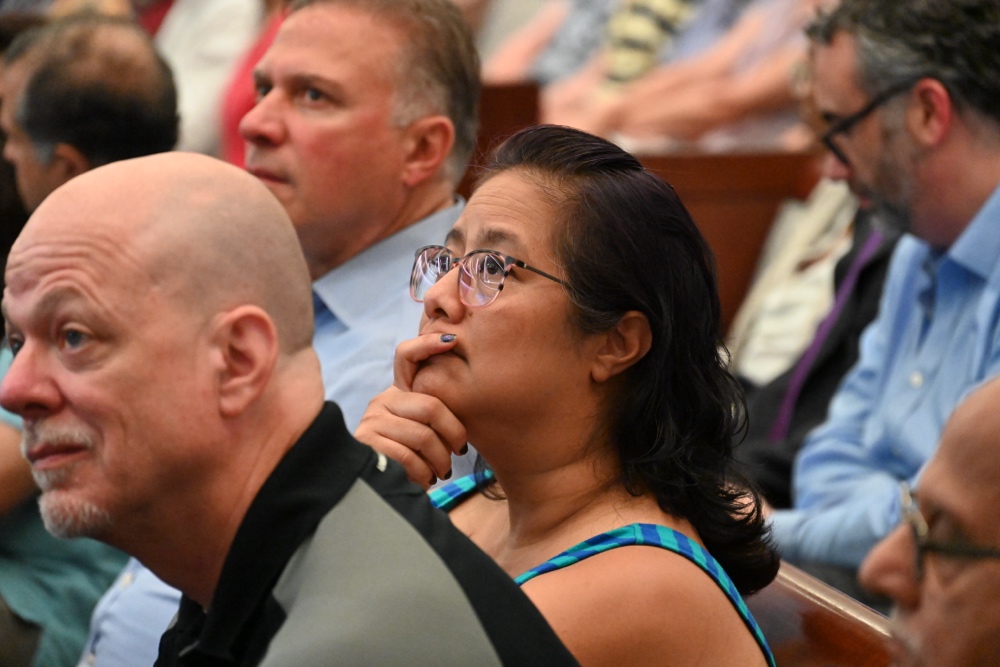
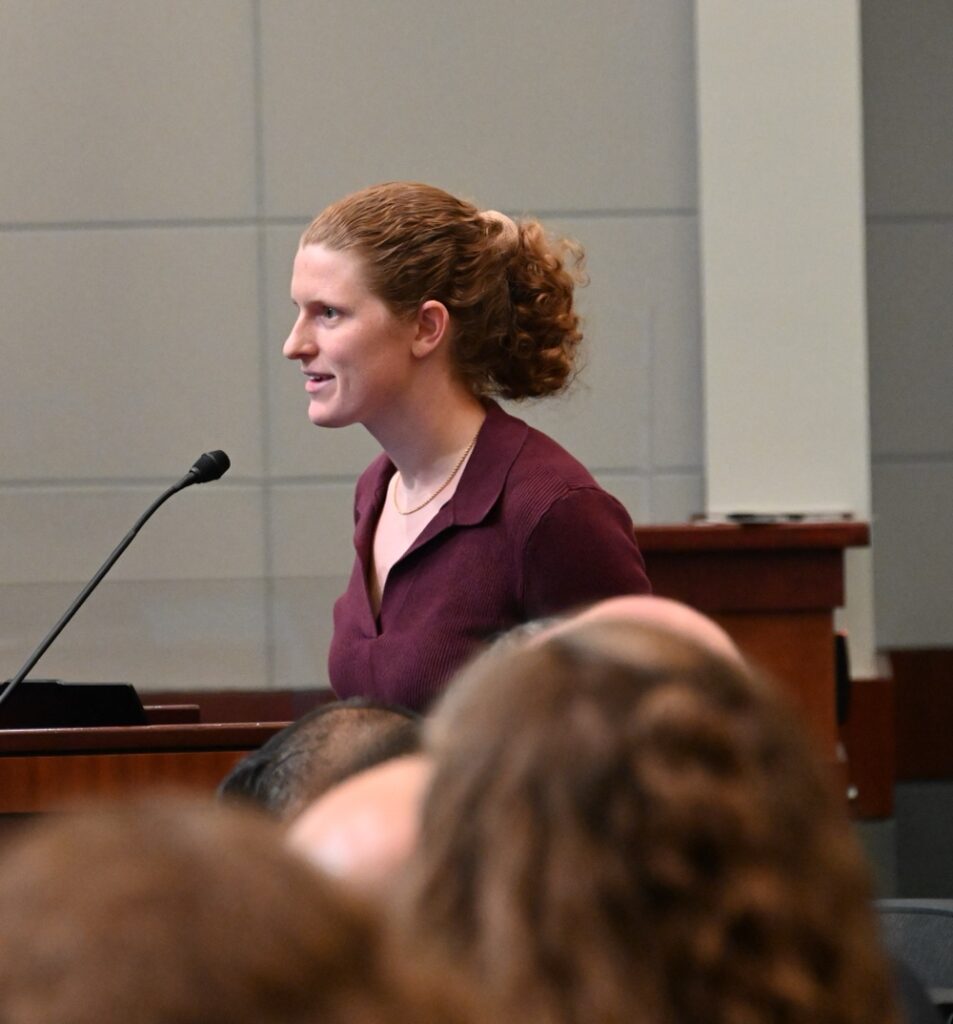
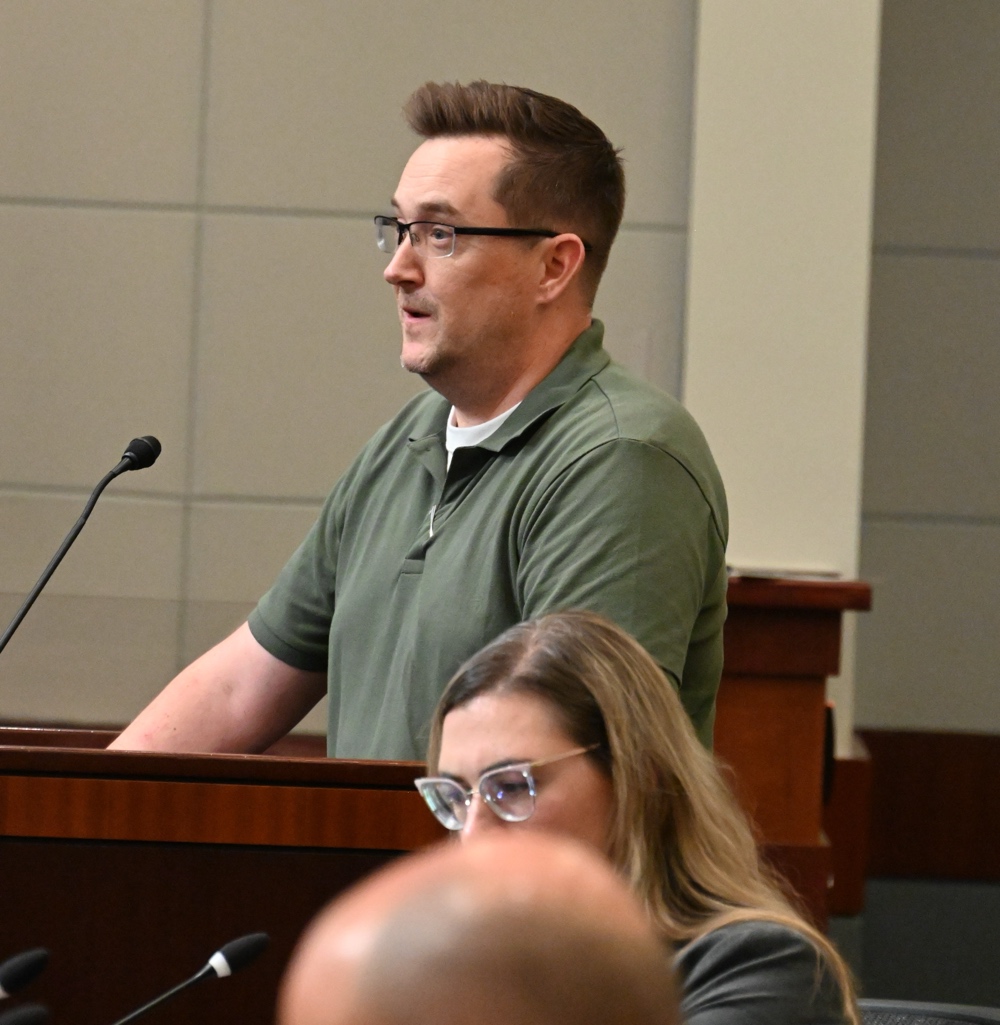
The public hearing drew significant community participation, with 68 residents signing up to speak. Despite the late hour, nearly 50 remained to address the commission, and all but one urged the commission to reject the proposal.
Residents Speak
Area resident Mete Sahin said the Transition Policy Area was created to preserve the area “for low-density housing and various other uses that are not compatible with data centers whatsoever.” He added that the county should not go against its own plans. “Data centers are industrial facilities, and they will change the character of the area, and it would go downhill from there,” he said.
Thomas David urged the Planning Commission to evaluate the application based on the county’s adopted plans and policies. “My request is simply that you assess the petition regarding the Spring Valley Technology Park against the laws, the regulations, and plans that control this very issue,” he said.
Referring to the Comprehensive Plan’s Transition Policy Area designation and the property’s residential zoning, David told commissioners, “Those terms are neither elastic nor ambiguous.”
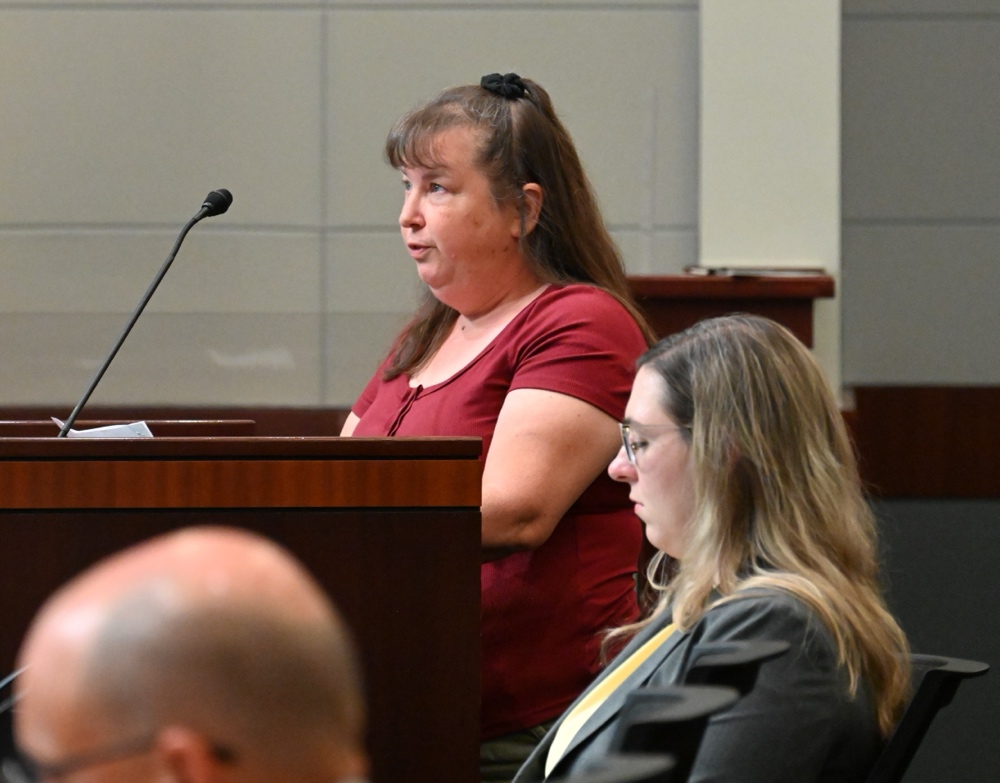
Erika Sovey said she and her husband chose Loudoun County more than 20 years ago because of its reputation as “one of the best places in America to raise a family.”
She said they intentionally purchased a home near Beaver Dam Reservoir, where they enjoy fishing, kayaking, hiking, and spending time outdoors with their son. “Families moved here because of those natural resources, not to live next to or across from one of the largest data center developments in the region,” she said.
Speaking on behalf of the Greenville Preserve Homeowners Association, President Joe Payne asked for denial of the application, saying the board represented 225 homes directly across from the proposed site.
“There’s no reason to go through all of this stuff unless you’re trying to put something that simply does not belong there,” said Payne. He said that the project’s extensive buffering and mitigation measures reflected its incompatibility with the Transition Policy Area.
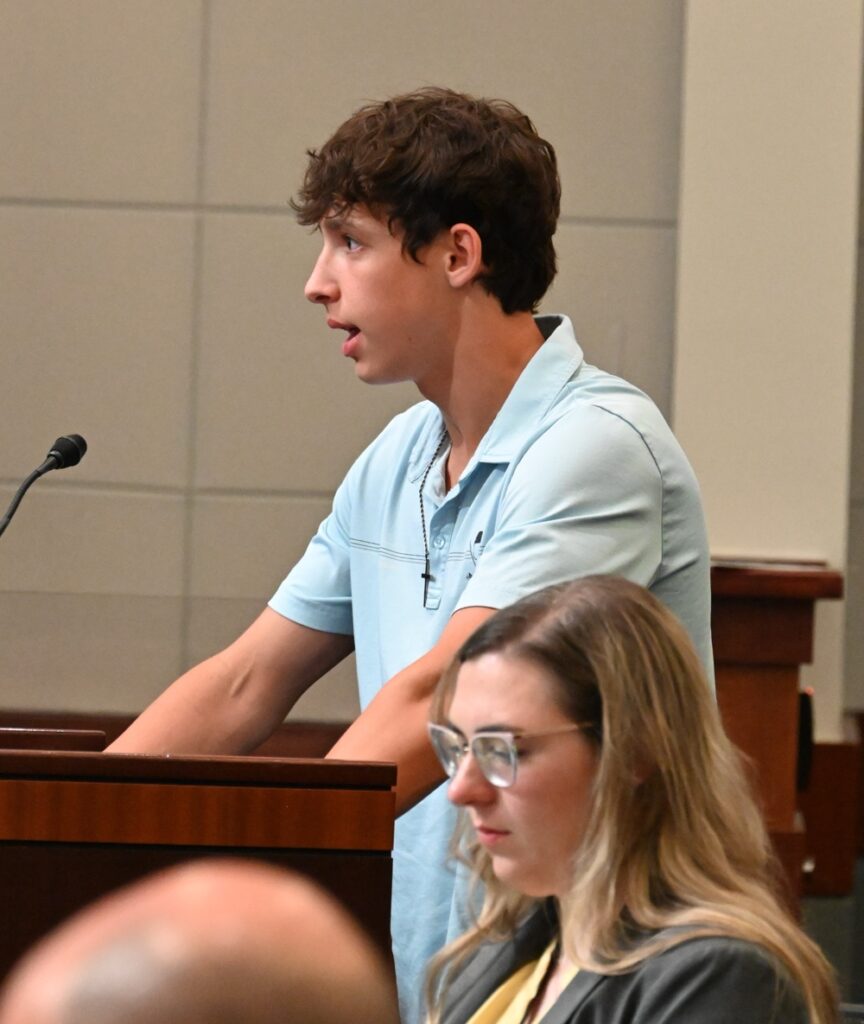
Sixteen-year-old Ryan Reategui, who lives less than a mile from the proposed site, said he enjoys fishing in Goose Creek, exploring the woods on his family’s property, and watching bald eagles near Beaver Dam Reservoir.
He urged commissioners to consider the long-term consequences of the proposal, saying, “Please think beyond the next years and consider what this decision means for the next 50.”
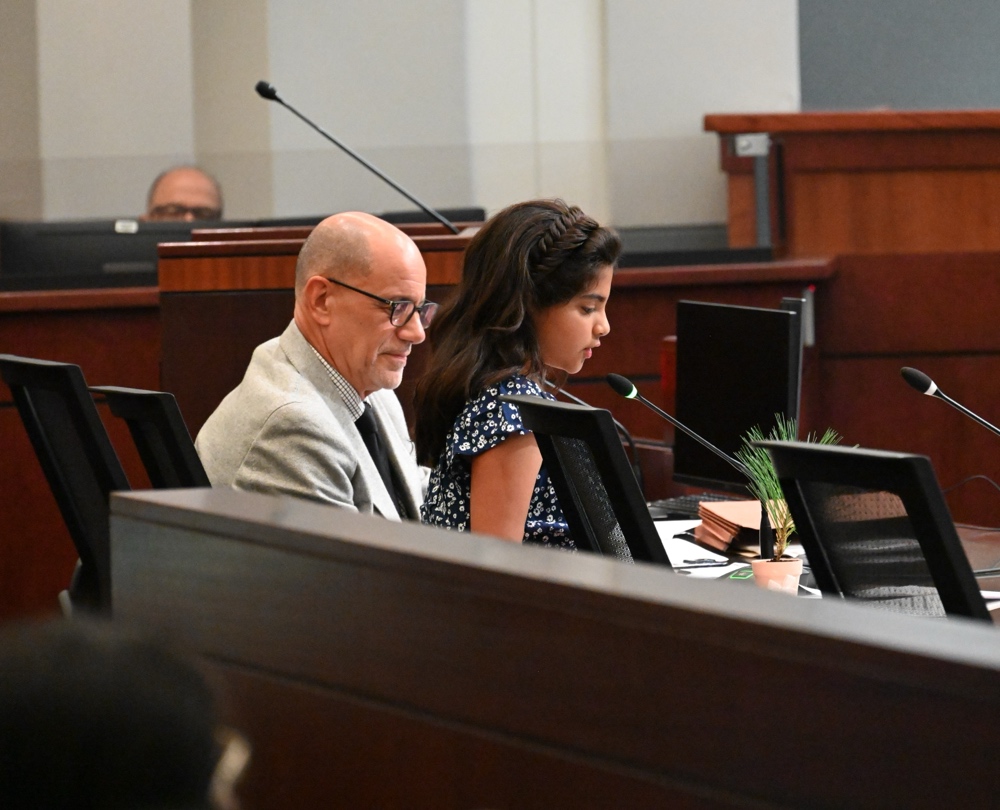
A nine-year-old, the youngest speaker of the evening, walked to the staff and applicant presentation table carrying a baby tree and placed it on the table as a symbol of growth and patience.
Referring to the sapling, she said, “This baby tree is a lot like me. It’s still growing, and if you give it time, it will become something amazing.”
She urged commissioners to slow the process, adding, “My parents and my teachers tell me to stop, think, and make good choices, like ‘measure twice, cut once.’ Maybe today we should measure twice and then decide to pause because some decisions can’t be taken back.”
She concluded, “I’m only nine years old. I don’t get to vote, but I do have to live with your decisions.”
Kelly McGinn urged the commission to restore public confidence by following the Comprehensive Plan, telling commissioners, “Show us that the TPA is more than words just on paper. Show us that existing neighborhoods and the people that live here are worth protecting.”
Speaking on behalf of the Loudoun Nature Conservation Project, Evan Gigliotti asked the commission to deny the rezoning application, saying the project’s air quality impacts and inconsistency with the Comprehensive Plan outweighed its benefits.
Martins Chase resident Adam Dovens said he and his wife chose their home for its open space and rural surroundings. He asked commissioners, “How much more of our carefully chosen home do you want to take from us for a data center that nobody wants in an area that isn’t zoned for their operations?”
Emily Johnson, Land Use Field Representative for the Piedmont Environmental Council, urged the Planning Commission to deny the application, saying the proposal was incompatible with the Comprehensive Plan and surrounding development.
Johnson said the organization’s concerns included impacts to open space, tree canopy, wildlife habitat, Goose Creek, historic resources, infrastructure, and neighboring residential communities.
One of the last speakers of the evening said he had polled his animals about the proposal. “My calves are going to go crazy … They were just born. They don’t get a vote. The other five were dead set against it. The donkeys were making a ruckus. I don’t speak donkey, but I’m pretty sure they’re against it too.”
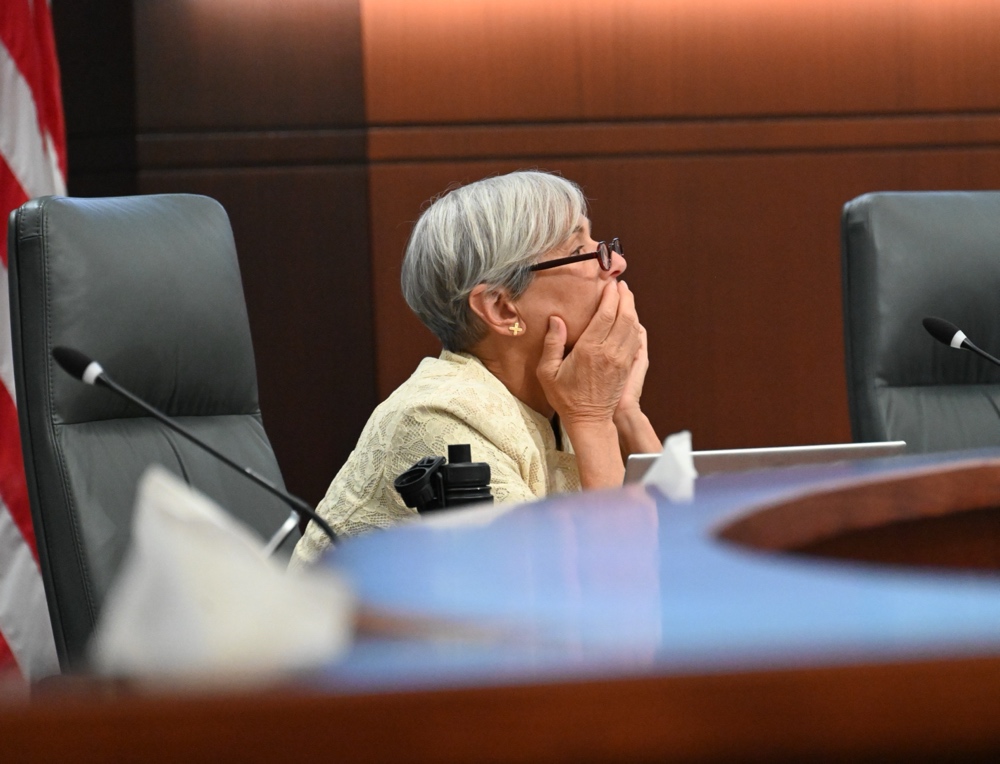
Following public comment, commissioners unanimously agreed the proposal was incompatible with the location and recommended denial. Several described the application as a well-designed project in the wrong place, while emphasizing it conflicted with the purpose of the Transition Policy Area and the surrounding residential and rural landscape.
Before the vote, commissioners also thanked the residents who participated throughout the process and encouraged them to remain engaged as future proposals for the property are considered.
All six commissioners present voted to recommend that the Board of Supervisors deny the rezoning application.
Continue reading in this news section
Comments
Any name-calling and profanity will be taken off. The webmaster reserves the right to remove any offensive posts.
e-edition